
Your leather sofa is bleaching in the sun, and your hardwood floors are turning blotchy near the windows, this is a daily reality for a lot of Los Angeles homeowners, and the same holds true for anyone researching smart film UV protection furniture fading Los Angeles issues. The direct answer: smart film with a UV-blocking layer stops up to 99% of ultraviolet rays from reaching your furniture, and it does this without darkening your room like traditional tint. Los Angeles gets over 280 sunny days a year, and homes with large south or west-facing windows take the worst of it. This guide walks through the real costs, the science behind UV blocking, the neighborhoods most at risk, and how to find an installer who won’t oversell you. Get a free estimate from a licensed Los Angeles smart glass installer once you know what you’re working with.
How Bad Is UV Damage to Furniture in Los Angeles Homes?
UV damage in Los Angeles homes is often worse than homeowners realize because fading happens gradually, then suddenly looks severe once you move a rug or picture frame. Los Angeles sits at a latitude and elevation that produces intense, direct sunlight for most of the year, and unfiltered glass does almost nothing to stop the ultraviolet wavelengths responsible for color breakdown.
Furniture doesn’t need direct, blazing sun to fade. Even ambient daylight through an unprotected window carries enough UVA radiation to bleach dye out of fabric, dry out leather until it cracks, and turn wood a chalky gray over a few years. Hardwood floors near sliding doors or floor-to-ceiling windows often fade unevenly, since the sun hits the same strip of flooring every afternoon.
A homeowner in the Los Feliz area recently noticed their custom sectional had faded almost two shades lighter on the side facing a west-facing bay window, while the rest of the piece stayed vibrant. That’s a textbook UV fading pattern, and it’s completely preventable with the right film. High-value furnishings, antiques, and area rugs are especially vulnerable because natural fibers and aniline-dyed leather have almost no built-in UV resistance.
Does Smart Film Actually Block UV Rays That Cause Fading?
Yes. Smart film with a UV-protective laminate layer blocks up to 99% of UV rays, the same wavelengths responsible for fabric bleaching, leather drying, and wood discoloration, while still allowing full visible light transmission.
This is the part most homeowners get wrong: they assume any window film that darkens a room is doing the UV-blocking work. It’s not that simple. UV protection comes from a specific polymer layer embedded in the film, not from tint or opacity. That’s why smart film for UV protection in Los Angeles can stay completely clear, or switch between clear and frosted on demand, and still stop the same percentage of UV radiation either way.
Smart film works by applying a laminated PDLC (polymer dispersed liquid crystal) layer to glass, which serves two jobs at once: it gives you switchable privacy, and its adhesive and film layers inherently filter UV wavelengths. So you get furniture protection whether the film is in its clear state or switched to opaque. For homeowners chasing smart film UV protection furniture fading solutions in Los Angeles, this dual function is the real selling point, you’re not choosing between light and protection, you get both.
Independent film manufacturer testing (the standard used across the switchable glass industry) shows UV blocking rates between 95% and 99%, depending on film grade and installation quality. Lower-grade films or poor edge-sealing can leave gaps where UV still leaks through, which is why installer experience matters as much as the film itself.
How Much Does Smart Film Cost in Los Angeles?
In Los Angeles, smart film installation typically costs $8 to $18 per square foot installed, with most residential window projects landing between $1,800 and $6,500 total depending on window count and size.
| Project Type | Typical Cost Range (Los Angeles) | Notes |
|---|---|---|
| Single window (standard size) | $450–$950 | Includes UV-blocking laminate layer |
| Sliding glass door / patio door | $1,200–$2,600 | Larger surface, often high UV exposure |
| Whole-room package (4–6 windows) | $2,800–$6,500 | Common for living rooms with west exposure |
| Whole-home retrofit | $8,000–$22,000+ | Depends on total glass square footage |
Cost varies based on a few factors: the total square footage of glass, whether you’re doing switchable smart film (which costs more than static UV film) or a basic UV-only laminate, and how accessible your windows are. A single-story home with standard windows is a much simpler job than a two-story home with tall picture windows or custom-shaped glass.
Honestly, most contractors will tell you the cheapest static UV film is a fine option if all you care about is fading protection and you have no interest in the privacy-switching feature. But once you’ve paid for professional installation labor, the price difference between static film and smart film is often smaller than homeowners expect, sometimes just $2–$4 per square foot more. That’s why a lot of Los Angeles homeowners upgrade to smart film once they’re already committing to the install cost. If you’d like an accurate quote for your specific windows, Pacific Smart Glass can walk you through pricing for your home.
Smart Film vs Smart Glass vs LED Film: Which Stops Fading Best?
All three products, smart film, smart glass, and LED film, block a similar percentage of UV rays, but they differ significantly in cost, installation method, and added functionality.
| Product | UV Blocking | Cost Range (LA) | Best For |
|---|---|---|---|
| Smart Film | 95%–99% | $8–$18/sq ft | Retrofit on existing glass, budget-conscious upgrades |
| Smart Glass | 95%–99% | $25–$45/sq ft | New construction or full window replacement |
| LED Film | 90%–98% | $15–$30/sq ft | Adding ambient lighting plus moderate UV control |
Smart film is applied directly to your existing glass, which makes it the fastest and least invasive option, and typically the least expensive. Smart glass, on the other hand, involves replacing the glass unit entirely with a PDLC-integrated pane, which costs more but offers a cleaner factory-sealed finish with no film edges to maintain over time.
LED film adds a lighting layer to the switchable glass technology, which is a nice feature for accent walls or commercial spaces, but it’s not the priority if furniture fading is your main concern. For pure UV protection paired with privacy control, smart film and smart glass perform almost identically, the real decision comes down to budget and whether you’re renovating or retrofitting.
Most Los Angeles homeowners protecting furniture from fading choose smart film simply because it doesn’t require removing existing windows. If you’re already doing a larger remodel, smart glass might make more sense long-term. You can compare both options in more detail through Pacific Smart Glass’s switchable glass comparison guide.
Which Los Angeles Neighborhoods Need UV Protection Most?
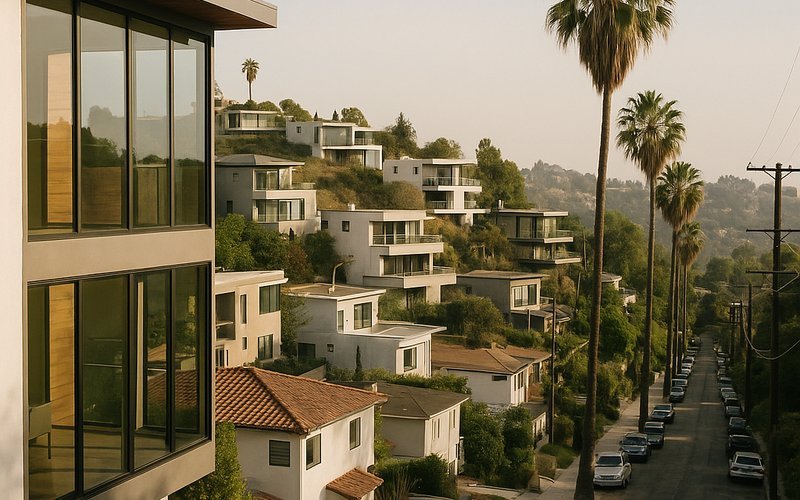
Homes in Los Angeles with unobstructed south or west-facing exposure see the most severe furniture fading, and that includes hillside and canyon properties with large picture windows designed to capture views.
In Bel Air, many homes were built with expansive west-facing glass to take in sunset views over the canyons, which means afternoon UV exposure hits living rooms and primary bedrooms directly for hours at a time. Furniture, art, and hardwood flooring in these rooms fade faster than in homes with smaller, shaded windows.
Brentwood has a similar issue: newer construction and remodeled homes often feature floor-to-ceiling glass walls that maximize natural light, which looks great architecturally but leaves upholstered furniture and rugs exposed to near-constant UV radiation. Silver Lake homes, especially those with mid-century modern styling and large single-pane windows, face the same problem, older glass in these homes typically has zero UV coating built in, unlike newer double-pane units with basic Low-E coatings.
If your home has large glass surfaces facing south or west and gets direct sun for more than 4–5 hours a day, you’re a strong candidate for UV-blocking smart film regardless of which part of Los Angeles you’re in. The physics don’t change by zip code, exposure time and window size are what matter most.
What Is the Lifespan of Smart Film Before It Needs Replacing?
Quality smart film typically lasts 10 to 15 years before UV-blocking performance starts to degrade noticeably, though switchable functionality can begin to weaken slightly sooner in high-heat installations.
Lifespan depends heavily on installation quality and film grade. A properly installed film with sealed edges and correct adhesive curing will hold its UV-blocking properties for well over a decade. Cheaper films, or films installed without professional-grade tools, can start showing edge lifting or bubbling within 3–5 years, which allows UV rays to bypass the film at the seams.
Heat exposure is the biggest factor specific to Los Angeles. Windows that face west and absorb intense afternoon heat put more thermal stress on the film’s adhesive layer than north-facing windows. So a west-facing window in a hot interior room might see the switching function degrade a year or two earlier than a shaded window on the same house.
Most manufacturers back their smart film with a 10-year warranty on UV performance and switching function, and a reputable local installer will tell you honestly if your specific window orientation is likely to shorten that lifespan. Regular cleaning with non-abrasive products also extends film life considerably. You can read more on upkeep in Pacific Smart Glass’s maintenance guide.
Do You Need a Permit to Install Smart Film in Los Angeles?
No permit is required to install smart film on existing residential windows in Los Angeles, since it’s classified as a surface-applied product rather than a structural or window replacement.
The Los Angeles Department of Building and Safety (LADBS) generally doesn’t require permits for window film installation because it doesn’t alter the structural opening, glazing type, or the building’s exterior envelope in a way that affects code compliance. This is different from full window replacement, which does require a permit through LADBS if you’re changing window size, structural framing, or egress requirements.
If your project involves swapping out entire window units for smart glass rather than applying film to existing glass, that’s a different story: full glazing replacement can trigger permit requirements, especially in designated historic districts or homes under specific overlay zones. If you’re unsure whether your project crosses that line, it’s worth confirming directly with LADBS before work begins, or asking your installer to check on your behalf as part of the quote process.
How to Find the Right Smart Film Installer in Los Angeles
The right smart film installer in Los Angeles will have hands-on experience with UV-blocking laminate products specifically, not just decorative or privacy tint, and should be able to show you actual UV transmission data for the film they’re recommending.
Start by asking for the film manufacturer’s spec sheet, not just a sales brochure. A legitimate UV-blocking product will list a specific UV rejection percentage, typically in the 95–99% range, along with a visible light transmission number. If an installer can’t produce this, that’s a red flag.
Ask how many smart film installations they’ve completed in the past year, and ask specifically about jobs similar to yours, whole-home retrofits versus single-window jobs require different skill levels. A company installing hundreds of square feet of smart film across Los Angeles homes will have refined their edge-sealing technique in ways that directly affect how long your film lasts before bubbling or lifting.
- Confirm the warranty covers both UV performance and switching function, not just one
- Ask whether they handle both smart film and smart glass, so you get an honest comparison rather than a one-product pitch
- Request references from Los Angeles homeowners with similar sun exposure to yours
- Get a written quote broken down by square footage, not a flat estimate
Pacific Smart Glass has installed smart film UV protection furniture fading solutions across Los Angeles homes, from hillside properties with wraparound glass to standard single-story retrofits. Their team can walk you through which product, smart film, smart glass, or LED film, fits your windows and your budget. For homeowners specifically dealing with sun-heavy exposure and looking to protect furniture without losing natural light, this is the kind of decision worth getting right the first time.
If you’re ready to stop watching your furniture fade season after season, the next step is simple: get a real quote based on your actual windows, not a generic estimate. Reach out to Pacific Smart Glass’s San Jose team for a consultation and pricing tailored to your home’s exposure and glass type.