
Smart Film Los Angeles – Professional Services for Homes & Businesses
Los Angeles Smart Film Services: Instant Privacy Solutions
If you’re looking for a modern way to add privacy without replacing your glass, smart film in Los Angeles is one of the most efficient and cost-effective solutions available today.
At Pacific Smart Glass, we specialize in switchable smart film services for residential and commercial spaces giving you instant control over privacy, light, and aesthetics with the touch of a button.
Whether you’re upgrading an office in Downtown LA, enhancing a retail storefront in Beverly Hills, or adding privacy to your home in Santa Monica, smart film transforms ordinary glass into intelligent glass.
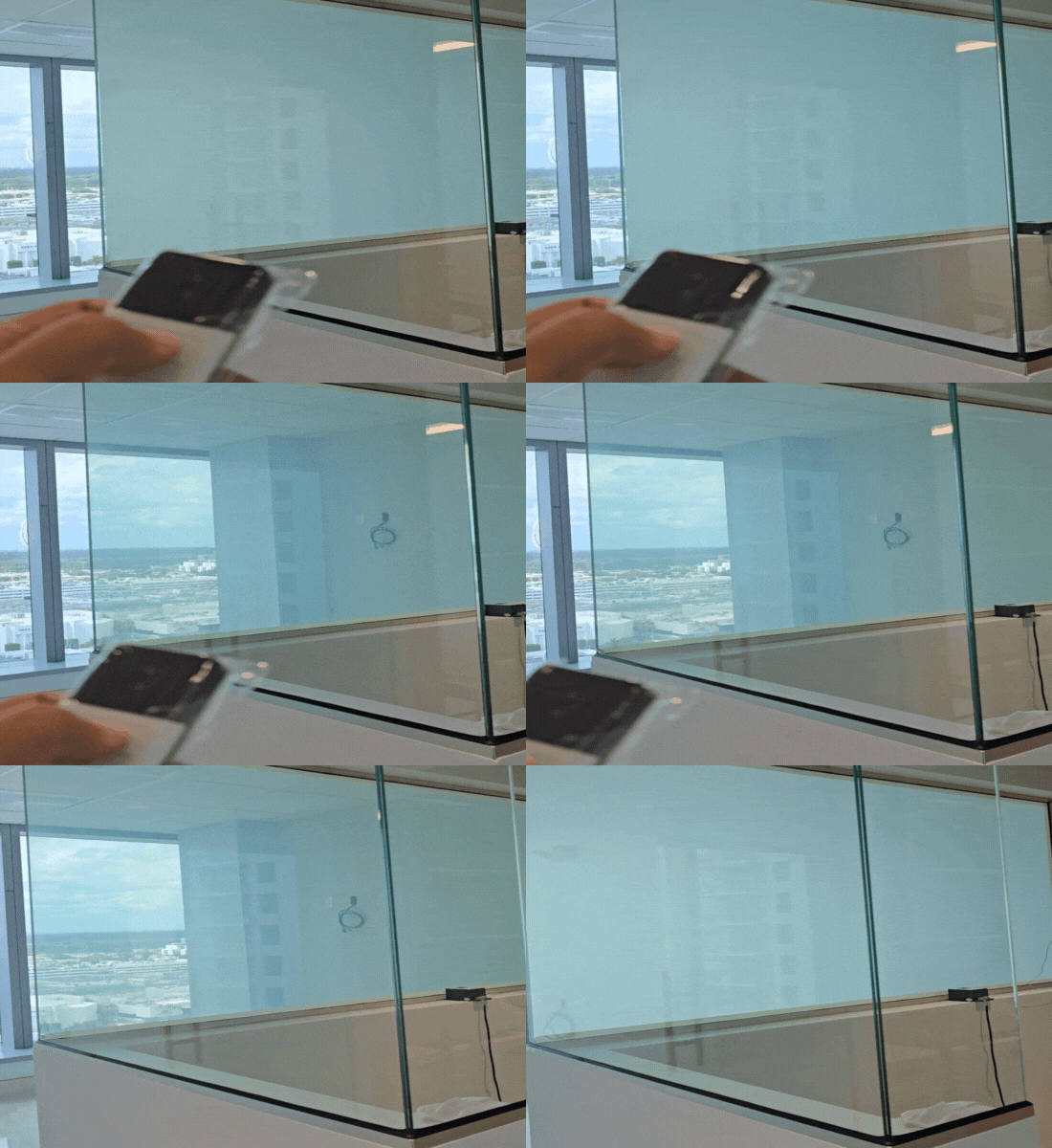
Smart Film Cost in Los Angeles
One of the most common questions we get is about pricing.
Typical Cost Range:
- $25 to $100 per square foot
Factors That Affect Cost:
- Type and quality of smart film
- Size of the glass area
- Installation complexity
- Electrical setup requirements
Compared to replacing glass entirely, smart film is a much more affordable solution.
The Pacific Smart Glass LA Difference: Local Expertise, Global Quality
Most of our clients come to us after comparing multiple options and realizing that the difference isn’t just the film, it’s how it’s installed and supported. We focus on long-term performance, not just completing the installation.
- Local LA Presence & Expertise: Our Pacific Smart Glass team understands the distinct needs and architectural nuances of Los Angeles homes and businesses.
- Certified Installation Specialists: Our team of professional and experienced installers guarantees a flawless application every time.
- Premium Quality Smart Film
- Custom Solutions: From custom shapes to advanced control systems, Pacific Smart Glass tailors each dimmable glass film project to meet your precise specifications.
- Dedicated Customer Support
- Fast Lead Times
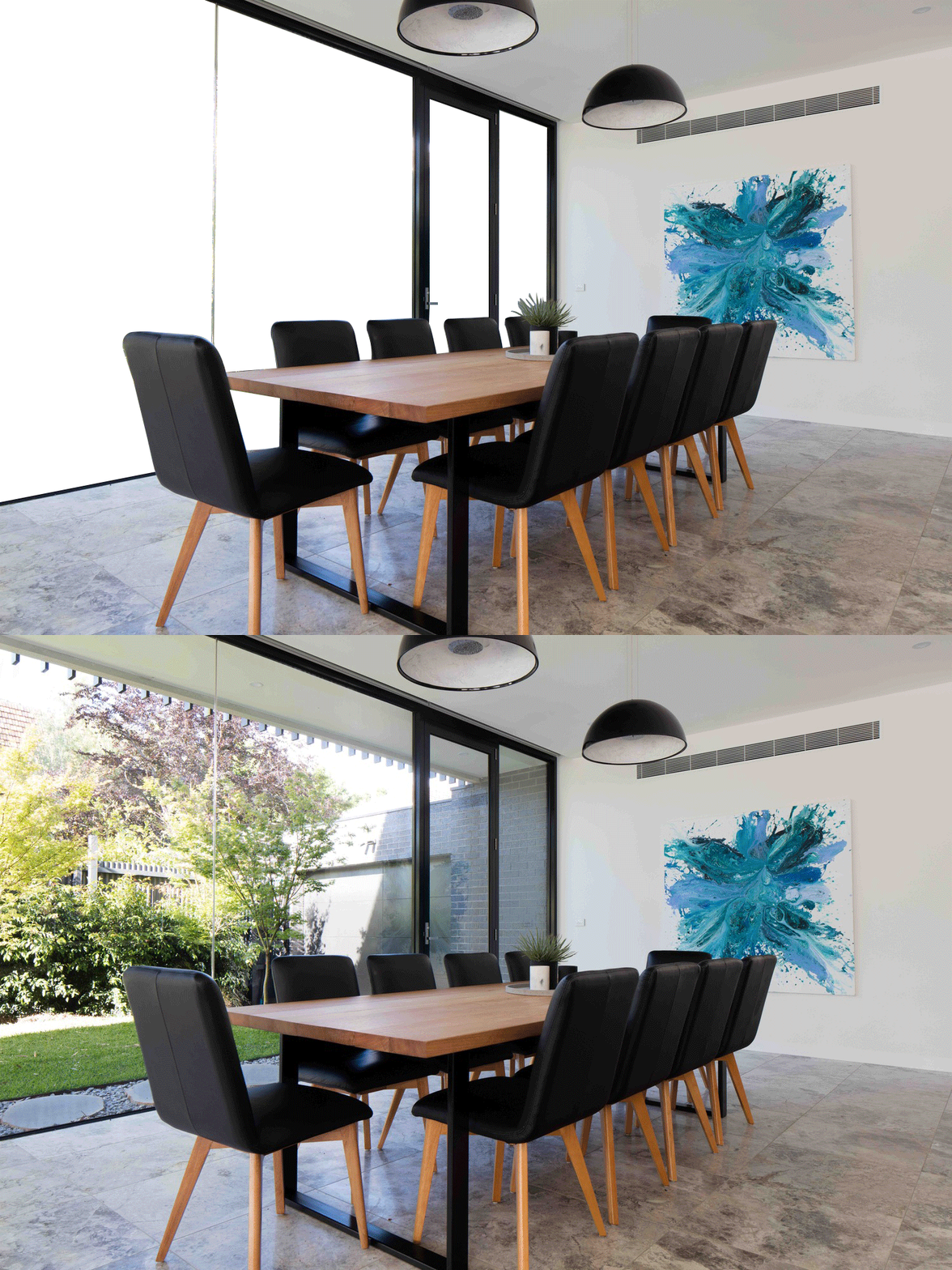
- Smart Glass Benefits
Why Choose Smart Glass?
- Instant Privacy
- Space-Saving
- Modern Aesthetic
- UV Protection
- Energy Efficiency
- Easy Integration
- Low Maintenance
- Enhanced Safety
- Smart Glass Benefits
Common Problems We Fix in Existing Smart Film
One of the most common issues we see is uneven opacity, where parts of the glass appear clearer than others. This usually happens when low-quality film is used or when the electrical load isn’t properly distributed.
Another issue is edge peeling, which often starts within months if the installation wasn’t sealed correctly. These are not product failures—they’re installation mistakes.
- See Our Review
What Our Clients Say About Us
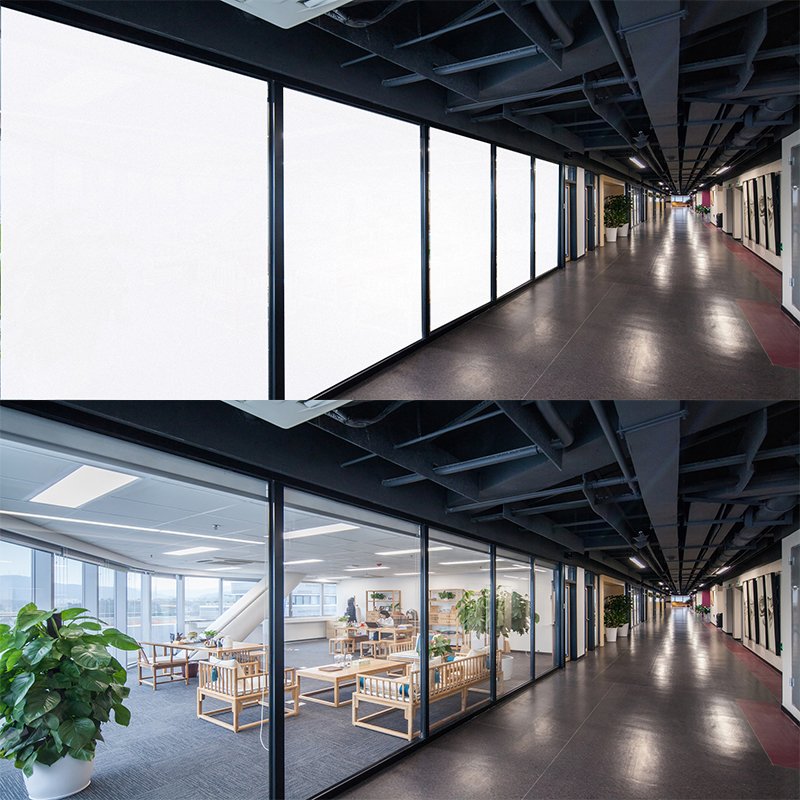
Our office looks modern and sleek
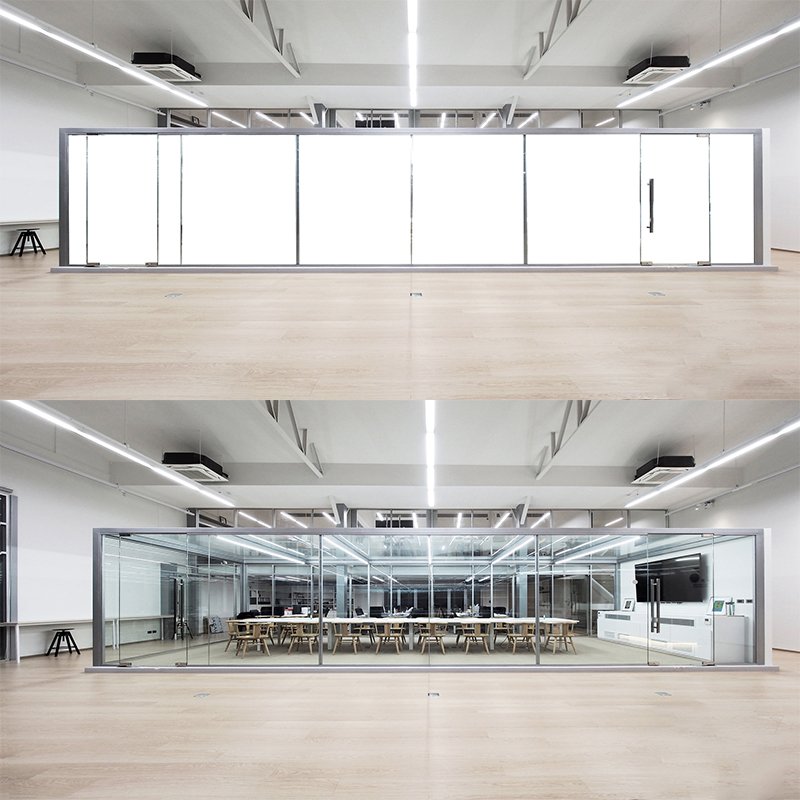
Impressive technology
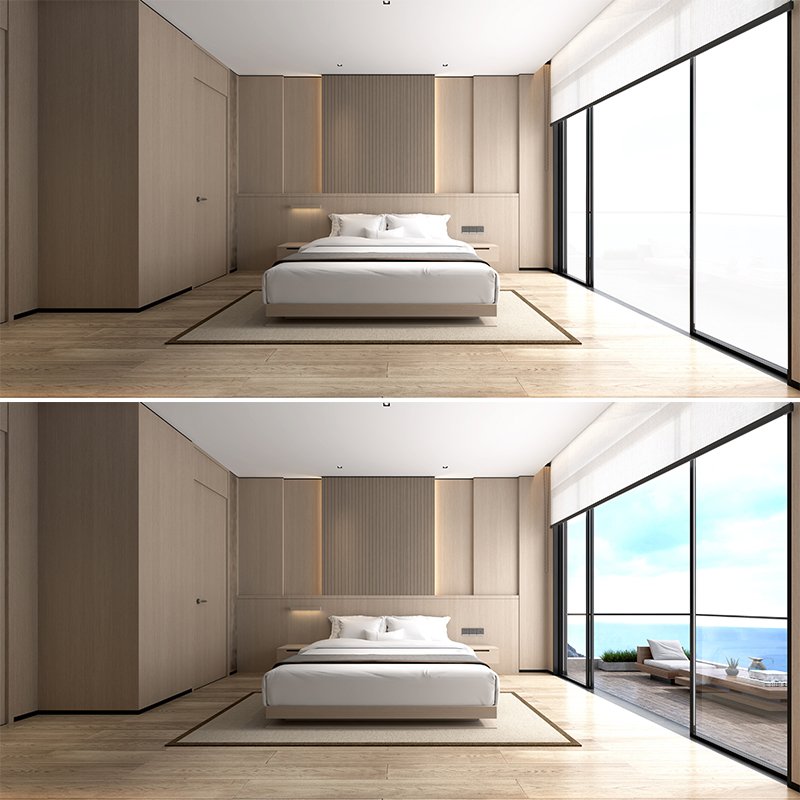
Instant Privacy and Elegance
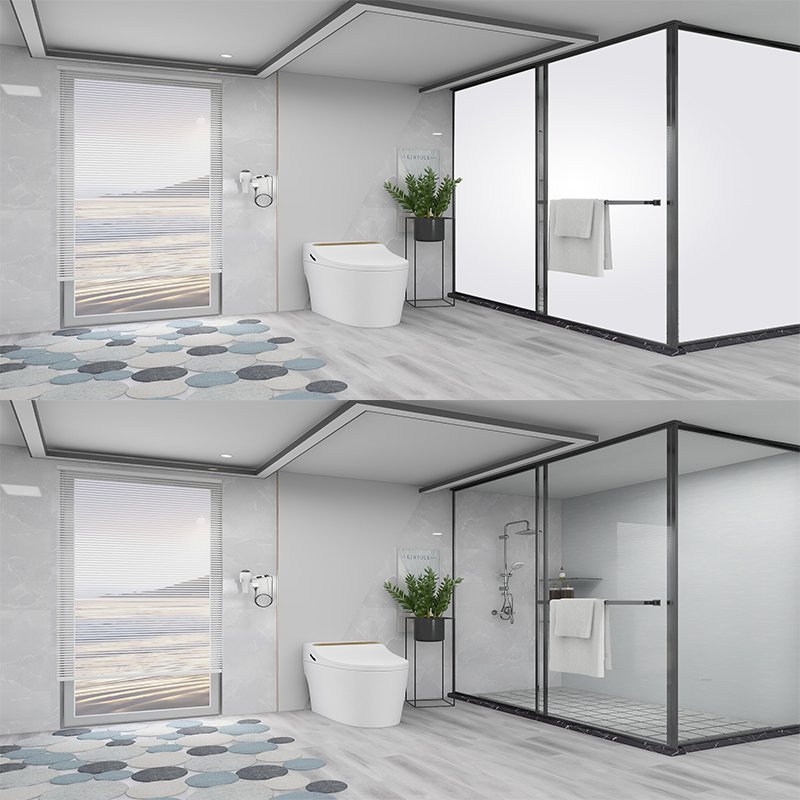
Our workspace has a trendy, modern vibe.
Request For Estimate
Get a quick, no-obligation quote for your smart glass project. Simple, fast, and tailored to your specific needs and requirements.
- FAQ
Frequently Asked Questions
Why does smart film sometimes look slightly hazy instead of perfectly clear?
This usually isn’t a limitation of smart film—it’s a result of either the film quality or how it was installed. High-quality PDLC smart film is designed to be very clear when powered on, but cheaper materials often have a slight milky appearance even in the transparent state.
Another common issue is contamination during installation. Even a small amount of dust between the film and glass can create a permanent visual distortion. This is something most DIY installations or low-cost providers overlook.
In properly installed systems using premium materials, the glass should appear clean and uniform, not cloudy or uneven. If it doesn’t, the issue is almost always in execution, not the concept.
Does smart film stop working after a few years?
It can, but only when the system is poorly designed or installed. The most common failures we see are not in the film itself, but in the electrical setup behind it. Weak connections, unstable voltage, or incorrect transformers can slowly degrade performance.
In Los Angeles specifically, heat exposure also plays a role. Windows that face direct sunlight for most of the day can stress lower-grade films over time.
When the right film is paired with proper wiring and installed with heat conditions in mind, smart film typically lasts close to a decade or more without performance issues. Longevity depends far more on installation quality than most buyers realize.
Why is there a delay or inconsistency when switching the film on and off?
Smart film should switch almost instantly. If there’s a delay, it usually points to a power distribution issue rather than a product defect.
In larger installations, especially in offices or storefronts, the electrical load needs to be calculated correctly. If the system is underpowered or unevenly distributed, some sections may respond slower than others.
This is why professional installations involve more than just applying film. The electrical design is just as important as the material itself, and when done correctly, the transition from clear to opaque feels seamless.
Is smart film really better than traditional blinds or curtains?
This depends on what you value more: initial cost or long-term functionality. Blinds and curtains are familiar and cheaper upfront, but they introduce ongoing issues—dust accumulation, wear and tear, and visual clutter.
Smart film solves a different problem. It removes physical barriers entirely and replaces them with a clean, architectural solution. In design-focused areas like Los Angeles, this shift is one of the main reasons property owners choose smart film. It’s not just about privacy—it’s about maintaining a modern, uninterrupted space.
Over time, many users find that the convenience and aesthetics outweigh the higher initial investment.
Can smart film handle the heat and sunlight in Los Angeles?
This is one of the most practical concerns, and it’s valid. Not all smart film performs well under strong UV exposure. Standard films can degrade if they’re installed on glass that receives intense, direct sunlight throughout the day.
In Los Angeles homes and commercial spaces, especially those with large glass surfaces, this becomes a critical factor. The solution is not avoiding smart film, but choosing the right type.
Heat-resistant and UV-stable films are specifically designed for these conditions. When installed correctly, they perform reliably even in high-exposure environments. The key is matching the material to the location, something many low-cost providers ignore.
Why do some installations start peeling or forming bubbles?
When smart film fails visually, it’s almost always due to installation errors. The process requires precise surface preparation and controlled application. If the glass isn’t cleaned properly or if the film is applied too quickly, air pockets and adhesion issues appear over time.
Peeling at the edges is another common sign of poor sealing. Once that starts, the lifespan of the installation drops significantly.
In professional setups, the glass is treated thoroughly before installation, and the film is applied in a way that prevents trapped air and ensures long-term bonding. When done correctly, the film remains stable and smooth for years.