
By late afternoon, the house is still doing exactly what you designed it to do. Light moves cleanly through the glass, the sightlines stay open, and nothing bulky interrupts the architecture. Then evening settles in, a lamp turns on, and the same window that felt effortless all day suddenly feels a little too revealing. We see that shift often in homes: the problem is not bad design or not enough glass. It is that privacy is only needed at certain hours, and the usual fixes ask you to live with the compromise all day.
That is the real residential smart film question. Not whether the technology is interesting, but which glass surfaces in a home actually benefit from switchable privacy, and which ones do not. In the right places, smart film is a clean, elegant upgrade. In the wrong places, it can be more solution than the room really needs.
Before getting deep into product details, we usually encourage homeowners to screen the project by use case. Smart film tends to earn its premium when privacy is important, but only some of the time, and when the glass is part of the design language of the home.
- Your glass looks best uncovered most of the day, but feels exposed at night or during specific moments.
- You want privacy without adding blinds, curtains, or permanent frosting.
- The opening is design-sensitive, hard to cover neatly, or visually central to the room.
- You are remodeling and want to keep the existing glass or preserve a minimal look.
- You need a fast change from clear to private rather than an all-day privacy treatment.
If that sounds like your bathroom window, bedroom glass, entry sidelight, or an interior partition, smart film is worth a serious look. If you already know a window should stay covered most of the time anyway, a simpler treatment may be enough.
What smart film changes in a home
In residential terms, smart film turns a piece of glass from clear to opaque on demand. That matters because it solves a timing problem, not just a visibility problem. Traditional frosted film gives you privacy all the time. Blinds and curtains give you privacy when closed, but they also add hardware, fabric, stack, and visual interruption. Smart film lets the glass stay visually open until the moment privacy is actually needed.
For homeowners, that difference is as much architectural as functional. A bright bathroom can stay bright. A front entry can remain welcoming. A bedroom can keep a cleaner, less layered look. In Southern California homes especially, where large openings and daylight are often part of the appeal, that ability to preserve openness is usually the reason smart film makes sense in the first place.
Where it tends to be most worth it
Bathrooms and shower-adjacent glass
This is often the strongest residential use case. Bathroom glass can be beautiful in daylight and uncomfortable after dark, especially when the window faces a neighbor, side yard, or a close property line. Static frosted film solves the exposure, but it also makes the glass private all day whether you need that or not. Curtains and blinds can feel out of place in a wet area or interrupt a clean bathroom design.
Smart film works best here because privacy needs are immediate and predictable. You may want full light in the room most of the day, then instant privacy when showering, dressing, or using the space at night. If the bathroom design leans modern and uncluttered, switchable privacy usually feels far more integrated than adding a conventional covering later.
Bedroom glass that feels open by day and exposed by night
Not every bedroom window needs smart film. Many standard bedroom openings are handled perfectly well with shades or drapery, especially if blackout control is already part of the plan. Where smart film stands out is on design-forward bedroom glass that people do not really want to cover all the time: sidelights, narrow privacy-sensitive windows, glass between a bedroom and bath, or select panels in a primary suite where openness is part of the experience.
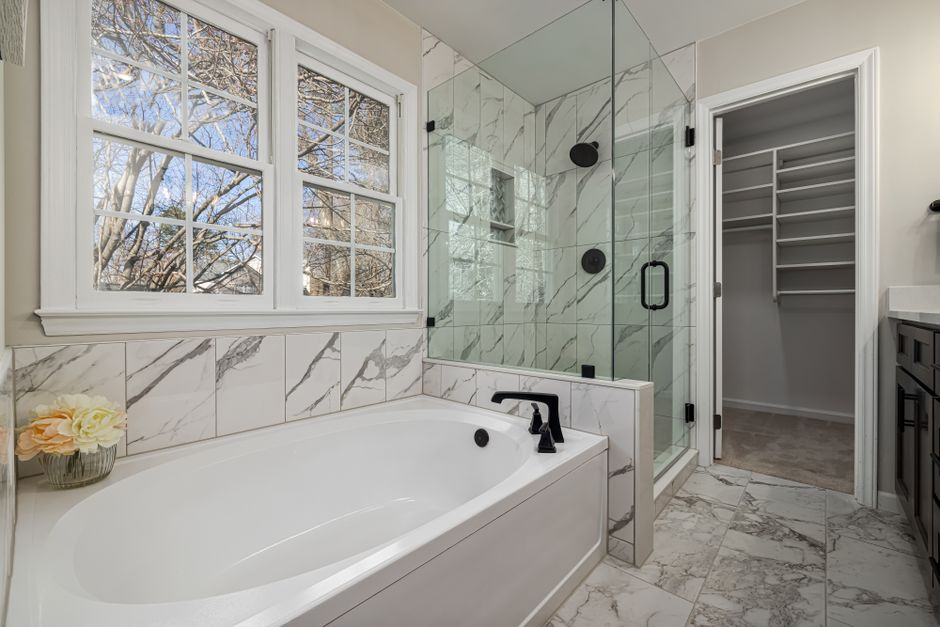
In those spaces, the value is not just privacy. It is keeping the room from looking over-treated. If you are already planning layered window coverings for darkness and sleep, smart film may be unnecessary. But if the glass is there to make the room feel larger, brighter, or more custom, and privacy is only occasionally the issue, this is a stronger fit.
Front entries and sidelights
Entry glass is one of the most common places where homeowners feel the tension between openness and exposure. You want natural light in the foyer. You may like seeing out to the front walk. But after sunset, a clear sidelight or door-adjacent panel can make the home feel more visible than you intended.
Smart film can be especially compelling here because the glass often plays a major role in curb appeal and interior brightness. Permanent frosting changes that look full time. Traditional coverings can feel awkward on narrow or custom-shaped entry glass. When privacy needs change with daylight and occupancy, switchable film gives the entry a cleaner answer.
Large sliders and select glass openings near living areas
This is a high-value use case in some homes and an unnecessary upgrade in others. We are not talking about every slider in a house. Large patio doors often still need broader strategies for light management, and if the goal is mostly shade or heat reduction, smart film is not the first tool we would use. But there are living-area openings where privacy is the real issue: a dining space that faces nearby homes, a lounge opening near a pool, or a glass panel that feels too exposed only at certain times.
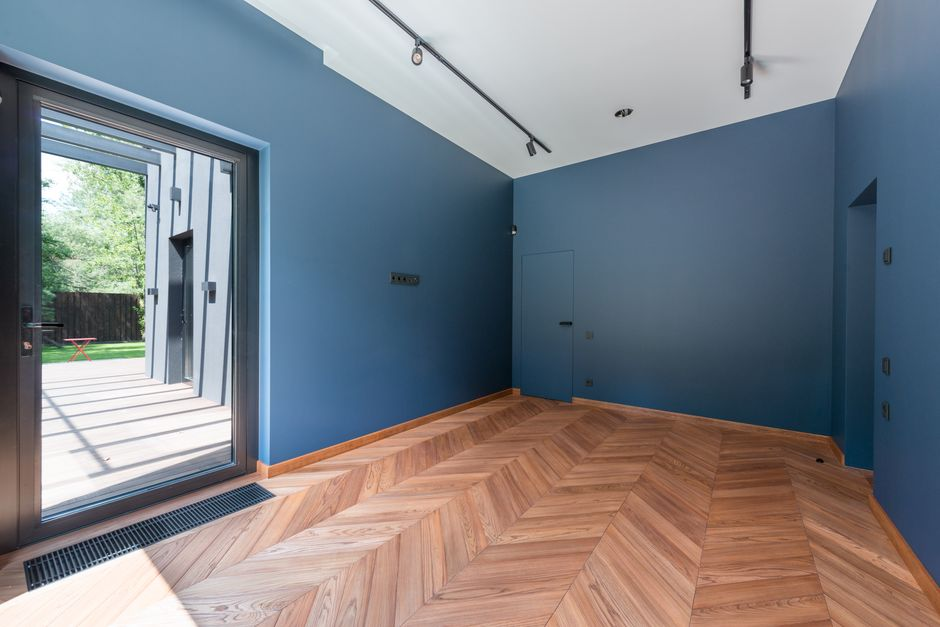
In those cases, smart film can outperform blinds or curtains because it preserves the clean indoor-outdoor feel when clear. The key is restraint. We usually advise homeowners to think selectively here rather than trying to convert every large opening into a privacy-on-demand surface.
Interior partitions and home offices
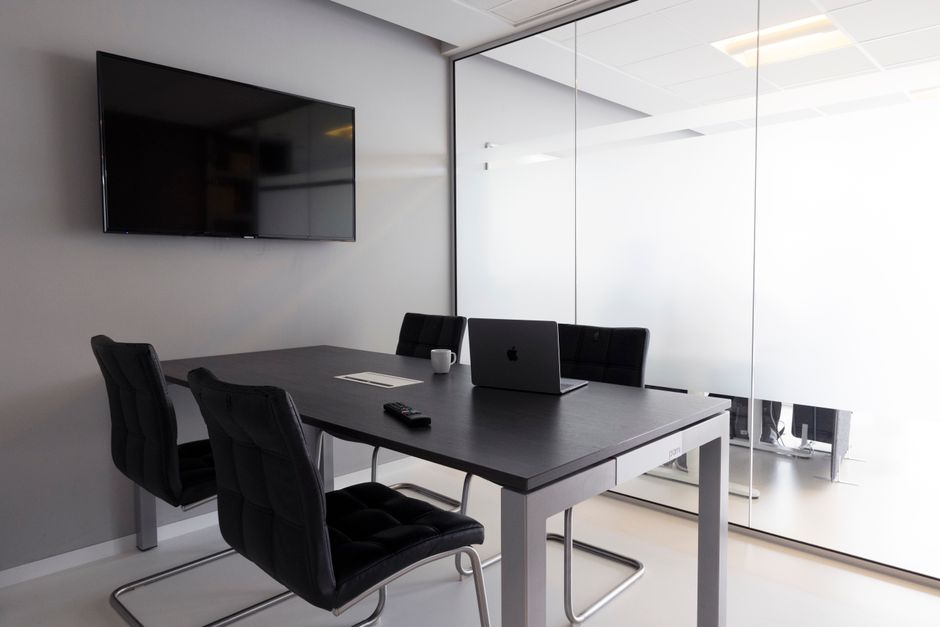
As homes take on more work, wellness, and multi-use functions, interior glass is becoming a better candidate for switchable privacy. A home office, gym, studio, or partition near a primary suite may look best with glass left open most of the time, but still need separation during calls, guests, or changing routines.
This is where smart film can feel especially elegant. Instead of choosing between openness and enclosure, you get both depending on the moment. For homeowners who want a contemporary interior without constantly managing shades or doors, interior smart film is often one of the most satisfying uses.
When it beats blinds, curtains, and standard privacy films
We do not position smart film as the right answer for every window treatment decision. Its advantage is specific. It wins when a space benefits from being open, bright, and visually clean most of the time, but still needs privacy instantly on command.
Compared with blinds or curtains, smart film removes the hardware, stacking, dust-catching surfaces, and visual clutter that can work against a minimalist room. Compared with static frosted film, it avoids solving a part-time privacy problem with an all-day opaque finish. Compared with one-way privacy film, it is much more dependable for day-and-night use, because one-way solutions typically depend on lighting conditions and are not the same thing as true on-demand privacy.
- If you need privacy only sometimes, smart film is usually the more elegant answer.
- If you need blackout, softness, or decorative layering, conventional coverings may still belong in the room.
- If the glass should stay private all the time, static frosting can be the simpler choice.
- If your main issue is glare or solar heat, smart film should not be treated as a full substitute for dedicated solar-control strategies.
That balance matters. The best smart film projects are rarely about replacing every other treatment in the house. They are about identifying the few places where those treatments always feel like a compromise.
Where it may not be worth the upgrade
Some homeowners benefit more from hearing the non-fit cases than from hearing another list of features. If a room already needs drapery for softness, blackout, or acoustics, smart film may be redundant. If a window is small, secondary, or easy to cover without affecting the room, the design payoff may not justify the investment. And if your main frustration is harsh sun, room heat, or screen glare, there may be other glass or film strategies that deserve priority first.
Budget should be part of the decision too. Smart film is a premium upgrade, so we typically recommend using it where the privacy problem is recurring, the glass is visually important, and a conventional covering would noticeably detract from the space. That selective approach tends to create a better result than trying to force the product into marginal applications.
Practical fit questions before you move forward
Residential buyers usually want to know whether they can keep the existing glass. In many projects, yes, smart film can be applied to suitable existing glass rather than requiring a full replacement. That can make it especially appealing during remodels where the opening already works and the goal is to upgrade privacy without redesigning the space.
That said, retrofit does not mean zero planning. Power and wiring still need to be coordinated, and the cleanest outcomes usually come when the electrical path is considered early. We also like to set realistic expectations about appearance. Smart film is clear in its transparent state and opaque in its private state, but homeowners should understand that switchable privacy products are not identical to standard untreated glass in every lighting condition.
Just as important, smart film is not a cure-all for every comfort issue. It is a privacy technology first. In sunny Southern California homes, that distinction matters. If the room also struggles with heat or glare, we want to evaluate that honestly as part of the larger glass strategy rather than overselling one product to do every job.
Common homeowner questions
Does smart film provide privacy at night?
Yes, when switched to its opaque state, it is designed to create privacy on demand, including at night. That is one of the biggest residential advantages over one-way privacy film, which depends heavily on lighting conditions.
Will it look the same as regular clear glass when off?
It is intended to maintain a clean, clear appearance in everyday use, but it should not be thought of as invisible in every possible condition. We always prefer to discuss appearance expectations in the context of the actual room, glass type, and viewing conditions.
Is it a good fit for bathrooms?
Very often, yes. Bathrooms are one of the best use cases because they tend to need privacy at specific times while still benefiting from daylight and a clean, minimal finish the rest of the day.
Can it work on existing residential glass?
In many cases, yes. Retrofit potential is one of the reasons homeowners consider smart film during renovations. The right answer depends on the existing glass condition, the installation details, and how power will be brought to the opening.
Does it replace blinds or curtains everywhere?
No. We usually see it as a selective upgrade, not a whole-house replacement for every treatment. Some rooms still need blackout, softness, or solar control solutions that smart film is not meant to replace by itself.
Is maintenance complicated?
Not typically, but it is still a specialty glass upgrade and should be treated accordingly. Proper installation matters, and we guide homeowners on realistic care and use expectations for the finished surface.
If you are looking at a bathroom window, entry sidelight, bedroom panel, interior partition, or another privacy-sensitive glass surface in a Southern California home, we can help you decide whether smart film is a strong fit or more upgrade than you need. At Pacific Smart Glass, we prefer that kind of room-by-room conversation, because the best projects are the ones where switchable privacy clearly earns its place.