
The room looks perfect right up until the moment it doesn’t. A bathroom window starts to feel exposed at dusk, a conference room needs instant privacy before a meeting, or a glass entry panel that felt airy all day suddenly feels too open after sunset. In spaces like these, the usual fix is to pull a blind, close a curtain, or live with frosted glass full time—and that often means losing the daylight, views, and clean lines that made the room appealing in the first place.
That is where electric privacy glass comes in. We use the term for glass that can switch from clear to private on demand, giving you visibility when you want openness and opacity when you need separation. For many homes, offices, healthcare spaces, and design-driven interiors, it solves a very specific problem: privacy is not needed all day, so the solution should not behave like it is.
See how privacy-on-demand could work in your space
If blinds or frosted film feel like a compromise, explore switchable glass and smart film solutions designed to keep daylight, views, and clean lines intact.
Most people do not start by looking for advanced glass technology. They start with a familiar frustration: the room needs to do two jobs. It should feel bright, open, and connected most of the time, but it also needs privacy at certain hours or in certain moments. Static solutions can handle one side of that equation, but not both very gracefully.
Blinds and curtains are effective at blocking views, but they also block a lot of the openness. In a bright Southern California-style space, that can change the whole mood of a room. A clean bathroom gets busier. A minimalist office starts to feel more closed in. A glass partition that was supposed to make a space feel modern ends up acting like a wall the moment the covering is drawn.
Always-frosted glass and standard privacy film solve privacy in a different way: they make the glass private all the time. That can work well when permanent screening is exactly what you want. But when the real need is flexibility—private now, clear later—that permanence can feel limiting. You keep the daylight, but you give up transparency, views, and the ability to make the space feel open when privacy is not necessary.
We see this tension often in bathrooms, street-facing entries, conference rooms, treatment areas, and interior partitions. The issue is rarely just privacy by itself. It is privacy without making the room darker, heavier, dustier, or visually cluttered.
What electric privacy glass actually is
In plain English, electric privacy glass is glass or glass-based material that changes appearance when powered. The version most people mean is switchable privacy glass: clear when turned on, opaque when turned off, or vice versa depending on the system configuration. Instead of adding a separate window treatment, the glass itself becomes the privacy control.
That matters because the user experience is simple. You press a switch, tap a control, or use an integrated system, and the panel changes state in seconds. You are not covering the glass with something else. You are changing the function of the glass already in the space.
When people hear technical terms like switchable glass or PDLC, the concept can sound more complicated than it really is from a decision standpoint. The important thing is not memorizing the acronym. The important thing is understanding what the technology lets you do: keep a room open and light-filled when you want that feeling, then create privacy without dragging the whole design backward.
How the switching effect works without the jargon overload
The most common type of electric privacy glass in this conversation uses a switchable layer between materials that respond to electricity. When power is applied, that layer aligns in a way that lets light pass through more clearly. When the power state changes, the layer scatters light, and the panel turns opaque or frosted-looking to create privacy.
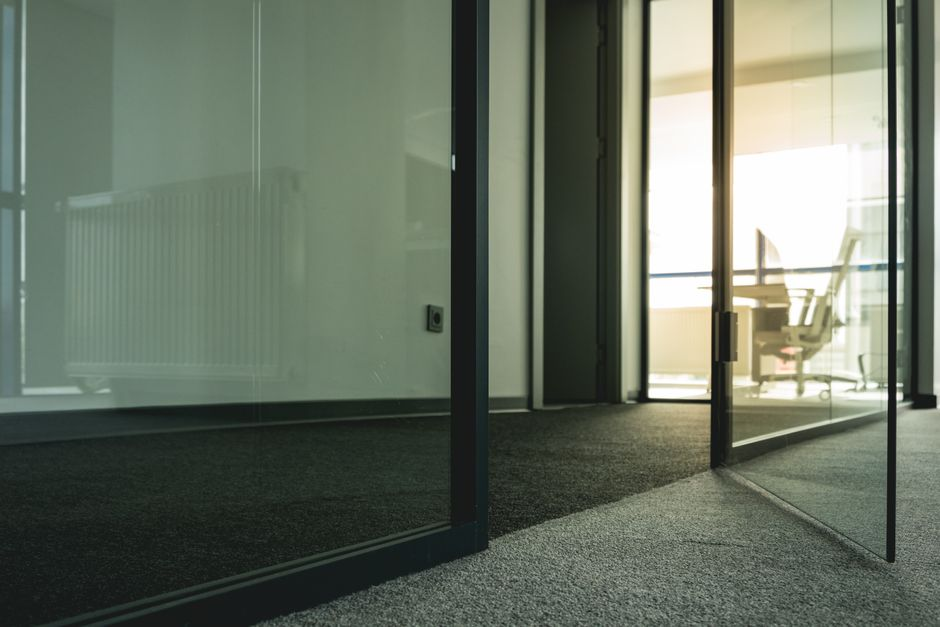
From the user side, the experience is much simpler than the science. One moment you have a clear partition, window, door lite, or enclosure panel. The next moment you have privacy. That is why this technology is so useful in rooms where needs change throughout the day rather than staying fixed.
We think that distinction matters more than the terminology. Electric privacy glass is not just about novelty. It is about replacing a static answer with a dynamic one. If a room needs to shift between open and private use, the glass can shift with it.
What sets it apart from blinds, curtains, and privacy film
The best comparison is not “which option exists,” but “which option matches the way the room actually functions.” Electric privacy glass tends to stand out when flexibility, clean sightlines, and daylight retention matter as much as privacy itself.
- Privacy flexibility: Electric privacy glass changes on demand. Blinds and curtains open and close, but they add a physical layer and alter the room more dramatically. Standard privacy film and etched glass stay private all the time.
- Daylight and openness: Smart glass preserves a brighter, more open feel when clear. Curtains and many blind setups can make spaces feel shut in. Permanent frosting keeps light but gives up visibility all day.
- Aesthetics: For modern homes and commercial interiors, switchable glass creates a cleaner look because the privacy function is built into the glazing instead of hanging on top of it.
- Maintenance: Fabric curtains and many blind systems collect dust and add surfaces to clean. Glass-based privacy solutions typically support a simpler maintenance routine.
- Retrofit fit: Smart film can be a practical path when you want a switchable effect on existing glass. Full smart glass is often the stronger fit for new construction, major remodels, or projects where the glazing is being specified from the start.
- Best-use situations: If privacy needs change often, electric privacy glass usually has the advantage. If you need a low-cost, permanent screen and do not care about switching back to clear, conventional film or coverings may be enough.
That does not mean blinds, curtains, or privacy film are wrong. It means they solve different versions of the problem. If the room only ever needs one privacy setting, simpler treatments may be perfectly reasonable. If the room needs to adapt, static options tend to show their limits quickly.
Where on-demand privacy makes the most sense
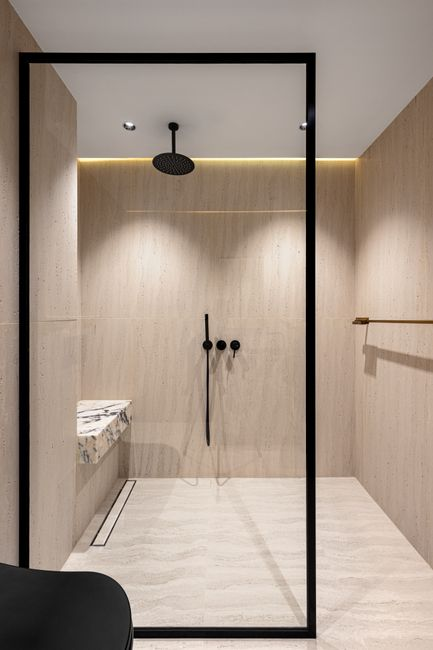
In residential spaces, the strongest use cases usually involve rooms that benefit from daylight but feel too exposed at certain times. Bathrooms are the obvious example, especially where natural light is valuable but permanent coverings make the room feel smaller. Bedrooms with street-facing glass, entry sidelites, interior home office partitions, and shower enclosures can also benefit when the goal is to keep the architecture light and open without sacrificing comfort.
In offices, the appeal is often operational as much as aesthetic. A conference room can stay visually open between meetings, then turn private when a confidential conversation starts. Executive offices, huddle rooms, and glass partitions can support a more connected workplace without forcing people to choose between transparency and discretion. In design-forward commercial interiors, that flexibility can feel much more intentional than a row of pulled blinds.
Healthcare spaces have their own logic. Treatment rooms, consultation areas, and patient-facing environments often need privacy that feels clean, controlled, and easy to manage. In those settings, reducing reliance on fabric-based dividers or dust-catching coverings can be part of the appeal, alongside the more modern patient experience.
For architects, designers, and contractors, electric privacy glass is often compelling where the design intent depends on glass doing more than one job. A partition may need to define space without making it feel boxed in. A storefront or interior feature may need moments of privacy without giving up a sleek visual language. In those projects, switchable glass is less about gadgetry and more about preserving the concept.
How we help decide whether the upgrade is worth it
We usually start with one practical question: does the space need privacy sometimes, or does it need privacy all the time? If the answer is “sometimes,” that is where electric privacy glass becomes much more interesting. It earns its place when the room benefits from switching between openness and separation instead of staying permanently screened.
It is also worth serious consideration when the current privacy method is actively undermining the design. If blinds darken a bright room, if curtains feel bulky, if permanent frosting gives up views you would rather keep, or if a glass partition only works with a covering that makes it look less intentional, then on-demand privacy may solve more than one problem at once.
Smart film can be the better path when you want that switching effect but are working with existing glass and looking for a retrofit-oriented solution. Smart glass can make more sense when the glazing itself is part of a new build, a remodel, or a larger architectural scope. We do not treat those as interchangeable by default; the right fit depends on the glass condition, the design goals, and how integrated you want the final solution to be.
And sometimes the honest answer is that a simpler privacy treatment is enough. If a window should always stay obscured, if budget is the main driver, or if the space does not gain much from switching back to clear, a conventional option may do the job. The key is matching the solution to the real privacy pattern rather than assuming every project needs the most advanced version available.
Common questions we hear
Does electric privacy glass replace blinds in every situation?
No. It is strongest where privacy needs change and where preserving daylight, openness, and clean sightlines matters. In some rooms, blinds or curtains may still serve other goals, but for privacy-on-demand, switchable glass often provides a more seamless answer.
Is smart film the same thing as smart glass?
Not exactly. They create a similar privacy effect, but they are different formats. Smart glass is typically specified as part of the glass assembly itself, while smart film is often used as a retrofit approach on existing glass. Which one makes more sense depends on the project conditions.
Can it be used only for interior glass?
No. Electric privacy solutions can be relevant for both interior and certain exterior-facing applications, depending on the design intent and project requirements. The right recommendation depends on the location, the glass type, and how the space is used.
Is it mainly for offices, or does it make sense in homes too?
It makes sense in both. Offices often use it for conference rooms and partitions, but homes can benefit just as much in bathrooms, bedrooms, entries, and other spaces where privacy needs shift during the day.
If you are weighing privacy, daylight, and design at the same time, that usually means the decision is not really about glass alone. It is about how the space needs to behave. We help clients think through that fit carefully, whether the right answer is switchable glass, smart film, or a simpler approach. When the goal is privacy without losing openness, PacificSmartGlass can help match the technology to the room instead of forcing the room to adapt to a static workaround.
Ready to upgrade to electric privacy glass?
PacificSmartGlass helps homeowners, offices, healthcare spaces, and design teams choose the right fit—whether that means smart glass, smart film, or a retrofit-friendly approach.