
Quick Answer: Smart film nursery Los Angeles installations typically cost $1,400–$3,800 depending on window size and count, and it’s a better fit than blackout curtains for most converted bedrooms because it doesn’t trap dust or allergens. Most single-nursery installs take one day, and you switch light control with a wall switch or app instead of pulling fabric shut.
Turning a spare bedroom into a nursery in Los Angeles almost always brings up the same problem: how do you block afternoon glare and street light without hanging heavy curtains that collect dust right where your baby breathes? Smart film solves this directly. It’s a thin, switchable laminate applied to your existing window glass that turns from clear to opaque with the flip of a switch, giving you nap-time darkness without fabric, rods, or a dust magnet six inches from the crib. In Los Angeles, where converted bedrooms and back-of-house additions are the two most common nursery layouts, this matters because so many of these rooms already have limited air circulation. This guide walks through real cost numbers, how smart film compares to curtains and smart glass, permit questions specific to Los Angeles homes, and how to find an installer who actually knows nurseries. Get a free estimate from a licensed Los Angeles smart film installer before you commit to a curtain rod you’ll regret.
How Much Does Smart Film Cost for a Los Angeles Nursery?
Smart film for a single nursery window in Los Angeles runs $700–$1,600 per window installed, with most full-room jobs landing between $1,400 and $3,800 depending on how many windows you’re covering and whether you add a smart glass panel for a door or interior window. That’s a fraction of what whole-home smart glass conversions cost, which is part of why it’s become the go-to for single-room nurseries.
Cost depends mainly on square footage, the type of film (manual switch vs. app-controlled), and whether your window has any unusual shape or a French door that needs custom cutting. A typical Los Angeles nursery has one or two standard double-hung or sliding windows, which keeps the job simple and the price predictable.
| Nursery Window Setup | Estimated Cost | Typical Install Time |
|---|---|---|
| Single standard window (24–36 sq ft) | $700–$1,600 | 2–4 hours |
| Two windows, standard nursery | $1,400–$2,900 | Half day |
| Nursery with sliding door or bay window | $2,200–$3,800 | Full day |
| Whole-room upgrade with app control hub | $3,000–$4,500 | Full day |
A homeowner converting a bedroom in the Mar Vista neighborhood recently had smart film installed on a single west-facing window in their new nursery for $1,150, because the room got direct afternoon sun that made nap time nearly impossible without blocking it completely. Their situation is a common one in Los Angeles: a west or south-facing bedroom that becomes a nursery gets far more usable light control from film than from a curtain that only partially blocks the glare around the edges. For a detailed room-by-room breakdown across different window types, our smart film cost guide for Los Angeles homes covers pricing for bathrooms, bedrooms, and additions side by side.
Why Smart Film Beats Blackout Curtains for a Baby’s Room
Smart film beats blackout curtains for a nursery because it controls light without fabric, rods, or the gaps around the edges that let sunlight leak in during nap time. Curtains also require pulling and adjusting by hand, which isn’t practical when you’re holding a sleeping baby.
Blackout curtains work by layering heavy, light-blocking fabric over a rod. That fabric has to hang somewhere, and in a nursery, that “somewhere” is usually right next to the crib. Curtains also never fully seal a window frame, so you get thin strips of light bleeding in around the sides and top, which is exactly what disrupts a baby’s nap in the middle of the day.
Smart film switches the entire pane from clear to opaque instantly, edge to edge, with no light leak because it’s laminated directly to the glass. You flip a switch or tap an app, and the room goes from bright to blackout in about a second. No cords, no blackout liners sagging over time, and no fabric that needs washing every few months as it collects dust and pet hair.
There’s also the practical daytime issue. Curtains left closed all day make a nursery feel like a cave, and parents often end up opening them just to get some daylight in, which defeats the purpose. Smart film lets you keep the room bright and cheerful during awake time, then switch to full opacity in seconds before nap time, without walking across the room to yank a cord.
Is Smart Film Safer Than Fabric Curtains for Allergy-Prone Infants?
Yes. Smart film has no fabric surface, so it doesn’t trap dust, pollen, or pet dander the way blackout curtains do, which makes it a meaningfully better choice for allergy-prone infants and babies with sensitive respiratory systems.
Fabric curtains, especially the thick blackout kind, are one of the most overlooked dust reservoirs in a bedroom. They hang for months, catching airborne particles, and every time they’re pulled open or shut they release some of that dust back into the air your baby breathes all night. In Los Angeles, where dry Santa Ana wind events kick up dust and pollen for days at a time, that matters more than most parents realize.
Smart film is a hard, wipeable surface. There’s nothing for allergens to cling to, and cleaning it is a quick wipe with a microfiber cloth rather than a trip to the dry cleaner or a delicate wash cycle. For a nursery specifically, that’s a real advantage: fewer surfaces in the room that need constant laundering means fewer chances for allergens to build up between cleanings.
Honestly, most parents don’t think about window treatments as an allergy factor until a pediatrician brings it up. But if you’re already dealing with a baby who has eczema, asthma risk, or general sensitivity, removing one more dust-collecting surface from the room is a small change that adds up. It won’t replace a HEPA air purifier, but it removes one more variable.
Where Do Los Angeles Nurseries Typically Go: Converted Bedrooms vs. Additions?
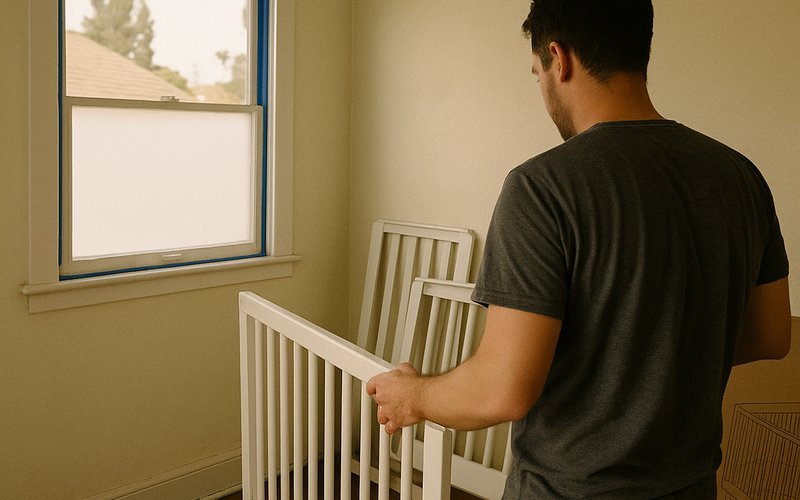
In Los Angeles, nurseries most often go into a converted second or third bedroom in the existing home, though a growing number of families are building small additions or converting garages into nursery-adjacent flex space as home prices push families to stay in place longer.
Neighborhoods like Eagle Rock and Highland Park have a lot of 1920s and 1930s bungalows with smaller original bedrooms, and those rooms often become the nursery simply because they’re closest to the primary bedroom. These older homes frequently have single-pane windows with poor light control to begin with, which is part of why smart film nursery Los Angeles installs are so common in this housing stock specifically: the existing glass isn’t doing the family any favors on its own.
In newer construction or homes with recent additions, particularly in areas with larger lots where a rear addition makes sense, families are building a nursery from scratch with the window placement already in mind. Even then, smart film comes up constantly during design conversations because builders and homeowners want the option to control light without deciding on curtain style before they’ve even used the room.
Either path, converted bedroom or new addition, benefits from the same basic principle: nurseries need flexible light control more than any other room in the house, since naps happen at unpredictable hours throughout the day. Film adapts to both scenarios without requiring structural changes, which is a big part of its appeal for LA’s mix of older bungalows and newer builds.
Smart Film vs. Smart Glass vs. LED Film: Which Fits a Nursery?
For most Los Angeles nurseries, smart film is the right fit because it applies directly to existing windows at a fraction of the cost of full smart glass replacement, while LED film serves a different purpose entirely and isn’t built for light-blocking privacy.
Smart glass involves replacing the window unit itself with switchable glass built into the pane, which gives you a slightly cleaner look and sometimes better long-term durability, but at a much higher cost and with actual window replacement labor involved. That makes sense for a whole-home remodel or a room where you’re already replacing windows anyway, but it’s overkill for a single nursery retrofit.
| Option | Best For | Typical Cost (Single Room) |
|---|---|---|
| Smart Film | Retrofitting existing windows for nurseries | $700–$1,600 per window |
| Smart Glass | New construction or full window replacement | $2,500–$5,500 per window |
| LED Film | Decorative lighting, signage, accent walls | Not suited for nursery light control |
LED film is built for illuminated display surfaces and accent lighting, not for blocking outside light, so it’s not a real contender for a nursery window despite showing up in the same product category. If you’re weighing film against smart glass for a broader remodel beyond just the nursery, our smart film vs. curtains comparison for Los Angeles homes breaks down the tradeoffs in more depth. If you’d like an accurate quote for your specific window setup, a quick consultation will tell you which option actually makes sense for your room.
Do You Need a Permit for Smart Film in a Los Angeles Home?
No. In Los Angeles, applying smart film to existing residential windows does not require a permit because it’s considered a surface-level modification, not a structural or electrical change to the building.
The Los Angeles Department of Building and Safety (LADBS) generally only requires permits for work that alters a window opening, changes structural framing, or involves new electrical circuits. Manual smart film, which switches with a simple low-voltage wall switch, falls outside that scope entirely because it’s applied directly to your existing glass without touching the window frame or wall structure.
Where it can get slightly more involved is with app-controlled or hub-connected smart film systems that tie into your home’s Wi-Fi and require a dedicated low-voltage transformer. Even then, this is typically treated as a minor electrical addition rather than a permitted project, similar to installing a smart thermostat, though your installer should confirm this based on your specific setup. If you live in a rent-controlled or historic-designated property in a neighborhood like Angelino Heights, it’s worth checking with your property manager or HOA before installation, since some historic overlay zones have rules about visible exterior modifications, even ones as minor as window film.
Bottom line: for the vast majority of Los Angeles homeowners converting a bedroom into a nursery, smart film installation is a same-day project with no permit application, no inspection, and no waiting period.
How to Find the Right Smart Film Installer in Los Angeles
Look for a Los Angeles installer with direct residential experience, not just commercial storefront or office work, since nursery installs require more precision around trim, outlets, and tight room dimensions.
Ask specifically how many single-room residential jobs they’ve completed versus larger commercial buildouts. A company that primarily does office conference rooms or medical suites may have great technical skills but less practice with the tighter tolerances and finish quality that matter in a small bedroom-turned-nursery. You want someone who can show you actual before-and-after photos from homes, not just commercial spaces.
- Confirm they carry proper licensing and insurance for residential glass and film work in California
- Ask whether the film comes with a manufacturer warranty and what it covers (delamination, bubbling, switch failure)
- Request a firm price before work begins, not a range that gets adjusted on-site
- Ask about turnaround time. A single nursery window should not take more than a day
- Check if they offer both manual switch and app-controlled options so you’re not locked into one system
A good installer will also walk your specific room and tell you honestly whether smart film is the right call versus smart glass or even a hybrid approach, rather than pushing whatever’s easiest to sell. If your project is part of a larger remodel touching multiple rooms, it’s worth asking about a full Los Angeles smart glass and film consultation so you get one coordinated quote instead of piecing together separate contractors room by room. That’s especially useful if you’re also considering film for a nearby bathroom or converting an addition down the line.
If you’re ready to move forward, the smartest next step is getting a real quote based on your actual windows, not a generic online estimate. A licensed Los Angeles installer can walk your nursery, measure your windows, and tell you within a day or two exactly what the job will cost and how it’ll fit your family’s schedule before the baby arrives.