
You can stand in front of a finished glass wall for months without thinking twice about it, and then one meeting, one patient consult, or one evening at home changes the whole equation. The glass itself is not broken. The design still works. What suddenly feels urgent is privacy, and the real question becomes whether that existing glass can be upgraded for switchable privacy without turning the space into a replacement project.
We help people sort through that exact decision at Pacific Smart Glass. In many cases, smart film is the practical answer: it adds privacy on demand to glass that is already in place. In other cases, the better move is to stop forcing a retrofit and step up to full smart glass replacement. The difference usually comes down to the condition of the glass, how the edges are built, where power can go, and how refined you want the final result to look.
Smart film is a switchable privacy film that is applied to existing glass. The type most people mean in this conversation is PDLC film, which changes appearance when power is turned on or off. In everyday use, that means the glass can shift from a private frosted look to a clearer state when you want visibility and daylight.
That is different from smart glass manufactured as a complete glazing product. With smart glass, the privacy technology is built into the glass unit itself. With smart film, we are retrofitting the glass you already have. That distinction matters because retrofit film can be a very efficient way to modernize a built space, but it also means the success of the project depends on the glass and installation conditions already there.
How PDLC smart film behaves on existing glass
At a simple level, PDLC smart film changes how light moves through the surface. When the system is in its privacy state, the film diffuses light so the glass appears opaque or frosted. When power is applied, the film aligns into its clearer state so the opening feels more open and visually connected again.
What that means in real life is important. Privacy mode gives you obscurity, not a blackout wall. You still get light transfer, but direct views are interrupted. In clear mode, the glass opens back up visually, which is why smart film is so attractive in spaces that do not want permanent frosting, blinds, or curtains.
That retrofit approach tends to make sense on surfaces like interior conference room glass, office sidelights, bathroom panels, residential entry glass, clinic partitions, and other already-built openings where people want privacy only at certain moments. In Southern California especially, where daylight and open design are often part of the original appeal, smart film lets a space stay bright without making privacy permanent.
What installation actually involves
The cleanest smart film projects are not just about the film itself. They depend on how well the existing glass can receive it and how neatly the electrical and control details can be resolved. Before we call a retrofit a good candidate, we look at the surface, the edge conditions, the surrounding frame or trim, and the available path for power.
The glass needs to be in suitable condition. If the surface has damage, heavy imperfections, failed coatings, or details that interfere with a smooth application, the final appearance may fall short of expectations. Smart film is not a magic layer that hides every existing issue. Because it sits on the current glass, it can reveal flaws rather than erase them.
Edge conditions matter too. Some openings give us a straightforward way to terminate and conceal the necessary connections; others leave too much exposed or make the finish harder to integrate cleanly. That does not always rule out retrofit film, but it does affect whether the result feels polished or compromised.
Then there is power. Switchable privacy needs a power source and a control method, whether that is a wall switch, remote, or more integrated control plan. In a finished office, clinic, or home, the question is often not whether power exists somewhere in the building. It is whether we can route it to the opening in a way that respects the surrounding finishes and avoids unnecessary disruption.
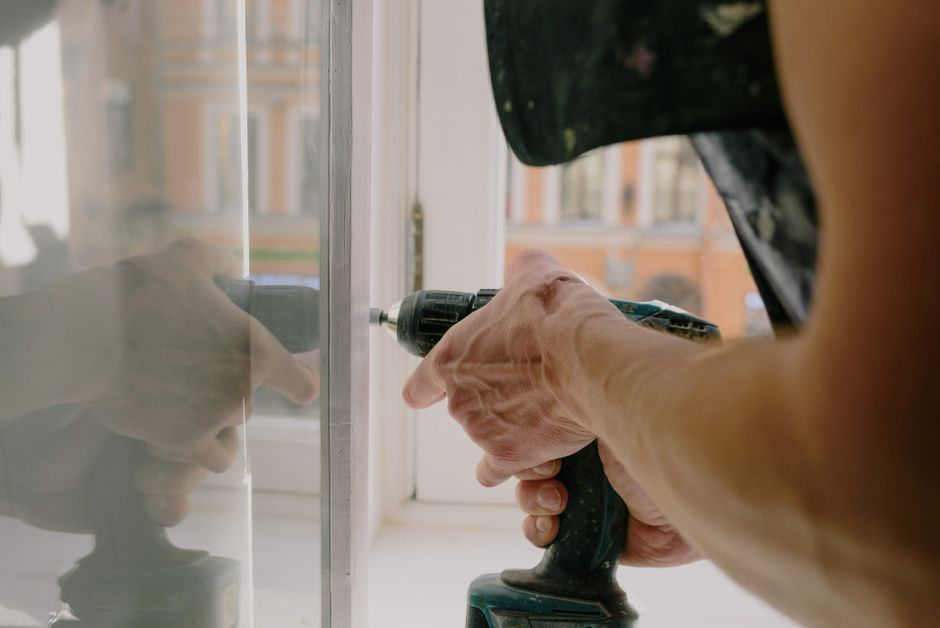
We also want readers to have realistic finish expectations. Smart film can look excellent, but a retrofit is still a retrofit. If your goal is the most seamless, built-in appearance possible, especially on high-visibility architectural glass, replacement smart glass may ultimately deliver the cleaner specification.
How to tell whether your current glass is a strong retrofit candidate
The best retrofit candidates usually have decent existing glass, manageable edge details, and a practical path for wiring and controls. They also tend to be spaces where the main goal is privacy on demand, not a full redesign of the opening.
We often see smart film work well when owners want to preserve the glass they already paid for, keep downtime lower, and avoid a larger glazing scope. That is especially appealing in tenant improvements, occupied offices, healthcare environments that need to stay operational, and homes where the glass itself still fits the design.
On the other hand, some conditions push a project out of the retrofit lane. If the glass is damaged, if the opening needs a more integrated edge finish, if fabrication details are critical, or if the surrounding conditions make power routing awkward, replacement starts to make more sense. The same is true when the project is aiming for a premium architectural result and does not want the compromises that can come with adapting an existing surface.
- Retrofit film is usually the better fit when the current glass is in good shape, privacy is the main goal, and you want less disruption.
- Replacement smart glass is usually the better fit when the opening needs a cleaner integrated build, the glass itself is not an ideal substrate, or the project scope is already moving into custom fabrication.
Where the line is between a smart retrofit and a smart replacement
This is the part many articles skip, but it is the most useful one for buyers. Smart film is not the right answer simply because it sounds easier. It is the right answer when the existing opening gives you a solid base and the project goal is to add privacy-on-demand efficiently.
Once the project starts asking for too many workarounds, the advantage of retrofit begins to fade. If we are trying to overcome poor glass condition, difficult exposed edges, design-driven finish demands, or complicated integration requirements, replacement may stop being the more expensive-looking choice and start being the smarter one.
We look at that threshold as a scope question. Are we upgrading a good existing opening, or are we trying to force an old opening to behave like a purpose-built smart glass assembly? If it is the first scenario, smart film can be an elegant move. If it is the second, full smart glass replacement usually gives a better long-term result.
That is why we approach these projects consultatively rather than treating every glass surface as an automatic film candidate. In homes, offices, healthcare settings, and architectural spaces across Southern California, the right answer is the one that fits the opening, the power path, and the finish expectations from the start.
Quick answers to practical retrofit questions
Does installing smart film mean tearing out the existing glass?
Not usually. The point of smart film is to retrofit glass that is already there. Some projects still need electrical planning or minor surrounding work, but they are typically far less invasive than replacing the glazing.
Can smart film be cleaned like regular glass?
It can be maintained as part of a glass surface, but the right cleaning approach depends on the film and installation details. We always recommend following product-specific care guidance so the finish stays in good shape.
Can it work with simple controls?
Yes. Many installations can be operated by a wall switch or remote, and some projects call for more integrated controls. The best control setup depends on how the space is used day to day.
Can every existing glass surface be retrofitted?
No. That is exactly why feasibility matters. Glass condition, size, exposure, edge detail, and wiring access all affect whether smart film is a strong candidate or whether smart glass replacement is the better path.
If you are looking at glass you already have and trying to avoid the wrong scope decision, that is where we come in. Pacific Smart Glass can assess the opening, the power route, and the finish goals, then tell you plainly whether smart film is the efficient retrofit or whether your project will be better served by full smart glass replacement.