
You’re standing in your living room deciding between two panels of curtain fabric and a switchable film that turns your window frosted with a tap. When it comes to smart film vs curtains Los Angeles homeowners face, smart film generally wins for privacy and light control on view-oriented homes, while curtains still make sense for bedrooms and traditional layouts where softness matters more than sightlines. The city’s indoor-outdoor floor plans, especially in hillside neighborhoods with floor-to-ceiling glass, push the math toward film. This guide breaks down cost, durability, resale impact, and installation so you can make the call for your own windows.
Get a free estimate from a licensed Los Angeles smart film installer before you commit to either option.
Smart Film or Curtains: Which Actually Wins for Privacy in Los Angeles?
Smart film wins for daytime privacy without sacrificing views, while curtains win for total blackout at night. In Los Angeles, smart film switches from clear to opaque in under a second using a low-voltage electrical current, so you get full privacy on demand without covering the glass with fabric.
Curtains, even good ones, are binary: open or closed. There’s no in-between setting that lets you see out while blocking a neighbor’s sightline. Smart film gives you that middle ground, which matters a lot in neighborhoods like Los Feliz and Silver Lake, where homes sit close together on hillside lots and windows often face directly into a neighbor’s kitchen or bedroom.
Where curtains still pull ahead is total darkness. Blackout curtains block more light than any switchable film on the market, which matters for west-facing bedrooms getting hit by LA’s afternoon sun. Honestly, most installers will tell you the best setup pairs smart film on street-facing or view windows with blackout curtains in bedrooms where you want zero light at 6 a.m.
A homeowner in the Hollywood Hills recently replaced floor-to-ceiling curtain panels in a great room with smart film for $6,400, keeping the canyon view fully visible during the day and switching to opaque at night for privacy from a neighboring deck. That’s the kind of use case where film simply outperforms fabric.
Smart Film vs. Curtains: Cost Comparison for Los Angeles Homes
Smart film runs $18–$35 per square foot installed in Los Angeles, while curtains cost $8–$25 per square foot depending on fabric and hardware. Smart film costs more upfront but needs no replacement for 10–15 years, while curtains typically get replaced or cleaned every 3–5 years.
For a typical Los Angeles living room with three large windows totaling around 120 square feet of glass, smart film lands between $2,160 and $4,200 installed. Custom curtains with motorized tracks for the same space run $1,600 to $3,000, though that’s before you factor in blackout liners or automation, which push curtain costs up fast.
| Option | Cost (installed) | Lifespan | Best For |
|---|---|---|---|
| Smart Film | $18–$35 per sq ft | 10–15 years | View-facing windows, glass walls, daytime privacy |
| Standard Curtains | $8–$15 per sq ft | 5–8 years | Bedrooms, budget-conscious homes |
| Blackout Curtains | $15–$25 per sq ft | 5–8 years | Nighttime darkness, west-facing rooms |
| Motorized Curtains | $25–$40 per sq ft | 7–10 years | Automation without giving up fabric texture |
The gap narrows once you count maintenance. Curtains need dry cleaning, dusting, and eventual replacement when fabric fades from UV exposure, which happens fast in Los Angeles given how many sun hours the city gets year-round. Smart film needs almost nothing beyond an occasional wipe-down.
If you want a full breakdown of film versus blinds specifically, including material types and warranty terms, the Privacy Window Film vs Traditional Blinds Complete Guide covers that ground in more depth. If you’d like an accurate quote for your specific windows, request a free on-site estimate before deciding.
Why LA’s Indoor-Outdoor Architecture Changes the Curtain Math
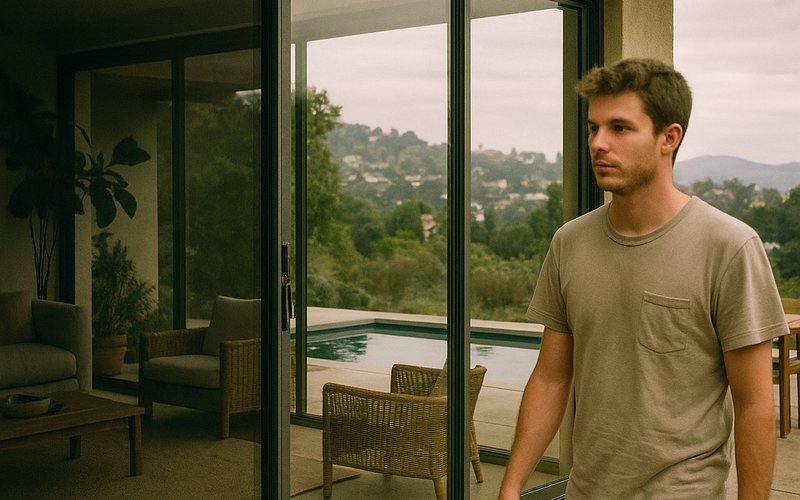
Los Angeles homes are built around sightlines that curtains actively work against. A huge share of the city’s housing stock, especially in Mid-Century and modern-remodel neighborhoods like the hills above Studio City and parts of Mar Vista, uses expansive glass walls and sliding doors designed to blur the line between indoors and out.
Curtains covering that kind of glass block the exact feature the architecture was built to show off. That’s the tension a lot of LA homeowners run into: you bought the house partly for the canyon or city view, and now you’re choosing between exposure and privacy every evening.
Smart film solves this without a design compromise. It stays fully transparent until you need privacy, so the glass wall keeps doing its job the other 20 hours a day. For homes with disappearing pocket doors or accordion glass systems, curtains also create a physical obstruction problem: fabric panels need somewhere to stack when open, and that’s not always available on a wall built entirely of glass.
A remodel in the hills near Laurel Canyon recently swapped a 14-foot curtain track along a glass wall for smart film, freeing up wall space the homeowner wanted for a media console. That’s a functional gain curtains simply can’t offer on that kind of layout.
Do Curtains or Smart Film Hold Up Better in LA’s Dry Climate?
Smart film holds up better than curtains in Los Angeles’s dry climate because it doesn’t absorb dust or fade the way fabric does. The city’s low humidity and frequent Santa Ana wind events push fine dust and particulate into homes constantly, and that dust settles into curtain fibers.
Curtains need regular vacuuming or professional cleaning to stay allergy-friendly, and lighter fabrics show dust buildup within weeks in homes near unpaved hillside roads or construction-heavy areas. Smart film’s glass or polymer surface just gets wiped clean with a microfiber cloth and glass cleaner.
UV exposure is the bigger issue long-term. Los Angeles gets intense, consistent sun, and that fades curtain fabric, especially lighter colors, within 2–4 years on south and west-facing windows. Smart film doesn’t fade the same way, and quality film also blocks a meaningful percentage of UV rays that would otherwise fade your furniture and flooring too.
For a deeper look at how film performs specifically against sun damage, the guide on smart film UV protection against furniture fading in Los Angeles covers that angle directly. If you’ve got hardwood floors or leather furniture near south-facing glass, that’s worth reading before you pick curtains for those rooms.
What Can You Put on Windows So You Can See Out but Nobody Can See In?
Smart film is the most reliable option for seeing out while blocking outside views in, since it switches to a frosted, opaque state that stops sightlines completely without darkening the room. Sheer curtains and one-way privacy films are common alternatives, but neither works as well in every lighting condition.
Sheer curtains only work during the day when interior light is dim relative to outdoor light. Once it’s dark and your lights are on inside, sheers become nearly transparent from the outside, which defeats the purpose. Static privacy films (the frosted adhesive kind) work day and night but you lose the ability to switch back to a clear view, which is the whole reason people prefer film over blinds in the first place.
Smart film avoids both problems. It’s opaque on demand regardless of the time of day or the light difference between inside and outside, and it reverts to fully clear the moment you don’t need privacy. That’s the main reason it’s become the go-to for street-facing living rooms and ground-floor bedrooms across Los Angeles, particularly in denser areas like Koreatown and parts of Downtown where windows sit close to sidewalks and neighboring buildings.
Does Window Film or Curtains Help More When Selling a Los Angeles Home?
Smart film generally helps more than curtains when listing a Los Angeles home, because it preserves the unobstructed window views that photograph well and drive buyer interest, especially in view-oriented listings. Real estate agents in the city consistently stage homes with open, uncovered glass to maximize perceived space and light.
Curtains, especially heavy or dated ones, can make a room look smaller in listing photos and signal to buyers that they’ll need to replace window coverings themselves. Smart film, by contrast, reads as a modern upgrade, similar to how smart thermostats or updated lighting get mentioned in listing descriptions as value-adds.
For homes in hillside or view-lot neighborhoods, where the view itself is part of the sale price, uncovered glass at showings matters even more. A listing agent showing a home in the hills above Sunset Boulevard isn’t going to want curtains drawn across a canyon view during an open house.
That said, smart film is a fixture that transfers with the sale, so buyers see it as included value rather than something they’ll rip out. Curtains, especially custom ones, often get removed by sellers before closing, leaving buyers to cover the windows again from scratch. That’s a real cost buyers factor into their offer, even if it’s a small one.
What Are the Disadvantages of Smart Film and Window Tint?
The main disadvantages of smart film are higher upfront cost, dependence on electrical wiring, and reduced flexibility for households that want changeable decor. A single pane of smart film needs a low-voltage connection run to the window, which adds installation complexity compared to hanging a curtain rod.
Smart film also locks you into one look. Curtains let you swap fabric seasonally or match a redecorated room; film is a fixed, permanent installation once it’s on the glass. If your design taste changes, you’re not simply buying new panels, you’re looking at film removal and reinstallation.
Power dependency is a real consideration too. If the electrical circuit powering the film goes out, most film defaults to its opaque (private) state, not clear, which is a deliberate safety and privacy design choice but can catch homeowners off guard during an outage. Static, non-switchable window tint has its own drawback: once applied, it can’t be toggled off, so you’re stuck with reduced natural light even when you don’t want privacy.
Cost is the most consistent objection. At $18–$35 per square foot, larger glass walls in newer Los Angeles builds can push smart film budgets into five figures fast, which is why many homeowners apply it selectively to street-facing or bedroom windows rather than the entire home.
Smart Film vs. Smart Glass vs. LED Film: Which Fits Your Los Angeles Windows?
Smart film is a retrofit product applied to existing glass, smart glass is a factory-built insulated unit with switchable technology laminated between panes, and LED film adds programmable lighting or display capability to a window surface. Each fits a different budget and use case for Los Angeles properties.
Smart film makes sense for retrofits, renters (with landlord approval), and homeowners who want privacy control without replacing existing windows. It’s the fastest and least expensive way to get switchable privacy, and installation on a standard Los Angeles home typically takes 1–2 days.
Smart glass is the better option for new construction or full window replacement projects, since it’s built into the glass unit itself and tends to offer better long-term durability and a cleaner factory finish. It costs more, but for a full remodel in neighborhoods like Bel Air or the Palisades, where homeowners are replacing windows anyway, building in switchable glass from the start often makes more sense than adding film later.
LED film serves a different purpose entirely. It’s used more in commercial and hospitality settings, or for homeowners who want a window that can also display patterns or soft lighting effects, not just clear versus frosted privacy. For a full side-by-side on how these three technologies differ in cost and application, the guide on switchable glass manufacturers in Los Angeles breaks down manufacturer options and pricing tiers in detail. Homeowners planning a larger remodel might also want to look at how smart glass fits into luxury home remodels in Los Angeles before finalizing a design direction.
How to Choose Between Smart Film and Curtains for Your Los Angeles Property
Choose smart film if your priority is preserving a view, reducing maintenance, or covering large glass walls without fabric bulk. Choose curtains if you want total blackout, seasonal decor flexibility, or a lower upfront cost on a tight budget.
Start by walking your home room by room and asking what each window is actually for. A bedroom that needs full darkness for sleep is a strong curtain candidate, especially paired with blackout liners. A living room or great room with a view worth showing off is a stronger film candidate.
Budget matters too. If you’re covering a small number of windows, curtains are the lower-cost entry point. But if you’re outfitting an entire glass wall or multiple large windows, the cost gap narrows once you account for how often curtains need replacing due to LA’s sun exposure and dust.
- Windows facing a neighbor’s yard or a busy street: smart film for on-demand privacy without losing the view
- Bedrooms needing full darkness for sleep: blackout curtains or a hybrid film-plus-curtain setup
- Large glass walls or sliding door systems: smart film, since curtain hardware struggles with disappearing glass
- Rental properties: curtains, unless the landlord approves a film installation
- Homes prepping for sale: smart film, to keep views unobstructed for listing photos
Homeowners near universities or schools thinking through similar privacy tradeoffs for institutional spaces can find relevant cost and code details in the guide on smart glass for schools and universities in Los Angeles, which covers a lot of the same privacy-versus-visibility decision points at a larger scale.
How to Find the Right Smart Film Installer in Los Angeles
The best smart film installers in Los Angeles carry a C-17 glazing contractor license or equivalent, offer a manufacturer-backed warranty of at least 5–10 years, and can show completed local installations, not just stock photos. Ask for references from jobs in your specific neighborhood type, whether that’s a hillside view home or a dense urban condo.
Get at least two or three quotes before committing, since pricing per square foot can vary meaningfully between installers depending on the film brand and whether they subcontract the electrical work or handle it in-house. A reputable installer will walk your windows in person, measure exact square footage, and explain how the low-voltage wiring will be routed before quoting a final number.
Ask specifically whether the quote includes the control system (app, wall switch, or remote), since some installers price the film and the controls separately, which can make quotes look artificially low at first glance. Confirm the warranty covers both the film’s switching function and its clarity over time, since some cheaper films haze or yellow after a few years of sun exposure.
Pacific Smart Glass installs smart film, smart glass, and LED film across Los Angeles, with crews experienced in everything from hillside view homes to dense multi-unit buildings downtown. If you’re weighing smart film vs curtains Los Angeles homeowners commonly compare, a walkthrough quote is the fastest way to see real numbers for your own windows rather than estimating from averages. Reach out for a free, no-pressure estimate and get a straight answer on what your specific windows would cost either way.