
Quick Answer: Smart film for smart glass Eichler homes San Jose runs $18–$35 per square foot installed, applying directly over the original single-pane glass without removing sash or frame. It’s the only privacy fix that solves the wall-of-glass exposure common in Berryessa and South San Jose Eichler tracts while keeping the mid-century facade untouched. Most homes need 1–2 days for full installation.
Your Eichler’s floor-to-ceiling glass is the whole reason you bought the house, and it’s also the reason your neighbor can see you making coffee at 7 a.m. Smart film solves this: it applies directly to your existing single-pane glass and switches from clear to opaque with the flip of a switch, for $18–$35 per square foot installed, without touching the original sash, mullions, or frame. In San Jose, this matters more than most cities realize, because thousands of Eichler homes built between 1950 and 1965 still carry their original steel-frame single-pane glass, and the City of San Jose treats several of these tracts as designated Conservation Areas with review requirements for exterior changes. This guide walks through real costs, HOA rules, permit requirements, and how to find an installer who actually understands mid-century glass. Get a free estimate from a licensed San Jose smart film installer before you decide between film, replacement glass, or curtains.
What Makes Eichler Windows in San Jose Different From Other Homes?
Eichler windows in San Jose are floor-to-ceiling single-pane glass panels set into thin steel or wood frames, designed to blur the line between indoor living space and the backyard atrium. Unlike a standard tract home with a few double-hung windows, an Eichler can have 60–70% of an exterior wall in glass, often facing directly into a neighbor’s yard or a shared side setback.
This design, popularized by developer Joseph Eichler and architects like Anshen & Allen, prioritized natural light and connection to the outdoors over privacy. That tradeoff made sense in 1955. It’s a real problem in 2026, when lots have been subdivided, additions have gone up next door, and the open floor plan you love now faces a two-story remodel with a clear sightline into your living room.
The glass itself is also a constraint. Original Eichler panels are single-pane, non-tempered in many cases, and set into narrow steel channels that weren’t built for retrofit hardware. Any privacy solution that requires re-glazing, drilling into the frame, or swapping the pane risks cracking 60-year-old glass that’s no longer manufactured to the same spec. That’s why so many San Jose Eichler owners end up choosing a film-based approach over full window replacement.
How Much Does Smart Film Cost for San Jose Eichler Windows?
Smart film for San Jose Eichler windows costs $18–$35 per square foot installed, with most homes falling in the $6,500–$14,000 range depending on how much glass wall you’re covering. An Eichler with a full atrium wall and adjoining living room glass will land at the higher end; a single bathroom or bedroom wall runs closer to $1,800–$3,200 on its own.
| Glass Area | Typical Eichler Application | Estimated Cost |
|---|---|---|
| 80–120 sq ft | Single bedroom or bathroom wall | $1,800–$3,200 |
| 200–350 sq ft | Atrium-facing living room wall | $4,500–$9,500 |
| 400–600 sq ft | Full rear glass wall plus atrium | $9,000–$18,000 |
| 600+ sq ft | Whole-house glass perimeter retrofit | $16,000–$28,000+ |
Manual (non-electric) smart film sits at the lower end of that per-square-foot range. Electric switchable film, the kind that toggles clear-to-frosted with a wall switch or app, costs more because it needs low-voltage wiring run to each panel, but it’s the version most San Jose Eichler owners choose because it replaces both curtains and privacy glass in one product.
A homeowner in the Fairglen neighborhood recently converted a 320 sq ft atrium-facing glass wall for $7,400, wiring three panels to a single switch by the kitchen entry. Their original concern was a two-story addition going up next door that would have had a direct view into their living room from the second floor. If you’d like an accurate quote for your specific glass layout, see what the installation process actually looks like before you commit.
Why Do Berryessa and South San Jose Eichler Tracts Have the Biggest Privacy Problems?
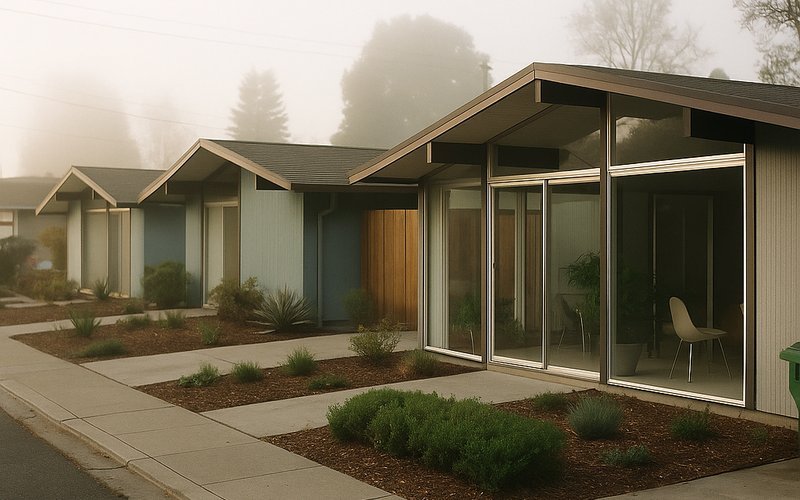
Berryessa and South San Jose Eichler tracts have the highest concentration of privacy complaints in the city because their lots run narrower than the Fairglen or Fairwood tracts, putting glass walls closer to property lines. Many of these homes sit on 60-foot-wide lots, meaning an atrium wall of glass can be less than 15 feet from a neighbor’s fence.
Add to that decades of remodeling. Second-story additions, ADUs, and rear-yard granny units have gone up next to original single-story Eichlers throughout these tracts, creating new sightlines that didn’t exist when the homes were built. A single-story Eichler on Cropley Avenue or in the Grossmont-area tracts near Berryessa never anticipated a neighbor’s second floor looking straight down into its atrium.
South San Jose’s Eichler pockets face a related issue: many were built with the glass wall oriented toward the street rather than a private backyard, a layout choice that made sense before street parking density increased and before ride-share and delivery traffic made front-facing glass a near-constant exposure point. Homeowners in these tracts consistently report that curtains blocked too much light, exterior shutters clashed with the roofline, and window replacement was cost-prohibitive given the non-standard steel frame sizing. Smart film became the practical middle option: full privacy on demand, full light the rest of the time, and no visible hardware change to the street-facing elevation.
Can You Install Smart Film Without Altering an Eichler’s Original Glass?
Yes. Smart film applies as a laminate directly to the interior or exterior surface of the existing single-pane glass, with no cutting, drilling, or re-glazing of the original Eichler pane. The steel or wood frame stays exactly as it is.
This matters because Eichler glass is genuinely hard to replace. Original panel dimensions rarely match today’s standard sizes, and sourcing custom-cut replacement glass for a steel channel frame from 1958 can run into structural issues if the frame has shifted even slightly over 65+ years. Film sidesteps all of that.
The installation process itself involves three steps. First, the installer measures and cleans each pane. Second, the film is cut to size and applied with a wet-application method that lets it settle into the glass without bubbling. Third, for electric smart film, low-voltage leads are connected at the panel edge and routed to a switch or hub, usually hidden inside the existing window trim or below the sill.
- No glass removal or re-glazing required at any stage
- Original steel or wood frame remains fully visible and unmodified
- Film can be applied to interior-facing glass to preserve the exterior appearance entirely
- Existing screens, if present, are removed and reinstalled without alteration
Because the film sits on top of the pane rather than replacing it, a licensed installer can also remove it later, which matters if you ever sell to a buyer who wants the glass in its unaltered original state. That reversibility is one reason film has become the default recommendation over tinted or frosted glass replacement for Eichler homes.
Do San Jose Eichler HOAs and Historic Guidelines Allow Smart Film or Smart Glass?
Most San Jose Eichler HOAs allow smart film because it doesn’t alter the exterior appearance of the glass or frame, but several tracts still require a design review submission before installation. If your Eichler sits within a City of San Jose-recognized Conservation Area, exterior modifications to street-facing elevations may require a courtesy review through the City of San Jose Planning Division, even for film.
The distinction that matters here is exterior versus interior application. Film applied to the interior glass surface, which is the more common method for Eichler retrofits, is generally treated as an interior improvement, similar to installing blinds, and doesn’t typically trigger HOA architectural review. Film applied to the exterior face of the glass is more likely to draw scrutiny, since it can slightly change the reflectivity or tint visible from the street.
If your HOA covenant includes language about “exterior glazing” or “window treatments visible from the exterior,” it’s worth a quick email to your HOA board before scheduling installation, even though most boards approve these requests within a week once they see that the film is switchable and reversible. Homeowners in tracts without an active HOA, which describes a meaningful share of Berryessa’s older Eichler streets, don’t face this step at all. Either way, a reputable installer will document the product spec sheet for you to include with any HOA submission.
Smart Film vs. Smart Glass vs. LED Film: Which Fits an Eichler Home in San Jose?
Smart film is the best fit for most San Jose Eichler retrofits because it works on existing single-pane glass; smart glass (which replaces the entire insulated unit) suits only Eichler additions or ADUs where new glazing is already planned; LED film serves a different purpose entirely, adding illuminated display capability rather than privacy.
| Option | Best For | Alters Original Glass? | Typical Cost |
|---|---|---|---|
| Smart Film | Existing Eichler single-pane retrofit | No, applies over existing pane | $18–$35/sq ft |
| Smart Glass | New Eichler additions, ADUs, full replacement projects | Yes, requires new insulated unit | $45–$95/sq ft |
| LED Film | Accent lighting, display walls, non-privacy use | No, applies over existing pane | $25–$50/sq ft |
For a homeowner focused purely on solving the Berryessa or South San Jose sightline problem, smart film wins on cost, reversibility, and speed. Smart glass makes more sense if you’re already building an ADU or ground-up addition where new insulated glazing units are required by Title 24 energy code anyway, since at that point you’re paying for new glass regardless.
LED film isn’t a privacy product at all; it’s worth mentioning only because installers sometimes get asked about it in the same breath. It’s built for retail displays and accent walls, not residential privacy, so it’s rarely the right call for an Eichler atrium.
Does San Jose Require a Permit for Smart Film on Eichler Windows?
No. San Jose does not require a building permit for smart film applied to existing glass, because it’s classified as a window treatment rather than a structural or glazing alteration. San Jose’s Building Division only requires permits when the glass itself is replaced or when window openings are enlarged or relocated.
This is a meaningful distinction for Eichler owners specifically, since full window replacement in these homes often does trigger permit review, especially if the replacement glass needs to meet current California Title 24 energy code, which original single-pane Eichler glass does not. Film avoids that entire process because the existing glass, and its permit status, remains unchanged.
The one exception worth knowing: if your smart film installation is part of a larger renovation that already requires a permit, such as an ADU conversion or a kitchen remodel that touches the adjacent glass wall, your contractor may need to note the film as part of the overall scope on that existing permit. On its own, though, a straightforward smart film installation on Eichler glass doesn’t need a separate application to the City of San Jose.
How to Find the Right Smart Film Installer for Your San Jose Eichler Home
The right smart film installer for a San Jose Eichler home has documented experience with single-pane steel-frame retrofits, not just standard double-pane residential film work. Ask any installer you’re considering for photos of a completed Eichler project, since the wet-application technique and edge-sealing method differ from what’s used on modern vinyl-framed windows.
Eichler glass is thinner and more fragile than what most installers work with day to day. A crew that’s only installed film on newer double-pane windows may not know how to handle the flex in a 65-year-old steel channel frame, which increases the risk of cracked glass during application. That risk alone is worth screening for before you sign a contract.
Questions worth asking before you hire
- Have you installed smart film specifically on Eichler or other mid-century single-pane glass in San Jose?
- Do you offer both electric (switchable) and manual film options, and can you explain the tradeoffs for my layout?
- What warranty do you provide on the film itself versus the wiring and switch hardware?
- Can you provide a written spec sheet I can submit to my HOA if architectural review is required?
- How long will installation take, and will I need to vacate rooms during the process?
Most full-home Eichler installations take 1–2 days, though a single wall or room can often be completed in a few hours. Get quotes from at least two installers, compare their Eichler-specific experience rather than just price per square foot, and confirm in writing that the film is rated for reversible removal, in case you ever want to restore the original clear glass appearance. If you’re ready to move forward, start with a San Jose smart glass consultation to get your specific glass measurements and a firm quote.