
Quick Answer: A smart glass medical dental office Los Angeles project typically runs $45–$95 per square foot for switchable glass, or $18–$35 per square foot for retrofitted smart film, depending on exam room count. Most independent practices in leased suites choose smart film because it doesn’t require altering existing glazing or triggering a landlord’s construction clause. A single exam room typically installs in 1–2 days with zero downtime for the rest of the practice.
Patients in your waiting room can see straight into your exam rooms every time the door opens, and that’s a real HIPAA exposure risk for any Los Angeles medical or dental office. The direct answer: switchable smart glass or smart film lets you flip exam room glazing from clear to opaque in under a second, giving you visual privacy on demand without permanent walls, blinds, or curtains. In Los Angeles, most independent practices operate in leased suites where the lease itself restricts structural changes, which makes film-based retrofits the practical choice over full glass replacement. This guide covers real cost tiers, the difference between smart film and smart glass, permit requirements from the Los Angeles Department of Building and Safety, and how to vet an installer who actually understands medical-grade privacy. Get a free estimate from a licensed Los Angeles smart glass installer before you commit to blinds or construction.
How Much Does Smart Glass Cost for a Los Angeles Medical or Dental Office?
Smart glass for a Los Angeles medical or dental office costs $45–$95 per square foot installed, while smart film retrofits run $18–$35 per square foot. A typical 8-foot by 4-foot exam room window or interior partition lands somewhere between $1,500 and $3,000 depending on which product you choose and how many panels need wiring.
Full switchable glass replacement means removing your existing glazing and installing PDLC (polymer dispersed liquid crystal) glass units with built-in wiring. That’s the higher-cost option, and it’s usually reserved for practices that own their building or are doing a full buildout from scratch. Smart film, on the other hand, adheres directly to your existing glass, so you keep the original window or partition and just add the switchable layer on top.
Here’s how the numbers typically break down for a small independent practice with 2–4 exam rooms:
| Option | Cost per Sq Ft | Typical Exam Room (32 sq ft) | Best For |
|---|---|---|---|
| Smart Film (retrofit) | $18–$35 | $576–$1,120 | Leased suites, existing glass |
| Smart Glass (PDLC unit) | $45–$95 | $1,440–$3,040 | Owned buildings, new construction |
| LED Film Add-On | +$8–$15 | +$256–$480 | Waiting room signage or accent lighting |
Most solo dentists and small medical groups we work with in Los Angeles spend $3,500–$9,000 total to convert a 2–3 exam room suite, film included. That’s a fraction of what a hospital system pays to retrofit an entire floor, and it’s usually less than the cost of high-end motorized blinds once you factor in the durability difference over 8–10 years.
What Makes Small Independent Practices in Los Angeles Different From Hospital Systems?
Small independent practices in Los Angeles need privacy solutions that work within a leased suite and a limited budget, while hospital systems can fund building-wide retrofits with capital improvement budgets. That single difference changes almost every decision you’ll make about smart glass.
A hospital system in Los Angeles might replace glass across an entire outpatient wing, coordinating with facilities engineers and a multi-year capital plan. A solo dentist in a leased suite in Koreatown or a two-doctor practice in Sherman Oaks doesn’t have that luxury. You’re working with a fixed lease term, a landlord who controls structural changes, and a budget that has to show return within a year or two, not a decade.
This is exactly why film-based retrofits dominate among independent practices here. You’re not touching the building envelope, you’re not triggering the landlord’s alteration clause, and you’re not waiting on a facilities committee to approve a change order. A practice owner can get a quote, schedule the install, and have private exam rooms within a week.
Honestly, most contractors who work primarily with hospital systems will quote you hospital-scale pricing and hospital-scale timelines, even for a two-room dental office. That’s the wrong fit. You want an installer who’s done small suite retrofits specifically, understands lease constraints, and can work around your patient schedule instead of shutting the office down for a week.
How Do You Keep Exam Rooms Private While Waiting Areas Stay Bright?
You keep exam rooms private and waiting areas bright by zoning your smart glass or smart film install so each room switches independently, with clear glass staying clear in reception and lobby areas at all times. The two spaces don’t need to share a single control system.
Most practices wire exam room panels to a wall switch or a small remote near the door, so staff can flip the glass to opaque the moment a patient enters and back to clear once the room is being cleaned or prepped. Waiting rooms and reception windows stay on clear glass permanently, since natural light there actually helps patients feel more comfortable and makes the space feel less clinical.
A dental practice in the Miracle Mile area recently split their suite this way: three exam rooms wired independently to switch opaque during procedures, while the front reception glass and a hallway partition stayed clear year-round. Patients in the waiting room still see natural light pouring in from the street-facing windows, and nobody waiting for a cleaning has to stare at whatever’s happening two doors down.
Some practices go a step further and add LED film to accent the reception area itself, using it for subtle branding or wayfinding signage while keeping the exam-room privacy zones completely separate on their own circuit. It’s a small design choice that makes a big difference in how the whole suite feels to a first-time patient walking in.
Is Smart Film a Better Retrofit for Leased Office Suites in Los Angeles?
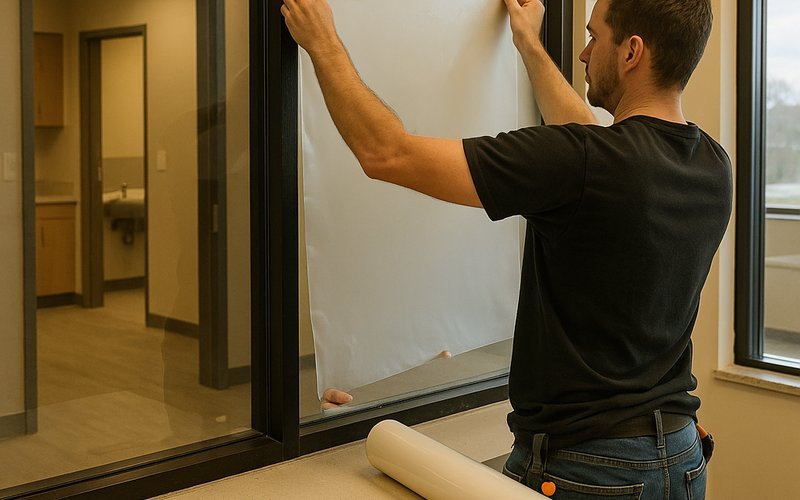
Yes, smart film is almost always the better retrofit for a leased office suite in Los Angeles, because it applies directly to existing glass without altering the building structure or triggering most commercial lease restrictions on alterations. Smart glass unit replacement, by contrast, usually counts as a structural change your landlord has to approve.
Commercial leases in Los Angeles commonly include an alterations clause requiring landlord sign-off for anything that changes the fixed structure, and glass replacement often falls into that category. Film application typically doesn’t, since you’re adding a layer to existing glazing rather than removing and replacing it. That said, always check your specific lease language or ask your leasing agent before signing a contract with an installer, since terms vary suite to suite.
Comparing smart film against traditional curtains and blinds is worth doing before you decide, since the upfront cost difference is smaller than most practice owners expect once you factor in how often blinds need replacing in a clinical setting.
| Factor | Smart Film | Smart Glass Replacement |
|---|---|---|
| Lease impact | Minimal, usually no approval needed | Often requires landlord sign-off |
| Install time (per room) | 1–2 days | 3–5 days |
| Structural change | None, applied to existing glass | Yes, full unit replacement |
| Reversibility at lease end | Removable | Permanent, stays with the space |
If you’d like an accurate quote for your specific suite, a licensed Los Angeles smart glass installer can walk your space and tell you within a day whether film or full glass makes more sense for your lease and budget.
Does Smart Glass Actually Meet HIPAA Visual Privacy Standards?
Yes, opaque smart glass and smart film meet HIPAA’s visual privacy expectations when switched to the opaque setting, since HIPAA requires that patients not be visible to others during exams or consultations, and switchable glass fully blocks sightlines in that state. HIPAA doesn’t name specific building materials, but it does require “reasonable safeguards” against incidental disclosure of protected health information, and visual exposure counts.
What matters for compliance isn’t the product category, it’s whether the opaque state is genuinely opaque and whether staff actually use it consistently. PDLC-based smart glass and film block visibility completely when switched, unlike sheer curtains or partially-closed blinds, which can still leave gaps. That’s actually a stronger privacy safeguard than what a lot of older Los Angeles practices are currently using.
The compliance risk isn’t the technology, it’s the workflow. A practice needs a clear staff habit of switching the glass before a patient undresses or before a sensitive conversation starts, not after. Most practices train front-desk and clinical staff to treat the switch like a light switch, part of the room-prep checklist every single time.
Sound doesn’t switch off with the glass, so pair any smart glass install with sound-dampening if your walls are thin, since HIPAA’s incidental disclosure rules cover audible conversations too, not just visual privacy.
What Permits Do Los Angeles Medical Offices Need for a Smart Glass Install?
In Los Angeles, smart film applied to existing glass typically does not require a building permit, since it’s classified as a non-structural finish, similar to window tint. Full smart glass unit replacement that alters glazing or requires new electrical wiring for switching controls generally does require a permit through the Los Angeles Department of Building and Safety (LADBS).
If your install involves running low-voltage wiring to a wall switch or control panel, an electrical permit through LADBS is the standard requirement, and your installer should pull that permit or coordinate with a licensed electrician who can. Practices in medical office buildings, particularly those in larger complexes near Cedars-Sinai or in the Miracle Mile medical corridor, may also need sign-off from the building’s own facilities management before any electrical work begins, separate from the city permit itself.
A good rule of thumb: if the work only touches the surface of existing glass and uses a plug-in or battery-powered control, you’re almost always permit-free. If it involves cutting into walls for wiring or replacing glazing units, budget extra time, typically 2–4 weeks, for LADBS review before installation can start. Always confirm directly with LADBS or ask your installer to confirm on your behalf, since requirements can shift based on your building’s occupancy classification.
Smart Film vs. Smart Glass vs. LED Film: Which Fits a Dental or Medical Office?
Smart film fits most leased dental and medical suites because it’s the lowest-cost, no-permit, no-construction option. Smart glass fits owned buildings or full buildouts where you want the switching mechanism built into the glass unit itself. LED film fits reception areas and signage more than exam rooms, since its main function is illumination and branding, not privacy.
| Product | Cost per Sq Ft | Install Time | Permit Needed | Best Use in a Medical Office |
|---|---|---|---|---|
| Smart Film | $18–$35 | 1–2 days | Rarely | Exam room privacy, leased suites |
| Smart Glass | $45–$95 | 3–5 days | Often, for wiring/glazing | New construction, owned buildings |
| LED Film | $26–$50 | 1–3 days | Sometimes, if hardwired | Reception branding, wayfinding |
A pediatric dental office near Larchmont recently used all three products in one suite: smart film on the four exam room windows for privacy switching, LED film on the reception desk glass for a subtle branded glow, and left the original clear glass in the hallway untouched. Total project cost came in around $6,200, completed over two non-consecutive weekend days so the practice never had to close.
For a deeper technical breakdown of how each product actually works and where manufacturers differ on quality, this guide to switchable glass manufacturers in Los Angeles is worth reading before you request quotes, so you know what questions to ask.
How Do You Choose a Smart Glass Installer for a Los Angeles Medical Practice?
Choose a smart glass installer in Los Angeles who has specific experience with medical or dental offices, not just residential or retail film work, and who can show you a completed exam room install, not just product samples. Ask for their electrical license number if the job involves wiring, and confirm they’ll handle any LADBS permit filing rather than leaving that on you.
The exam room privacy market has a lot of general window tint companies branching into “smart film” without real experience in clinical environments. That matters more than it sounds like it should. A residential installer might do beautiful work on a bedroom window and still get exam room zoning wrong, wiring an entire suite to one switch when you actually needed four independent zones.
Questions worth asking before you sign
- Have you installed smart film or smart glass in a medical or dental office in Los Angeles before, and can I see photos or contact that practice?
- Will you handle the LADBS permit if my install requires one, or is that my responsibility?
- What’s the opacity rating in the switched state, and is it fully opaque or just frosted?
- How long is the warranty on the film or glass, and does it cover delamination or discoloration?
- Can you work around my patient schedule, or does the practice need to close during install?
A licensed installer with genuine healthcare experience should be able to answer all five of these without hesitation. If a company can’t show you a real medical office project, that’s a signal to keep looking. Pacific Smart Glass has completed healthcare installs across Los Angeles and can walk you through zoning, permits, and product choice specific to your suite before you sign anything.
Getting this right the first time matters more in a medical office than almost anywhere else, since a bad install means either exposed patients or a practice that has to shut down mid-week for a redo. Take the time to vet the installer the same way you’d vet any vendor touching patient care spaces, and you’ll end up with a privacy solution that actually holds up for the next decade of your lease.