
Smart glass neighborhoods San Jose 2026 data shows demand isn’t spread evenly across the city, and if you’re trying to figure out whether it’s worth installing in your neighborhood, that matters. The short answer: Willow Glen, Rose Garden, and Almaden Valley lead residential adoption, downtown San Jose is driving condo and commercial demand, and North San Jose near Berryessa is the fastest-growing market for both office and home installs. San Jose’s mix of older bungalow neighborhoods, dense downtown high-rises, and new tech-adjacent construction creates distinct demand patterns you won’t see in a more uniform suburb. This guide breaks down exactly where that demand is coming from, what it costs by neighborhood, and how to get a project started. Get a free estimate from a licensed San Jose smart glass installer once you know which category your property falls into.
Which San Jose Neighborhoods Have the Most Smart Glass Demand in 2026?
In San Jose, the highest smart glass demand in 2026 is concentrated in Willow Glen, Rose Garden, Almaden Valley, downtown San Jose, and the North San Jose/Berryessa corridor. Each neighborhood is driven by a different factor: home value and renovation activity in the older residential areas, condo density downtown, and tech campus proximity in the north.
Willow Glen and Rose Garden have some of the highest home renovation rates in the city, largely because of their older housing stock and strong resale values. Almaden Valley’s larger lots and higher average home prices make whole-home smart glass upgrades more common there than in most other parts of San Jose. Downtown, the driver isn’t renovation, it’s density: thousands of condo units packed into high-rises where residents want privacy without giving up natural light. North San Jose and Berryessa are newer to the smart glass conversation, but tech campus expansion nearby is pulling both commercial and residential demand into that corridor fast.
| Neighborhood | Primary Demand Driver | Typical Project Type |
|---|---|---|
| Willow Glen | Home renovation activity, historic bungalow retrofits | Residential smart film on existing windows |
| Rose Garden | High resale values, period-home upgrades | Residential smart film and glass replacement |
| Almaden Valley | Larger lots, higher home values | Whole-home smart glass installs |
| Downtown San Jose | High-rise condo density | Privacy smart film for condo windows |
| North San Jose / Berryessa | Tech campus growth, new construction | Commercial smart glass and home office builds |
Why Are Willow Glen, Rose Garden, and Almaden Valley Leading Residential Adoption?
Willow Glen, Rose Garden, and Almaden Valley lead residential smart glass adoption because homeowners there are already investing heavily in renovations, and smart glass fits naturally into kitchen, primary suite, and home office upgrades already underway.
Willow Glen’s craftsman and bungalow-style homes were built long before double-pane, low-E glass was standard, which means a lot of retrofit opportunity. A homeowner in Willow Glen recently replaced the front-facing windows on a 1920s bungalow with switchable smart film for $6,200, solving a street-privacy problem without losing the home’s original window trim. That’s a common story in the neighborhood: preserve the character, fix the privacy issue.
Rose Garden homeowners tend to be renovating for resale value, and smart glass shows well in listings, especially in primary bathrooms and home offices where buyers notice the tech. Almaden Valley is different again. Larger square footage and higher household incomes mean homeowners there are more likely to do a full smart glass install across multiple rooms in one project rather than a single window. Honestly, most contractors will tell you Almaden Valley clients ask about integration with existing smart home systems first, then decide on room count. That’s part of why smart glass integration with Lutron and Crestron systems comes up so often in that neighborhood specifically.
How Is Downtown San Jose Condo Density Driving Smart Film Demand?
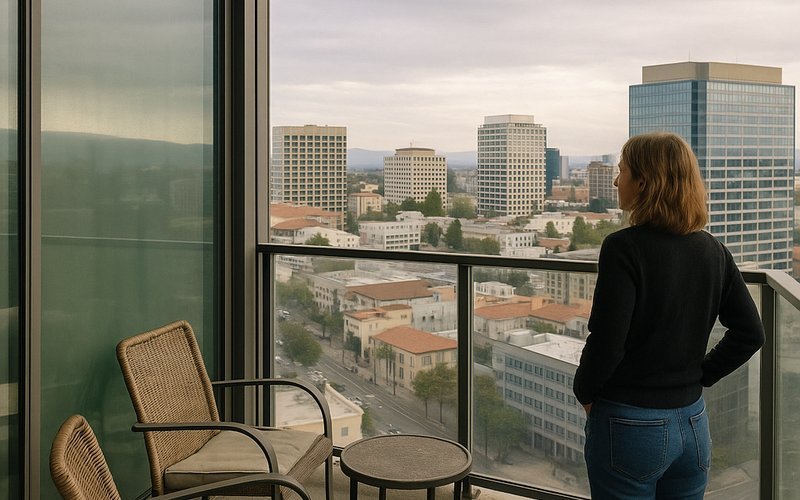
Downtown San Jose’s high-rise condo density is the single biggest driver of smart film demand in the city because floor-to-ceiling windows in buildings packed close together create privacy problems that blinds and curtains don’t solve well.
Buildings in the downtown core often sit within direct sightline of neighboring towers, and residents don’t want to keep blinds shut all day just to avoid being visible from the building across the street. Smart film switches from clear to opaque in seconds, which solves that without blocking the view entirely when privacy isn’t needed. It’s a compact fix for a space problem too. Condo units don’t have room for bulky curtain hardware, and smart film mounts flush to existing glass.
Commercial demand downtown follows a similar logic. Ground-floor retail and restaurant spaces use smart film and LED film for storefront windows to control visibility and add branding without permanent tinting. HOA rules matter more here than anywhere else in San Jose, and most downtown high-rise HOAs require a review before any window treatment install, smart film included. That’s covered in more detail in our guide on privacy glass for San Jose high-rise condos, which walks through the approval process building by building.
Why Is North San Jose Becoming an Emerging Smart Glass Market?
North San Jose is emerging as a smart glass market in 2026 because tech campus construction near Berryessa is pulling in both commercial office demand and residential demand from employees moving into newer housing developments nearby.
New office construction in this corridor is being built with switchable glass specified from the start rather than retrofitted later, since builders can design conference rooms and open-plan offices around glass partitions that switch from clear to private on demand. That’s a meaningful shift from five years ago, when smart glass was almost always an after-the-fact upgrade. Our guide on smart glass specs for new construction in San Jose covers what builders in this area are asking for.
On the residential side, newer townhomes and condos going up near Berryessa are smaller than the single-family homes in Willow Glen or Almaden Valley, which means owners are more likely to use smart glass for home office partitions rather than full-window replacement. A homeowner in the Berryessa area recently installed switchable glass partitions in a converted bedroom-to-home-office for $3,400, splitting the room without losing natural light. That project type, a partial-room partition rather than a full window retrofit, is becoming the norm in this part of the city. If your home office or ADU is in this corridor, our page on smart glass for San Jose home offices and ADUs breaks down whether it’s worth it for a smaller footprint.
What Does Smart Glass Cost in San Jose by Neighborhood and Property Type?
Smart glass in San Jose costs $25–$45 per square foot for switchable film applied to existing windows, and $90–$150 per square foot for full switchable glass units installed during a remodel or new build. Neighborhood affects cost mainly through property type and project scope, not price per square foot.
Willow Glen and Rose Garden retrofit projects tend to land on the lower end of the range since they involve applying film to existing glass rather than replacing it. Almaden Valley whole-home projects cost more in total simply because more square footage is involved, even though the per-square-foot rate is similar. Downtown condo projects often come with a premium of $500–$1,200 in HOA-related coordination and building access fees that don’t apply to single-family homes. North San Jose commercial installs, especially glass partitions in new office builds, run closer to the higher end because they’re often full glass units rather than film.
| Property Type | Typical Cost Range | Common Neighborhood |
|---|---|---|
| Single-family retrofit (film on existing windows) | $25–$45 per sq ft | Willow Glen, Rose Garden |
| Whole-home installation | $90–$150 per sq ft | Almaden Valley |
| High-rise condo unit (privacy film) | $3,500–$8,000 total | Downtown San Jose |
| Home office / ADU partition | $2,800–$5,500 total | North San Jose, Berryessa |
| Commercial office glass partitions | $100–$160 per sq ft | North San Jose |
If you’d like an accurate quote for your specific property, request a free estimate from Pacific Smart Glass for your San Jose project and get a number based on your actual square footage rather than a citywide average.
Do You Need a Permit or HOA Approval to Install Smart Glass in San Jose?
In most cases, applying smart film to existing windows in San Jose doesn’t require a building permit since it’s considered a non-structural window treatment. But full smart glass replacement that alters the window assembly does require a permit through San Jose’s Department of Planning, Building and Code Enforcement, and downtown condo units almost always require HOA approval regardless of the type of project.
The distinction comes down to whether you’re changing the glass itself or applying film over existing glass. Film installs are treated like window tinting: no permit needed in most residential cases. Full unit replacement, where the entire window or glass panel is swapped for a switchable glass unit, falls under the same permitting rules as standard window replacement and needs sign-off from San Jose’s Department of Planning, Building and Code Enforcement before work starts.
HOA rules add another layer, especially downtown. High-rise condo associations frequently require a written request and sometimes a sample swatch or spec sheet before approving any window film, since building exteriors are considered common elements even when the glass itself belongs to the unit owner. Almaden Valley and Willow Glen homes with neighborhood associations may have similar architectural review requirements, though they’re generally less strict than downtown high-rise HOAs. Our detailed breakdown on permit requirements for smart glass installation in San Jose walks through the exact steps by project type.
How Do You Choose the Right Smart Glass Installer for Your San Jose Neighborhood?
Choose a smart glass installer in San Jose based on their experience with your specific property type: retrofit film work for older Willow Glen and Rose Garden homes, HOA-coordinated condo installs downtown, or commercial glass partition work for North San Jose office builds. Not every installer handles all three well.
Ask any installer how many projects they’ve completed in your specific neighborhood type, not just San Jose broadly. A contractor who’s done a dozen downtown condo installs will know the HOA approval process for major buildings already, which saves you weeks of back-and-forth. A contractor experienced with Willow Glen’s older window frames will know how to work around original wood trim without damaging it, something a commercial-focused installer might not think about.
Check that the installer is licensed to work in San Jose, ask for local references in your neighborhood specifically, and get a written estimate that separates material costs from labor and any HOA coordination fees. The cheaper option isn’t always wrong, but if a quote comes in far below the ranges above, ask what film grade or glass type they’re actually using. Pacific Smart Glass has completed projects across Willow Glen, Rose Garden, Almaden Valley, downtown San Jose, and the North San Jose corridor, which means the crew already understands the permit and HOA differences between them. Reach out for a free consultation and quote for your San Jose neighborhood to get a project timeline that matches your specific property type.