
The hotel industry in the United States is undergoing a quiet but powerful design revolution. Across luxury resorts, boutique hotels, airport hotels, and even extended-stay properties, one traditional element is rapidly disappearing: window blinds and curtains.
In their place? Smart Glass.
From New York high-rises to Las Vegas luxury suites, hotel owners and developers are replacing blinds with switchable and electrochromic smart glass to improve guest experience, operational efficiency, sustainability, and long-term ROI.
This interactive guide breaks down why smart glass is becoming the new standard in hospitality, how it outperforms traditional window coverings, and what hotel decision-makers need to know before upgrading.
What Is Smart Glass in Hotels?
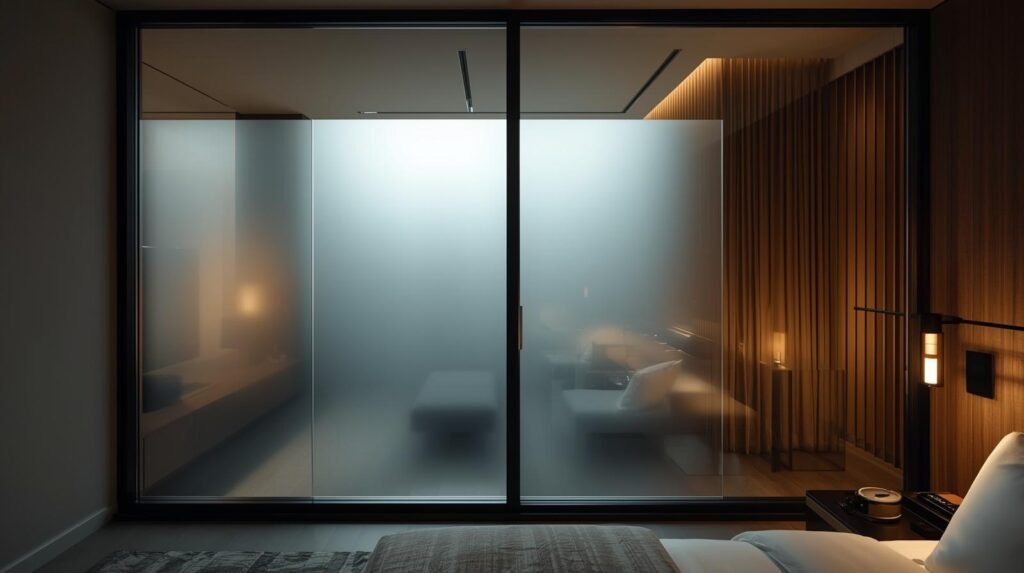
Smart glass (also called switchable glass or privacy glass) is architectural glass that changes transparency on demand. With the flip of a switch, tap on a control panel, or integration into a building management system (BMS), glass can instantly transition from:
- Clear → Frosted
- Transparent → Tinted
- Open View → Full Privacy
Unlike blinds or curtains, smart glass is sealed within the glass itself, eliminating moving parts, dust traps, and fabric maintenance.
Must Read: Smart Film vs Frosted Glass: Cost, Privacy & Performance
The Real Reason Hotels Are Abandoning Blinds
Let’s get specific. Hotels are not switching to smart glass because it looks futuristic (although it does). They are switching because blinds are operational liabilities.
Common Blind Problems Hotels Face
- Broken or jammed mechanisms
- Stains, dust, and allergens
- Inconsistent housekeeping results
- Replacement costs every few years
- Poor blackout or light control
- Dated appearance in luxury spaces
Smart glass solves all of these issues at once
Top 10 Reasons Hotels Prefer Smart Glass Over Blinds
1. Elevated Guest Experience (Instant Wow Factor)
Guests love intuitive technology. The ability to control privacy with a single touch:
- Feels premium
- Enhances comfort
- Increases perceived room value
This is especially impactful in luxury suites, bathrooms, and spa-facing rooms.
2. Superior Privacy Without Blocking Space
Blinds close off views and make rooms feel smaller. Smart glass:
- Maintains clean sightlines
- Preserves daylight
- Provides privacy without visual clutter
Perfect for bathrooms, meeting rooms, and street-facing hotel rooms.
3. Faster & More Efficient Housekeeping
No blinds means:
- Less cleaning time per room
- Fewer missed dust issues
- Consistent room readiness
This directly improves turnover speed and labor efficiency.
4. Energy Efficiency & Sustainability
Smart glass helps hotels:
- Reduce heat gain from sunlight
- Lower HVAC loads
- Improve insulation performance
Many properties report noticeable reductions in energy costs, helping meet ESG and green building goals.
5. Long-Term Cost Savings
While blinds seem cheaper upfront, smart glass wins long-term:
- No fabric replacement
- No mechanical failures
- Lower maintenance budgets
- Extended lifespan
Over 10–15 years, smart glass often delivers higher ROI than traditional window treatments.
6. Modern Design That Never Goes Out of Style
Interior design trends change fast. Smart glass offers:
- Minimalist aesthetics
- Timeless architectural appeal
- Seamless integration with glass walls and partitions
This keeps hotels visually competitive for years.
7. Better Hygiene & Health Standards
Post-2020 hospitality standards changed permanently. Smart glass:
- Eliminates dust-collecting fabrics
- Supports allergy-sensitive environments
- Aligns with wellness-focused hospitality design
Ideal for medical tourism hotels and luxury wellness resorts.
8. Smart Room & Automation Compatibility
Smart glass integrates with:
- Smart room controls
- Occupancy sensors
- Lighting systems
- Voice assistants
Hotels can automate privacy modes based on guest presence or time of day.
9. Increased Revenue Opportunities
Hotels using smart glass often:
- Market rooms as “tech-enabled” or “luxury smart suites”
- Charge premium rates
- Increase repeat bookings
Technology becomes a selling feature, not just an amenity.
10. Future-Proof Hospitality Investment
Smart glass aligns with where hospitality is heading:
- Smart buildings
- Sustainable construction
- High-tech guest experiences
Hotels that upgrade now avoid costly retrofits later.
Where Hotels Are Using Smart Glass Most
Most common hotel applications include:
- Guest room windows
- Bathroom and shower enclosures
- Conference and meeting rooms
- Lobbies and atriums
- Spa and wellness areas
- Pool-facing glass walls
- Executive suites and penthouses
Blinds vs Smart Glass: Quick Comparison
| Feature | Traditional Blinds | Smart Glass |
|---|
| Maintenance | High | Minimal |
| Hygiene | Poor | Excellent |
| Lifespan | Short | Long |
| Guest Appeal | Average | Premium |
| Energy Efficiency | Limited | High |
| Design Impact | Dated | Modern |
| Automation | No | Yes |
Final Thoughts: Smart Glass Is No Longer Optional for Modern Hotels
In today’s competitive hospitality market, guest experience, efficiency, and sustainability determine success. Smart glass addresses all three—while eliminating the ongoing headaches of traditional blinds.
Hotels that adopt smart glass aren’t just upgrading windows.
They’re future-proofing their brand.
Trusted Smart Glass Partner for U.S. Hotels
If you’re exploring smart glass solutions for hotels, resorts, or hospitality developments across the United States, Pacific Smart Glass specializes in hotel-grade smart glass and smart film solutions designed for durability, performance, and seamless integration.
Upgrade from blinds to smart glass—and give your guests a smarter stay.