
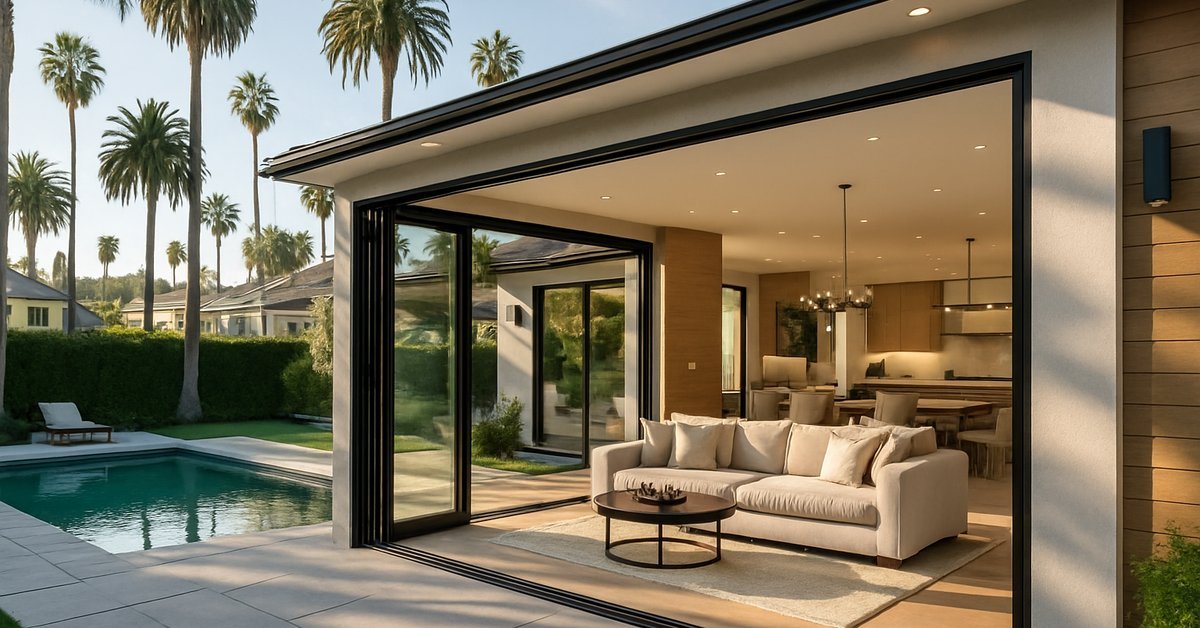
You’re researching beverly hills operable glass wall installation and want real numbers, not a sales pitch. Installed costs run $850–$3,200 per linear foot for a complete system, and Beverly Hills homeowners tend to land at the higher end of that range. LADBS permit requirements apply to virtually every structural opening, and the smart glass or smart film you add on top changes both the price and the permit path. This guide covers installed costs, technology comparisons, permit requirements, and what to ask any contractor before you sign.
Ready to skip straight to a number for your specific project? Get a free estimate from a licensed Los Angeles smart glass contractor before you go any further.
How Much Does Operable Glass Wall Installation Cost in Los Angeles?
Operable glass wall installation in Los Angeles runs $850–$3,200 per linear foot fully installed, including the framing system, tempered glass panels, hardware, and labor. A 12-foot opening — common in Beverly Hills indoor-outdoor rooms — will typically cost between $10,200 and $38,400 depending on the system and glass upgrade selected.
| System Type | Base Cost (per linear ft) | With Smart Glass Upgrade | With Smart Film Upgrade |
|---|---|---|---|
| Aluminum Folding (Bifold) | $850–$1,400 | $1,500–$2,200 | $1,100–$1,800 |
| Frameless Sliding | $1,100–$1,800 | $1,800–$2,700 | $1,400–$2,200 |
| Multi-Track Sliding (Pocket) | $1,400–$2,400 | $2,200–$3,200 | $1,900–$2,900 |
| Pivot / Telescoping | $1,800–$3,200 | $2,600–$4,000+ | $2,200–$3,600 |
A homeowner in Bel Air recently installed a 16-foot multi-track sliding system with electrochromic smart glass across a rear-facing great room for just under $42,000 installed, including LADBS permit fees and structural modifications. The smart glass eliminated the need for any shading system, which offset a chunk of the premium cost.
And that’s an important point: smart glass isn’t just an aesthetic choice. In west-facing Los Angeles rooms, it reduces solar heat gain enough to lower cooling loads, which can qualify for utility rebates. More on that in the FAQ below.
Labor in Los Angeles runs $95–$145 per hour for experienced glass wall installers. Structural header work, if required, adds $2,000–$8,000 separately. Don’t skip that estimate — it’s the line item that surprises most homeowners.
If you’d like an accurate quote for your specific wall opening and system type, Pacific Smart Glass offers free on-site assessments across Los Angeles.
What’s the Difference Between Smart Glass, Smart Film, and LED Film for Operable Glass Walls?
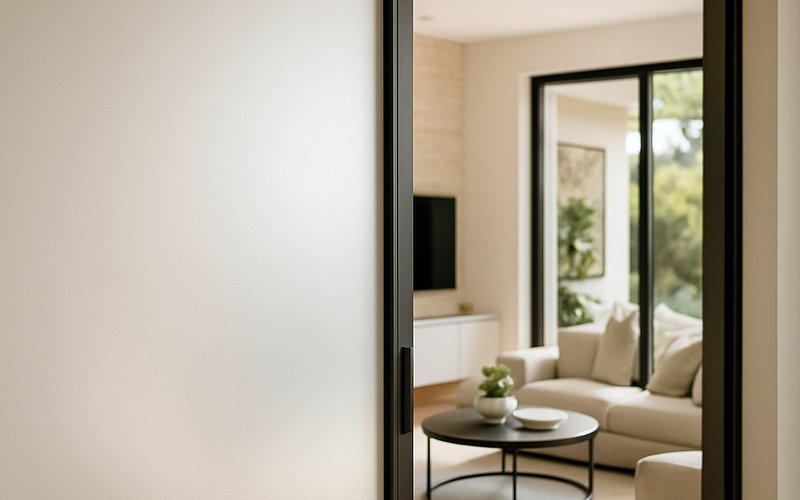
Smart glass, smart film, and LED film solve different problems. Choosing the wrong one for an operable wall is an expensive mistake, so here’s the honest breakdown.
| Technology | How It Works | Best For | Added Cost (per sq ft) | Works on Existing Glass? |
|---|---|---|---|---|
| Smart Glass (Electrochromic) | Voltage changes molecular tint level | Heat control, privacy, luxury finish | $65–$125 | No — factory-built panels only |
| Smart Film (PDLC) | Applied film switches opaque/clear | Privacy on a budget, retrofit applications | $25–$55 | Yes — adheres to existing glass |
| LED Film | Transparent display film with LED matrix | Branding, art walls, entertainment displays | $80–$160 | Yes — adheres to existing glass |
Smart glass is built into the panel at the factory. You can’t retrofit it onto an existing operable glass wall, which matters if you’re upgrading a system you already have. Smart film, by contrast, bonds directly to tempered glass and switches between clear and frosted with a switch or app command. It’s the more practical choice for homeowners who want privacy on demand without replacing their entire glass wall.
LED film is a different category entirely. It turns your glass panels into a transparent display surface — think art installations, privacy dividers that double as digital canvases, or entertainment walls in a media room. The cost is higher, the installation is more complex, and it draws real power. But in a Beverly Hills home theater or entertainment space, it’s genuinely impressive. You can read more about LED film options for Los Angeles homeowners here.
Honestly, most homeowners in the Beverly Hills and Bel Air area choose smart glass for new installations and smart film for retrofits. The performance gap between the two has narrowed considerably since 2023, and smart film from a quality manufacturer is hard to tell apart from electrochromic glass in daily use.
Why Beverly Hills and West LA Homeowners Are Choosing Operable Smart Glass Walls
Beverly Hills operable glass wall installation has accelerated sharply since 2022, driven by a specific set of conditions that don’t exist in most other markets. Here’s what’s actually driving demand in this part of Los Angeles.
First, lot configurations. Many properties in Beverly Hills, Bel Air, and the Trousdale Estates area sit on hillside lots with significant rear yard setbacks and panoramic views. A fixed glass wall blocks those views when the weather is perfect. An operable system opens the entire rear elevation and blurs the line between inside and outside completely.
Second, privacy requirements are genuinely different here. Homes on smaller lots or in gated communities often face close neighbors or street visibility. Smart glass on operable panels gives homeowners the ability to open the space for light and air while switching to opaque when they need it — without any blinds, shades, or hardware cluttering the opening.
Third, energy performance matters at this price point. The California Building Code requires Title 24 compliance for any permitted alteration involving fenestration. Smart glass with a low solar heat gain coefficient (SHGC) often meets or exceeds those thresholds. That’s not a minor footnote — it directly affects whether your permit gets approved and whether you qualify for Southern California Edison energy rebates.
And the resale angle is real. In a market where comparable homes are priced within single-digit percentages of each other, a fully integrated indoor-outdoor system with switchable glass is a genuine differentiator for buyers. Luxury real estate agents in the area confirm this is now an expected feature at the $5M+ tier.
What Does LADBS Require for Operable Glass Wall Permits in Los Angeles?
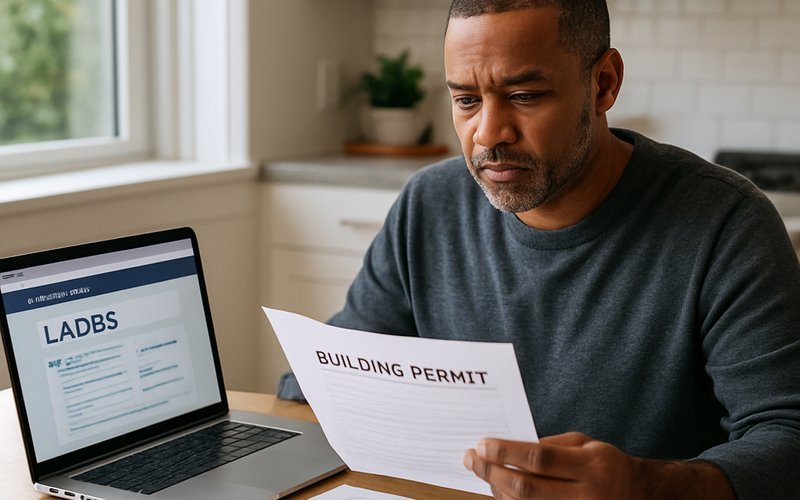
In Los Angeles, any operable glass wall installation that involves modifying an existing wall opening or creating a new one requires a building permit through the Los Angeles Department of Building and Safety (LADBS). There are no exceptions for single-family homes in Los Angeles — this applies to you. — this applies to you.
Here’s what LADBS typically requires for this type of project:
- Structural engineering drawings stamped by a California-licensed engineer (required when modifying load-bearing walls)
- Title 24 energy compliance documentation for any new fenestration area
- Permit application filed through the LADBS online portal or in person at the Metro office at 201 N. Figueroa Street
- Site inspection at rough framing and final completion stages
- For smart glass with electrical components: an electrical permit pulled separately
Permit fees in Los Angeles for this scope of work typically run $800–$2,400, depending on the valuation of the project. Processing time through LADBS ranges from 2–6 weeks for over-the-counter review and up to 12–16 weeks for projects that require plan check. Expedited review is available for an additional fee.
Don’t let a contractor pull the permit under a “cosmetic alteration” classification to skip plan check. That shortcut creates title issues and can trigger stop-work orders if flagged during inspection. It’s not worth it. For a deeper look at what Los Angeles specifically requires, see this guide to smart glass permits in Los Angeles.
Which Neighborhoods in Los Angeles Install Operable Glass Walls Most Often?
Operable glass wall projects in Los Angeles are heavily concentrated in a handful of neighborhoods with specific architectural and lot characteristics. Knowing where these projects happen most often tells you a lot about what drives the decision.
Bel Air sees high volume because of the combination of hillside views, generous lot sizes, and custom home construction that tends toward open-plan indoor-outdoor design. A typical project there involves a rear-facing wall spanning 14–20 linear feet, often adjacent to a pool deck or canyon view terrace.
West Hollywood is a different profile entirely. Lots are smaller, homes are denser, and the motivation is more often privacy than views. Smart film on operable panels is the most common solution here — homeowners want the ability to open the space fully without exposing the interior to neighbors or street traffic.
In Los Feliz, craftsman and mid-century homes are being updated with operable glass walls that connect dining rooms and living rooms to rear yards. The challenge in that neighborhood is structural: many homes have load-bearing rear walls that require engineering work before any opening can be created. Budget an extra $4,000–$10,000 for that scope.
And in the flats of Beverly Grove, new construction and full renovations routinely spec operable glass walls as a baseline feature rather than an upgrade. Those projects more often include factory-integrated smart glass from the start, since the structural work happens during the build rather than as a retrofit.
What Should You Look for in a Los Angeles Operable Glass Wall Installer?
Before you hire anyone for this type of project in Los Angeles, ask these specific questions. The answers will separate qualified contractors from crews that do this work occasionally and hope for the best.
- Are you licensed by the California Contractors State License Board (CSLB)? Ask for the license number and verify it at cslb.ca.gov. You want a C-17 (glazing) or B (general building) license at minimum.
- Have you pulled permits for operable glass walls through LADBS in the past 12 months? Recent experience with LADBS plan check is genuinely different from general permit experience.
- Can you provide a Title 24 energy compliance report for the proposed system? If they look confused, that’s your answer.
- Who handles the structural engineering? Do they have a working relationship with a California PE, or will you need to find one separately?
- Do you install and warrant the smart glass or smart film component, or do you subcontract that out? Accountability gaps in subcontracted smart glass work are the most common source of post-installation disputes.
Honestly, the best installers for this type of project in Los Angeles are those who do operable glass walls as a core service, not as an add-on to a general remodeling practice. Pacific Smart Glass, for example, has been installing smart glass systems across Los Angeles for years and handles the technology integration directly. If you want to see how a nearby service area operates with that same approach, the Agoura Hills smart glass installation team gives a good picture of the service model.
For a full breakdown of the right questions to ask any installer before you commit, this guide on choosing a smart glass installer in Los Angeles covers all seven critical checkpoints.
Next Steps for Los Angeles Homeowners Ready to Move Forward
If you’ve read this far, you’re past the research phase and ready to make a real decision. Here’s how to move forward without wasting time or money.
Start with your wall opening. Measure the width and note whether the wall is load-bearing — if you’re not sure, a contractor can tell you in five minutes on-site. That single factor determines whether your permit will require structural engineering, which affects both cost and timeline significantly.
Next, decide on your glass technology before you start collecting bids. If you want switchable privacy, smart film on a new operable system is the most cost-effective path. If you want heat control and long-term energy performance, factory-integrated smart glass is worth the premium. LED film is a specialized choice for entertainment or display applications — it’s not a general privacy or comfort solution.
Finally, get your LADBS permit process started early. The permit timeline is often the longest part of the project. An experienced installer can file on your behalf, but the sooner you start, the sooner your installation date gets locked in. Most quality contractors in Los Angeles are booked 4–8 weeks out, and permit approval adds to that.
Pacific Smart Glass works with homeowners across Los Angeles on exactly this type of project — from initial measurement through permit filing, installation, and smart glass calibration. Contact the team for a free on-site consultation and written estimate for your Beverly Hills or West LA operable glass wall project.