
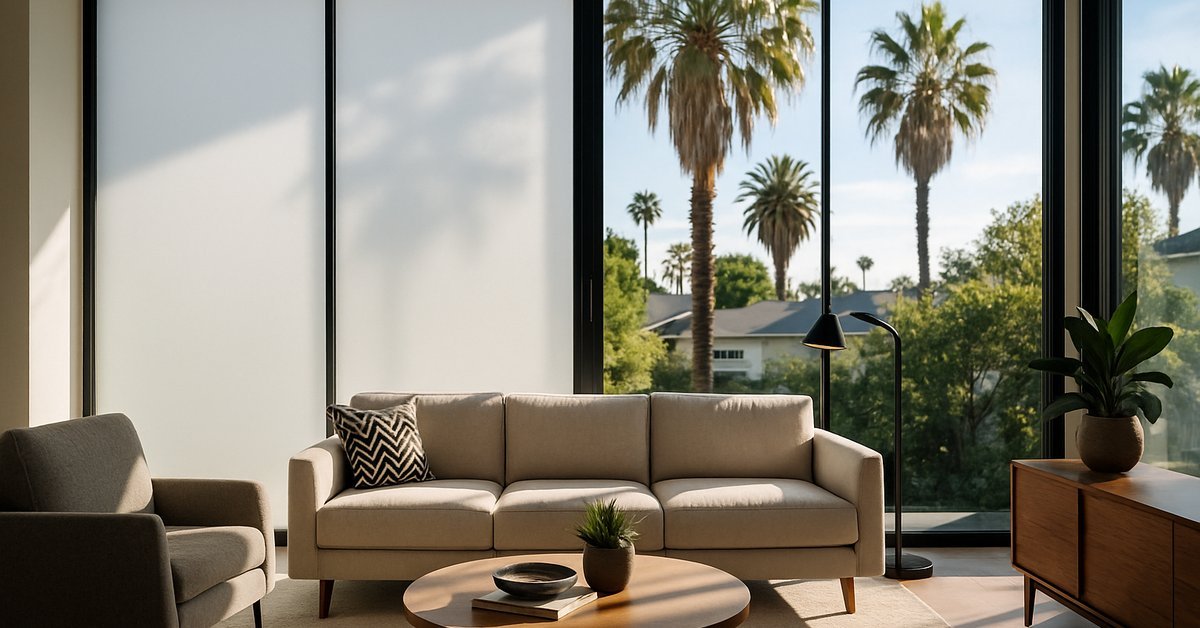
Los Angeles property owners searching for smart glasses solutions are choosing between three very different technologies that all get called “smart glass,” and picking the wrong one can cost you thousands. Smart film, smart glass, and LED film serve different problems entirely. The Los Angeles market runs higher than most of the country because of labor costs, permitting complexity, and the sheer size of the glazing typical in LA homes and commercial builds. This guide breaks down all three products by cost, use case, neighborhood fit, and city rules so you can make the right call before you spend a dollar.
Ready to talk specifics for your space? Get a free estimate from a licensed Los Angeles smart glass contractor before you commit to any product.
Smart Film, Smart Glass, or LED Film: What’s the Actual Difference in Los Angeles?
In Los Angeles, these three products are frequently confused, but they solve completely different problems. Smart film is a retrofit adhesive layer you apply to existing glass. Smart glass is a factory-manufactured unit with the switchable technology embedded between two glass panes. LED film converts glass into a transparent display panel. All three use electricity to change their optical state, but that’s where the similarity ends.
| Product | How It Works | Applied To | Primary Use Case | Reversible? |
|---|---|---|---|---|
| Smart Film | PDLC layer adheres to existing glass surface | Existing windows, glass doors, partitions | Privacy on demand in existing spaces | Yes, film can be removed |
| Smart Glass | PDLC or electrochromic tech built into IGU | New construction or full glass replacement | New builds, major renovations, high-end installs | No, glass unit must be replaced |
| LED Film | Transparent LED matrix laminated to glass | Existing glass storefronts, partitions, facades | Digital displays, advertising, architectural lighting | Yes, film can be removed |
Smart film uses PDLC (polymer dispersed liquid crystal) technology. When the power is off, the crystals scatter light and the glass goes opaque. Power on, they align, and the glass goes clear. The response time is nearly instant — under a second. Smart glass works on the same principle, but because the technology is laminated inside the glass unit during manufacturing, the optical quality is higher and the installation is cleaner. You won’t see the edge connectors or wiring that film installs sometimes show.
LED film is a different animal. It doesn’t switch between clear and opaque. It displays content. Think of it as a giant transparent screen applied to your window. A retail storefront in Silver Lake or a lobby partition in Century City can become a live video display while still allowing some light through. That’s a marketing and architectural tool, not a privacy tool. Knowing which problem you’re trying to solve is the first decision you need to make.
How Much Does Smart Glass Cost in Los Angeles in 2026?
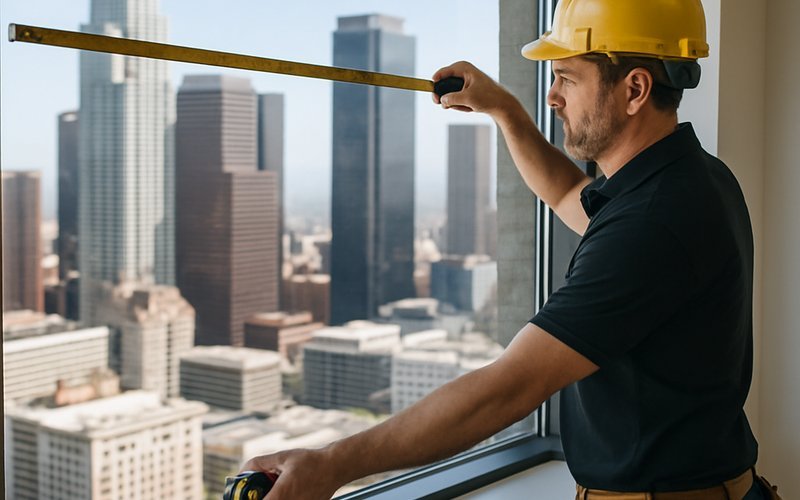
In Los Angeles, smart glass and smart film pricing runs 15–25% above national averages because of higher contractor labor rates, LA-specific permitting fees, and the cost of materials sourcing in the Southern California market. Here’s what real projects actually cost.
| Product | Installed Cost Per Sq Ft | Typical Residential Project | Typical Commercial Project | Lead Time in LA |
|---|---|---|---|---|
| Smart Film | $25–$55/sq ft | $2,800–$8,500 | $5,000–$40,000+ | 1–3 weeks |
| Smart Glass (PDLC) | $65–$120/sq ft | $7,500–$25,000 | $18,000–$100,000+ | 4–8 weeks |
| Smart Glass (Electrochromic) | $100–$150/sq ft | $12,000–$40,000+ | $30,000–$200,000+ | 6–12 weeks |
| LED Film | Quoted by project | Less common residential | $15,000–$80,000+ | 2–5 weeks |
A homeowner in Los Feliz recently had smart film installed on three large living room windows and a glass sliding door — roughly 220 square feet total. The project came in at $9,400 installed, including low-voltage wiring and a Lutron-compatible controller. That’s toward the higher end of the smart film range, driven by the custom glass dimensions and the integration work needed for their existing smart home system.
For smart glass, expect the biggest cost driver to be the glass replacement itself. You’re not just paying for the technology — you’re paying for demolition of existing glazing, new framing in some cases, and the city’s inspection process. Honestly, most homeowners underestimate this by 20–30% when they first get quotes. Always ask for a fully itemized estimate that separates materials, labor, and permit fees. Knowing the common mistakes Los Angeles homeowners make when buying smart glass will save you from a costly surprise.
If you want an accurate number for your specific project, request a detailed quote from Pacific Smart Glass — ballpark figures from online calculators won’t account for LA’s actual project conditions.
Which Los Angeles Neighborhoods Are Installing Smart Glass the Most (And Why)?
Demand for smart glass and smart film in Los Angeles tracks closely with home values, architectural style, and whether a building has modern glazing that supports retrofit installation. Four neighborhoods stand out right now.
Venice has become one of the highest-demand areas for smart film, particularly on street-facing glass in the small-lot homes and live/work lofts common there. Residents want to maintain natural light from the west-facing ocean side without giving pedestrians a clear view inside. Smart film solves this without sacrificing the open, modern look that defines Venice architecture.
Los Feliz and Silver Lake are both seeing steady commercial interest, especially in the retail corridors. Boutique shops and cafes are using smart film on their storefront glass to create flexible privacy for events or off-hours. A few hospitality businesses in Silver Lake have also added LED film to their street-facing windows as an ambient branding element — particularly effective at night when exterior light levels drop and the film becomes more visible.
Century City drives the highest commercial smart glass volume in the city. The high-rise office towers and medical buildings in this area have been upgrading conference rooms and executive floors with PDLC smart glass partitions that integrate with building automation systems. These aren’t small projects — a single floor build-out can involve 40–80 linear feet of switchable partition glass.
And residential installs in Hollywood Hills skew toward full smart glass replacement, driven by owners who are already undertaking larger renovations and want the factory-finished look of built-in technology rather than an applied film. The hillside homes with canyon-facing glass walls are a natural fit for electrochromic smart glass that adjusts tint automatically based on sunlight.
Does Smart Film Work on Existing Windows in Los Angeles?
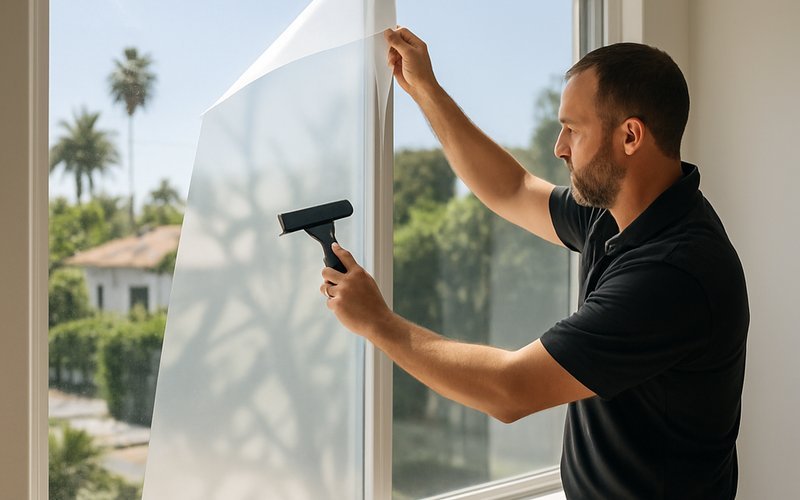
Yes, smart film installs directly on existing glass in the vast majority of Los Angeles residential and commercial buildings, but there are real conditions that affect compatibility. You don’t need to replace your windows to get switchable privacy — that’s the core advantage of film over glass.
The main compatibility question is whether your existing glass is tempered, laminated, or insulated. Smart film adheres to flat glass surfaces. Heavily textured, wired, or severely scratched glass won’t produce a clean adhesion, and some Low-E coatings can interfere with the film’s electrical conductivity at the bus bar connections. A qualified installer will assess this before quoting.
Los Angeles buildings present a specific challenge: many mid-century and pre-1980 commercial buildings have single-pane glass that’s still in serviceable condition. Smart film on single-pane glass works fine electrically, but you won’t gain any additional thermal insulation benefit from the film itself. If heat reduction is your goal, smart glass is worth understanding as a separate heat-reduction solution — the insulated glass unit does the thermal work, not the film.
Installation on existing windows typically takes 1–3 days for a residential project and 3–7 days for a commercial space, depending on size and electrical routing complexity. The film needs a 24-hour cure period before full switching use. Here’s a realistic breakdown of what the installation timeline looks like in Los Angeles if you want to plan around your schedule.
What Can LED Film Do That Smart Glass and Smart Film Can’t?
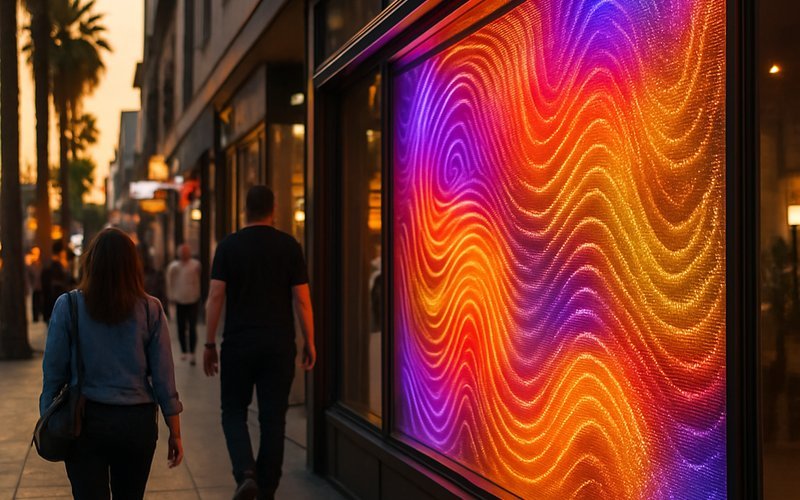
LED film does something neither smart film nor smart glass can: it turns your window or glass partition into a working display surface while keeping the glass functional. It’s not privacy glass. It’s architectural media.
The film is made of a transparent LED matrix — a grid of micro-LEDs spaced closely enough to display images and video, but spread far enough apart that the glass remains partially see-through. Transparency rates typically run 60–85% depending on the product and pixel pitch. The lower the pixel pitch (meaning more LEDs per square meter), the higher the resolution and the lower the transparency.
Where does this make sense in Los Angeles? Retail storefronts are the clearest use case. A Melrose Avenue boutique can display lookbook video on its front window at night, then have an effectively transparent storefront during daylight. Office lobbies use it for branded content on glass dividers. Entertainment and hospitality venues use it for immersive lighting effects on large glass facades.
What it won’t do is give you privacy. When the display is off, the glass looks like normal glass — not frosted or opaque. It also requires a media player, content management software, and proper electrical infrastructure. This is a more complex install than smart film, and content creation is an ongoing cost that smart glass buyers never face. If you’re looking specifically at this application for a commercial space, Pacific Smart Glass’s LED film installation service in Los Angeles covers the full scope from design through deployment.
How Do Los Angeles Building Rules Affect Your Smart Glass Install?
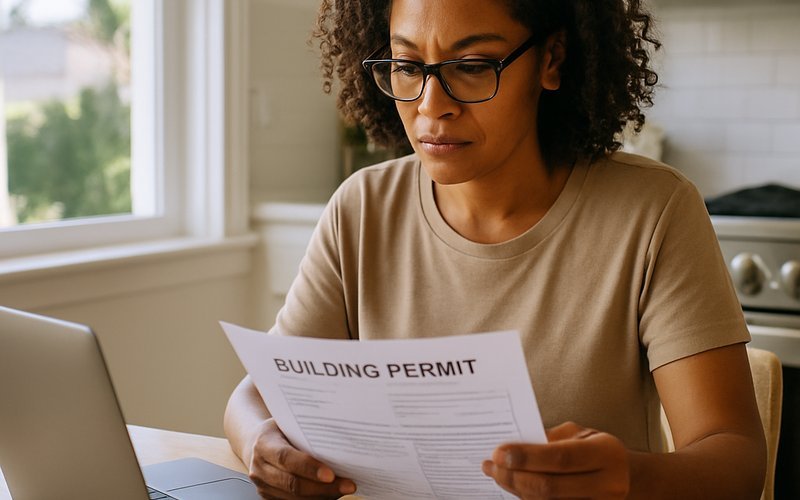
In Los Angeles, whether you need a permit for smart glass or smart film depends on the scope of work — specifically, whether you’re replacing structural glazing or only installing an applied film. The City of Los Angeles Department of Building and Safety (LADBS) is the authority you’ll deal with for any permitted work.
Smart film installation on existing glass typically does not require a building permit in Los Angeles. The film is treated as a non-structural modification. However, the low-voltage electrical work that powers the film — the bus bars, wiring, and controller — may require a permit from LADBS depending on the scope. A licensed C-7 (low voltage) or C-10 (electrical) contractor in California can pull this permit for you.
Smart glass replacement is a different story. Replacing existing windows or glass panels is classified as a structural alteration in most Los Angeles buildings. LADBS will require a permit, and in many cases a plan check, before work begins. In high-rise commercial buildings, the process can also involve the fire marshal’s office depending on the floor and building classification.
If your property is in a Historic Preservation Overlay Zone (HPOZ) — parts of Los Feliz, Silver Lake, and several other Los Angeles neighborhoods fall into these zones — any exterior glass modification requires additional review by the Office of Historic Resources. This can add 4–10 weeks to your project timeline and should be factored into your schedule from day one. A full breakdown of Los Angeles permit requirements for smart glass explains exactly what LADBS requires and when a licensed contractor needs to pull permits on your behalf.
How to Choose the Right Smart Glass Product for Your Los Angeles Property
Choosing between smart film, smart glass, and LED film in Los Angeles comes down to four things: your existing glass condition, your budget, whether you own or lease the space, and what problem you’re actually trying to solve.
Start with the use case. Privacy? Smart film or smart glass. Display advertising or architectural media? LED film. Heat control combined with privacy? Smart glass with electrochromic or high-grade PDLC is your strongest option. Don’t let a salesperson push you toward a product that fits their inventory rather than your need.
If you’re renting or leasing, smart film is almost always the right answer. It installs without structural modification and can be removed when your lease ends. Smart glass is a permanent investment in the building — meaningful for owners, risky for tenants. There’s important guidance on what Los Angeles renters can and can’t install that’s worth reading before you commit.
Budget is the honest filter most people skip. If your total budget is under $10,000, you’re in smart film territory. A high-quality smart film install on key windows in a typical Los Angeles home will fall comfortably in that range. Smart glass starts making financial sense when you’re already replacing windows for other reasons and can fold the upgraded technology into the project cost.
And finally, consider your smart home setup. Los Angeles homeowners using Lutron, Crestron, or Control4 systems can integrate both smart film and smart glass with existing controllers — but the wiring and control protocol need to be specified correctly up front. Ask your installer about compatibility before the project is quoted, not after.
If you’re ready to figure out exactly which product fits your property, reach out to Pacific Smart Glass for a site assessment. The team has been installing smart film, smart glass, and LED film across Los Angeles for commercial and residential clients and can walk you through real costs and timelines for your specific space. Start with a free consultation here.