
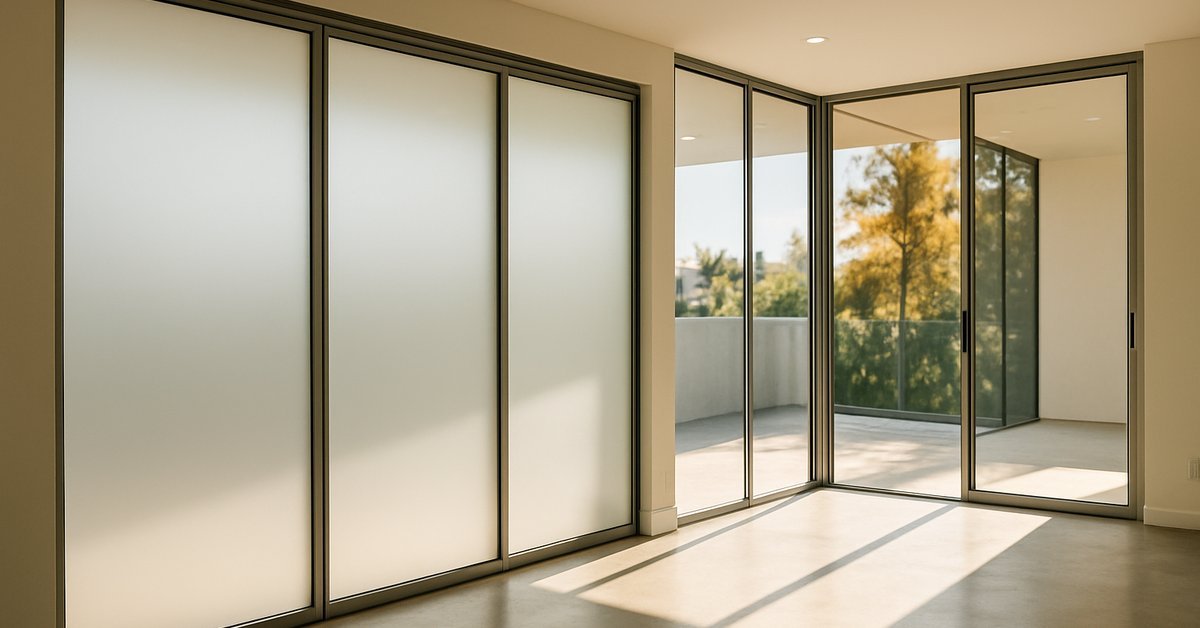
You’re weighing a major decision: whether to install a switchable, operable glass wall in your Los Angeles home or commercial space, and which technology actually makes sense for your situation. A full smart glass wall system costs $180–$420 per square foot installed, while smart film retrofits on existing panels start around $65–$120 per square foot. Los Angeles labor costs and the LADBS permit process add real time and money compared to other markets, so budgeting accurately matters before you commit. This guide breaks down real costs, technology differences, the permit process, and what a Glendale operable glass wall installation actually includes from start to finish.
Get a free estimate from a licensed Los Angeles smart glass contractor before you finalize your plans.
What Does Operable Glass Wall Installation Cost in Los Angeles?

In Los Angeles, operable glass wall installation costs range from $65 to $420 per square foot, depending entirely on the technology you choose and the complexity of the opening. Smart film on existing panels sits at the low end. Full custom smart glass wall systems with motorized bi-fold or sliding hardware sit at the high end. Most residential projects fall between $12,000 and $55,000 total, while commercial installs in office or retail settings can run well above that.
| Technology | Cost Per Sq Ft (Installed) | Best For | Typical Project Total |
|---|---|---|---|
| Smart Film (retrofit) | $65–$120 | Existing glass panels, renters, budget retrofits | $4,000–$18,000 |
| Smart Glass (new panels) | $180–$320 | New construction, full wall replacements | $18,000–$45,000 |
| Smart Glass (premium, motorized) | $280–$420 | Large commercial, high-spec residential | $30,000–$75,000+ |
| LED Film (transparent display) | $150–$350 | Retail, hospitality, storefront displays | $12,000–$60,000 |
Your biggest cost driver isn’t the glass itself — it’s the hardware. Motorized sliding or folding track systems for an operable wall add $8,000–$22,000 on their own, before you touch the glass panels. And in Los Angeles, union labor rates on commercial jobs push installation costs meaningfully higher than the national average.
A homeowner in Silver Lake recently completed a 280 sq ft operable smart glass wall between their living room and backyard deck for $41,000 total, including a four-panel bi-fold system with motorized tracks and PDLC smart glass panels. The project took six weeks from permit approval to final walkthrough. That’s a useful benchmark for a mid-range residential job in Los Angeles.
If you want a precise number for your project, contact Pacific Smart Glass for a site-specific Los Angeles estimate — costs vary significantly based on your opening dimensions and wall conditions.
Smart Glass vs. Smart Film vs. LED Film: Which Works Best for Operable Walls in Los Angeles?
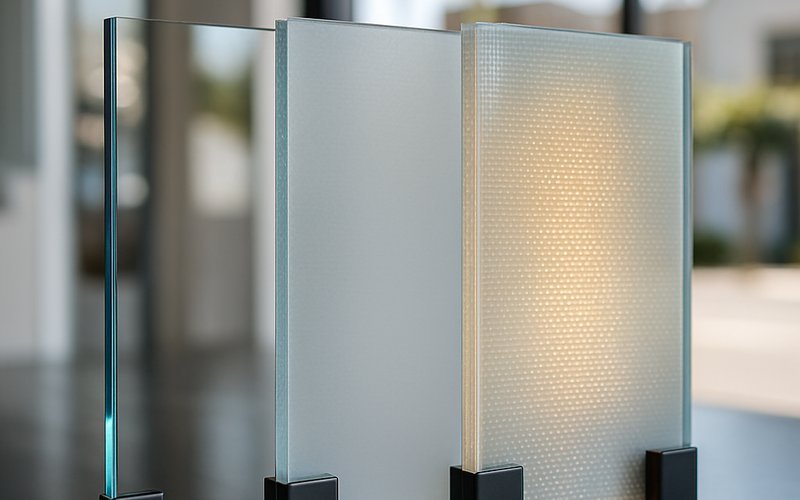
For operable glass walls specifically, the technology choice matters more than most buyers realize. Not every option works equally well on movable panels.
| Feature | Smart Glass | Smart Film | LED Film |
|---|---|---|---|
| Privacy when off | Frosted (opaque) | Frosted (opaque) | Semi-transparent |
| Clarity when on | Fully clear | Mostly clear (slight haze) | Fully transparent |
| Works on existing panels? | No (replacement only) | Yes (adhesive retrofit) | Yes (adhesive retrofit) |
| Works on operable/moving panels? | Yes (with flexible wiring) | Yes (with proper wire routing) | Yes (with wire management) |
| Heat reduction | Good (electrochromic: excellent) | Moderate | Minimal |
| Typical lifespan | 15–25 years | 8–15 years | 8–12 years |
Smart glass is the stronger long-term choice if you’re doing a full wall replacement. It’s built into the glass itself, so there’s no film to bubble, peel, or re-apply. But it only works as a full panel replacement, not a retrofit. Smart film is the practical choice when you already have quality glass panels and want switchable privacy without replacing them.
LED film is a different animal entirely. It’s less about privacy and more about turning your glass wall into a display surface. Retail spaces in Los Angeles use it for branded projections on storefront glass. It’s not the right call for a residential living room wall.
For Los Angeles specifically, heat rejection matters. The city’s climate means your south- and west-facing walls take real sun pressure. Electrochromic smart glass, which tints dynamically in response to light, outperforms standard PDLC smart glass in heat control. Read more about how smart glass handles Los Angeles heat before making your final technology choice.
What Does a Glendale Operable Glass Wall Installation Actually Include?
A Glendale operable glass wall installation covers more than most buyers expect. Understanding what’s included — and what’s not — prevents surprise invoices after the project starts.
Site Assessment and Engineering
Before any glass is ordered, the installer needs to assess your opening dimensions, wall structure, floor condition, and ceiling attachment points. Operable glass wall systems are heavy. A full 20-foot sliding wall system can weigh 800 to 1,200 pounds, and the track hardware has to be anchored into structural members. This assessment takes 1–3 days and is usually included in the project cost, though some contractors charge a separate site survey fee of $300–$600.
Custom Glass Panel Fabrication
Smart glass panels are custom-fabricated to your exact opening dimensions. Standard lead times from reputable manufacturers run 3–6 weeks. You can’t rush this without paying a premium. The panels arrive on-site ready to install, laminated and wired, with the electrical connections already embedded in the interlayer.
Track and Hardware Installation
This is where operable walls differ from fixed smart glass. The track system, whether sliding, folding, or pivot, gets installed first, before the panels arrive. That means two separate site visits in most cases. Hardware installation typically takes 1–2 days for a single opening.
Electrical Wiring and Control System
Every smart glass or smart film panel needs low-voltage power. On an operable wall, wiring runs through the track system or along a flexible conduit to accommodate panel movement. Control options include wall switches, app-based control, or integration with smart home systems like Lutron or Crestron. Electrical work on a typical residential install adds $1,200–$3,500 to the project.
Final Testing and Commissioning
A proper installation includes a full test of every panel’s switching function, the control system, and the mechanical operation of the track. Don’t skip this — it’s the step that catches wiring issues before they become repair calls six months later.
Which Los Angeles Neighborhoods Are Installing Operable Glass Walls Right Now?
Demand for operable glass walls has grown steadily across Los Angeles, but a few neighborhoods are seeing disproportionate activity right now.
Silver Lake and Los Feliz have become two of the most active markets for residential smart glass wall systems. Both neighborhoods have a high concentration of mid-century modern and contemporary homes where indoor-outdoor living is already built into the architecture. Adding an operable smart glass wall to replace a fixed glass slider or a solid wall is a natural upgrade for these homes.
In Koreatown, the commercial buildout has been strong. Medical offices, therapy practices, and high-end restaurants are installing switchable glass walls to create flexible room configurations without permanent construction. A therapy group in Koreatown recently installed four smart glass partition panels, each independently switchable, to convert a large open suite into private treatment rooms on demand.
Echo Park and Silverlake’s adjacent hillside properties are seeing ADU-related installs, where smart glass walls are used to separate the ADU from the primary structure visually while maintaining an open feel. If you’re considering smart glass for an ADU or home office, this room-by-room guide for Los Angeles homes covers the best placement decisions in detail.
Do You Need a Permit for an Operable Glass Wall in Los Angeles?
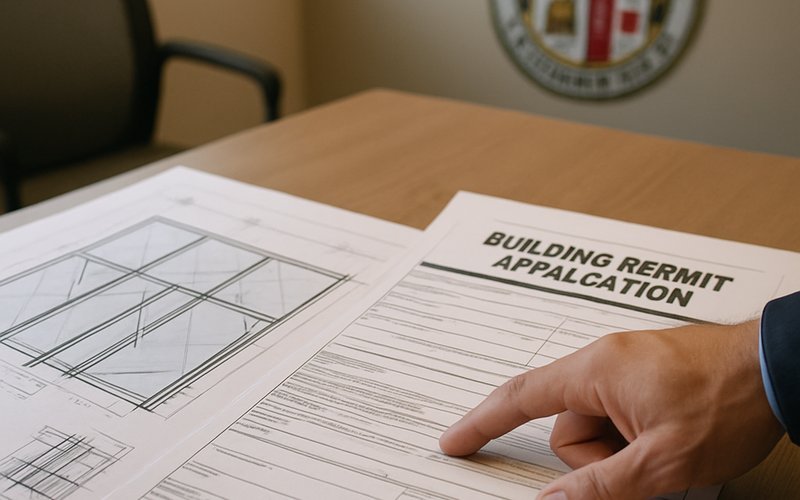
In most cases, yes. Los Angeles requires a building permit from the Los Angeles Department of Building and Safety (LADBS) for any structural wall modification, new opening creation, or load-bearing track installation associated with an operable glass wall system.
Here’s where it gets specific. If you’re retrofitting smart film onto existing glass panels in an existing operable wall system, no structural work is involved, and a permit is generally not required for the film itself. The electrical work to power the film may require an electrical permit, depending on whether you’re adding new circuits or drawing from an existing outlet.
If you’re installing a new operable wall system — cutting a new opening, installing a structural header, anchoring a ceiling track — you’ll need a building permit through LADBS. The permit fee in Los Angeles typically runs $500–$1,800 for residential projects of this scope, and plan check can take 3–8 weeks unless you use LADBS’s expedited Over-the-Counter (OTC) plan check service for simpler projects.
Your contractor should pull the permit. If they suggest skipping it, that’s a red flag. Unpermitted structural work in Los Angeles can create problems when you sell the property and will not pass a home inspection. For a detailed breakdown of the Los Angeles permit process for smart glass, see what LADBS actually requires for switchable glass installations.
How Long Does an Operable Glass Wall Installation Take in Los Angeles?
A full operable smart glass wall installation in Los Angeles takes 6–12 weeks from contract signing to completion in most cases. That timeline breaks down like this:
- Week 1–2: Site assessment, engineering review, permit application submission to LADBS
- Week 2–6: LADBS plan check and permit approval (standard track); glass panel fabrication runs concurrently
- Week 6–8: Track and hardware installation, electrical rough-in
- Week 8–10: Panel delivery and installation
- Week 10–12: Electrical finishing, control system setup, final inspection, commissioning
Smart film retrofits on existing panels move much faster — often 2–4 weeks total — because there’s no structural work and usually no LADBS permit required. For a detailed timeline breakdown, this Los Angeles smart glass installation timeline guide walks through every phase.
The single biggest delay in Los Angeles is LADBS plan check. If your contractor submits complete drawings the first time, you’ll stay on the shorter end. Incomplete submittals go back for corrections and add 2–4 weeks easily.
How to Find the Right Operable Glass Wall Installer in Los Angeles
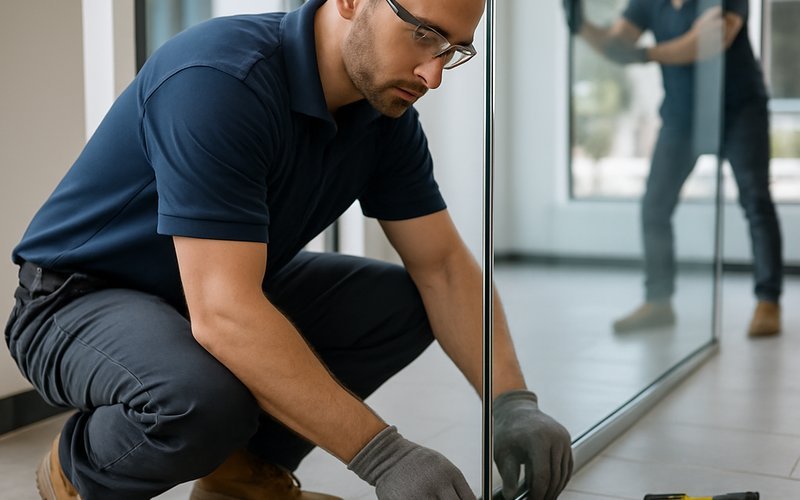
Not every glazing contractor has experience with operable wall systems specifically. This is a specialized install that combines architectural glass, mechanical hardware, and low-voltage electrical — and a contractor weak in any one area will cost you money down the line.
Before you hire anyone, ask these specific questions:
- Have you installed operable smart glass walls in Los Angeles before? Can you show photos of completed projects?
- Do you pull LADBS permits, or does the homeowner have to handle that?
- What glass panel manufacturers do you work with, and what warranty do they offer?
- Who handles the electrical — do you subcontract it, or is it in-house?
- What’s your warranty on the installation itself, separate from the manufacturer warranty?
Licensing matters. In California, a contractor installing an operable glass wall system should hold a C-17 (glazing) license at minimum. If electrical work is included in the scope, a C-10 (electrical) license is required for that portion. You can verify both at the California Contractors State License Board (CSLB) website.
Honestly, the cheapest bid is rarely the right one here. A botched operable wall install — panels that don’t seat properly in the track, wiring that fails under repeated movement, a track that deflects under load — is expensive to fix. Pay for experience.
If you’re sourcing smart film for a property near Los Angeles, it’s worth knowing that Pacific Smart Glass also serves the broader Southern California market. Their smart film services for Orange County are an option if you’re managing properties in multiple areas.
Ready to move forward on your Glendale operable glass wall installation? Contact Pacific Smart Glass for a site assessment and quote — they handle permitting, fabrication coordination, and installation across Los Angeles.