
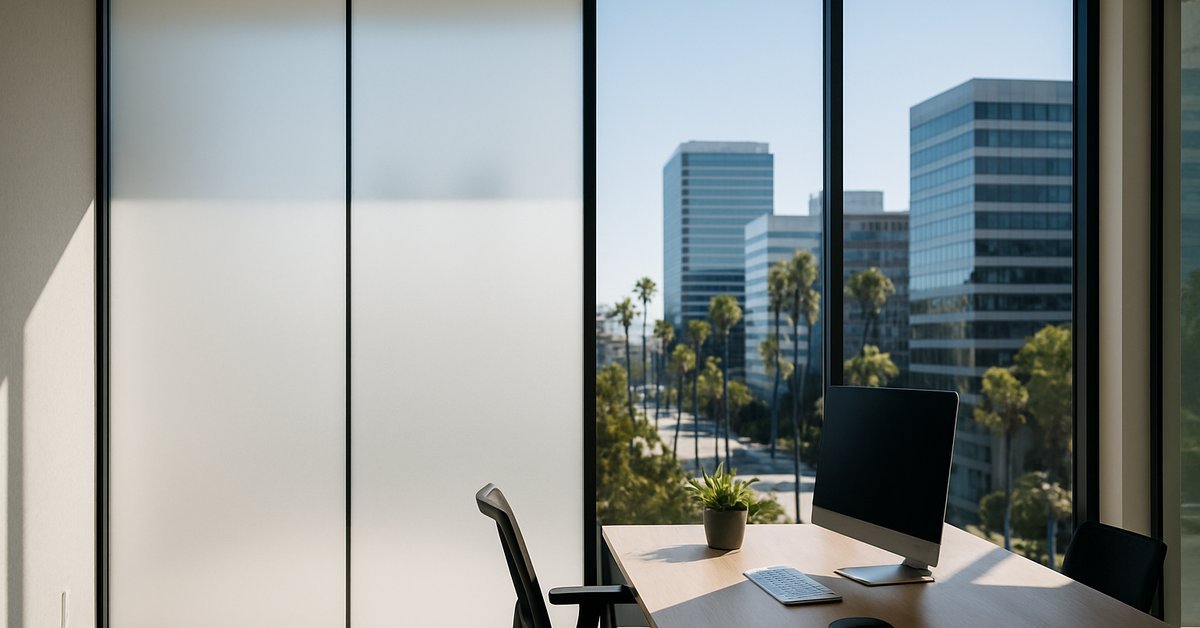
You’re sourcing switchable glass for a Los Angeles project and you need to know who actually makes it, what exactly they’re selling, and what it’s going to cost. Those are three different questions, and most buyers don’t realize that until they’re already mid-quote. In Los Angeles, switchable glass manufacturers supply three separate product categories: PDLC smart glass, self-adhesive smart film, and LED film, and each one comes from a different part of the supply chain. California’s Title 24 energy code adds another layer, since not every product qualifies for the solar heat gain requirements required in warm-climate zones like LA. This guide walks you through every product type, real cost ranges, the neighborhoods driving demand, and exactly what to ask before you place an order.
Ready to skip the research and get a direct quote? Connect with Pacific Smart Glass for a free estimate on your Los Angeles project.
What Do Switchable Glass Manufacturers in Los Angeles Actually Make?
Switchable glass manufacturers don’t all make the same thing. That’s the first thing to understand. Some fabricate finished glass units with PDLC (polymer dispersed liquid crystal) technology laminated between two panes. Others supply rolls of film that get applied to existing glass in the field. And a third category produces LED film, which is an entirely different product with a transparent display function layered onto glass surfaces.
True smart glass is a factory-fabricated unit. A manufacturer takes two sheets of tempered or laminated glass, bonds a PDLC interlayer between them, and ships the finished unit to a glazier or installer. You can’t make this in the field. It has to be spec’d with exact dimensions upfront, because cutting it after fabrication destroys the electrical layer. Lead times run 3–8 weeks depending on unit size and the manufacturer’s queue.
Smart film is the flexible version. It’s manufactured as a self-adhesive film on a roll, shipped flat, and applied directly to existing glass by an installer on-site. The underlying technology is the same PDLC principle, but the delivery format is completely different. This matters a lot if you’re retrofitting existing windows in a West Adams Victorian or adding privacy to a glass conference room in downtown Los Angeles without replacing the glass entirely.
LED film sits in its own category. It’s a transparent, flexible display screen that bonds to glass. When off, it’s nearly invisible. When powered, it becomes a high-resolution display surface. Retail storefronts, hotel lobbies, and residential feature walls in Los Angeles have started using it for branding and ambiance. It’s not a privacy product in the traditional sense, but some manufacturers bundle it into their switchable glass line because the installation workflow is similar.
So when someone says “switchable glass manufacturer,” they might be describing any of these three product types. Know which one you actually need before you start calling suppliers.
Smart Film vs. Smart Glass vs. LED Film: Which Product Fits Your Los Angeles Project?
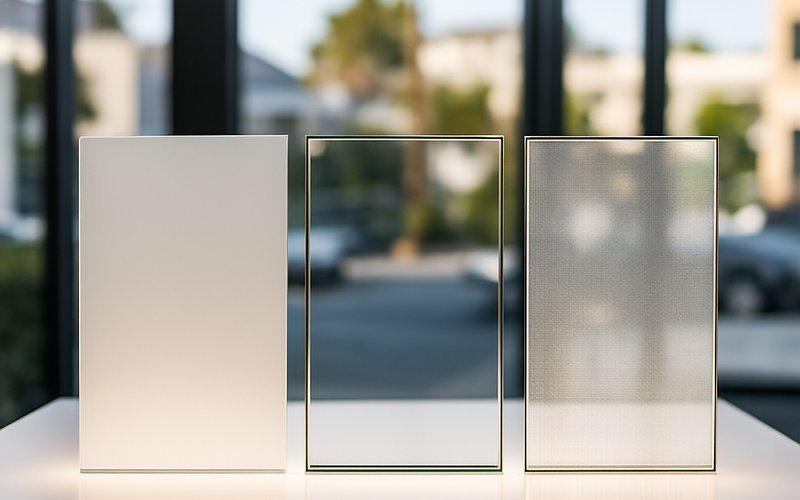
The right product depends on your substrate, your goal, and your budget. Here’s a direct comparison of all three across the factors that matter most to Los Angeles buyers.
| Product | Applied To | Privacy Function | Display Function | Title 24 Eligible | Typical Cost (per sq ft installed) |
|---|---|---|---|---|---|
| Smart Glass (PDLC laminated unit) | New construction or full replacement | Yes, opaque when off | No | Yes, with correct SHGC spec | $150–$350 |
| Smart Film (self-adhesive PDLC) | Existing glass surfaces | Yes, opaque when off | No | Partial, depends on base glass | $85–$175 |
| LED Film | Existing glass or new units | Partial (frosted effect) | Yes, full transparent display | Not applicable | $120–$280 |
Smart glass is the right call when you’re doing new construction or a full window replacement and you want the cleanest possible look. There are no visible layers, no adhesive edges, and the electrical connection is built into the frame. But it commits you to a single size and spec at order time, so changes after fabrication are expensive.
Smart film is the practical choice for retrofits. A homeowner in Silver Lake recently added smart film to an existing bathroom skylight for $1,100 total, including material and installation, because replacing the entire skylight unit would have run over $4,000. The film delivered the same on-demand privacy at a fraction of the cost. It’s not permanent either, which matters if you’re renting or may sell the property.
And if your goal is visual display rather than privacy, smart film and smart glass won’t get you there. That’s LED film’s job, and it’s genuinely different technology. Pacific Smart Glass offers LED film solutions in Los Angeles that work on both new and existing glass, with transparent pixel pitch options for retail and commercial applications.
How Much Does Switchable Glass Cost in Los Angeles in 2026?
In Los Angeles, switchable glass costs more than the national average for two reasons: labor rates run higher, and most projects involve custom fabrication rather than stock sizes. There’s no “off the shelf” smart glass for a non-standard window.
| Project Type | Typical Size | Material Cost | Installation | Total Range |
|---|---|---|---|---|
| Single bathroom smart film window | 12–20 sq ft | $800–$2,000 | $300–$600 | $1,100–$2,600 |
| Conference room smart glass partition (new unit) | 60–120 sq ft | $9,000–$28,000 | $2,500–$5,000 | $11,500–$33,000 |
| Retail storefront LED film | 40–80 sq ft | $8,000–$18,000 | $1,500–$3,500 | $9,500–$21,500 |
| Residential bedroom privacy glass (replacement unit) | 20–40 sq ft | $4,500–$12,000 | $1,200–$2,500 | $5,700–$14,500 |
Your biggest cost variable is whether you’re buying a fabricated glass unit or a film. Film material is sold by the square foot and priced in a relatively tight range. Smart glass units are priced by the unit, and custom sizing adds cost every time. If your opening is an odd dimension, expect a fabrication surcharge of 15–25% above standard pricing.
Also factor in controls. A basic on/off wall switch adds almost nothing to the cost. A Lutron or Crestron integration for a home automation system can add $800–$3,500 per zone depending on the control hardware you spec. Most LA residential buyers doing high-end installs in neighborhoods like Bel Air or Los Feliz go the full integration route. Most commercial buyers in smaller offices keep it simple.
Want a quote tailored to your specific opening dimensions and product type? Request a free estimate from Pacific Smart Glass and get a number you can actually use for your budget.
Which Los Angeles Neighborhoods Are Installing Smart Glass the Most?
Demand isn’t evenly distributed across Los Angeles. Certain neighborhoods are seeing far more switchable glass projects than others, and understanding why helps you benchmark your own project expectations.
Silver Lake and Echo Park have become hotspots for smart film retrofits on older residential stock. The housing inventory there includes a lot of 1930s–1960s bungalows and mid-century homes with large, single-pane windows that aren’t going to be replaced wholesale. Smart film gives those homeowners privacy and solar control without touching the original glass. Projects in this pocket run mostly in the $1,200–$4,500 range for one or two rooms.
West Hollywood and Koreatown are seeing the most commercial switchable glass activity, driven by office-to-residential conversions, new restaurant buildouts, and boutique fitness studios that want transparent partitions they can switch to opaque for classes. These are larger projects, often 80–300 square feet of glass surface, and they typically involve new smart glass units rather than film.
Bel Air and the Hollywood Hills skew heavily toward custom smart glass in new construction. Architects on these projects specify smart glass from the design phase, and budgets in the $40,000–$120,000 range for full-home installations aren’t unusual. These buyers are almost always going direct to a manufacturer or working through a high-end glazier who has an established supply relationship.
Downtown Los Angeles, particularly the Arts District, is where LED film projects are most concentrated. Retail brands, pop-up activations, and hospitality venues in that corridor have embraced transparent display glass as a storefront differentiator. It’s a different buyer profile entirely: brand-driven, display-focused, with a budget tied to marketing spend rather than construction cost.
What Should You Ask a Switchable Glass Manufacturer Before Ordering in Los Angeles?
Before you commit to a switchable glass manufacturer for your Los Angeles project, you need answers to specific technical questions. Not vague ones. Concrete ones that affect fabrication, compliance, and long-term performance.
Fabrication and Lead Time
- What is your current lead time for custom-size PDLC units? (Accept no answer vaguer than a week range.)
- Do you fabricate in-house or source the PDLC interlayer from a third party?
- What tolerances do you hold on custom dimensions, and what’s your policy if a unit arrives off-spec?
Compliance and Certification
- Is your smart glass UL listed? California projects involving electrical components in a building envelope typically require this.
- What is the SHGC (solar heat gain coefficient) of your glass unit, and do you have documentation for Title 24 compliance review by the Los Angeles Department of Building and Safety (LADBS)?
- Can you provide a product data sheet that an LADBS plan checker can review?
Warranty and Support
- What does your warranty cover, and specifically, does it cover delamination of the PDLC layer?
- If a unit fails after installation, what’s the replacement timeline and who bears shipping cost?
- Do you have an authorized installer network in Los Angeles, or do you ship direct and expect the buyer to arrange installation?
Honestly, most manufacturers will answer the UL and SHGC questions confidently if they’re legitimate. If a supplier hedges on either, treat that as a red flag. California’s energy code isn’t optional, and LADBS plan checkers will ask for documentation on any permitted project. Read more about what LADBS requires for smart glass permits in Los Angeles before you finalize your spec.
LED Film: The Option Most Los Angeles Buyers Haven’t Considered Yet
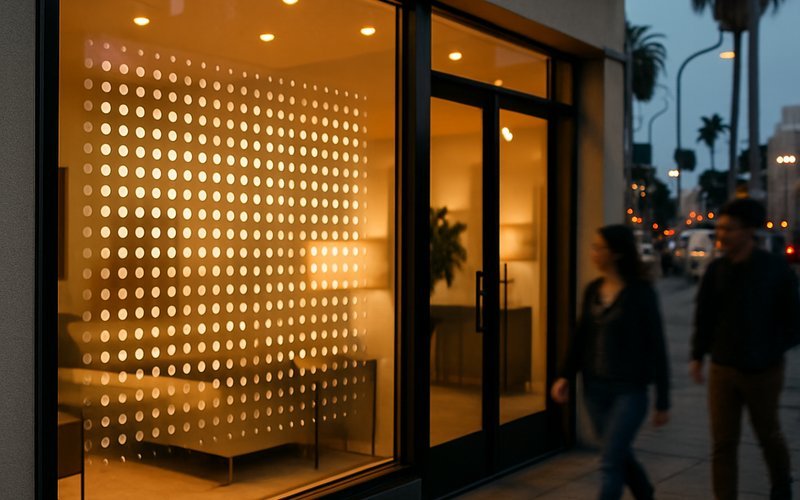
LED film is genuinely underused in Los Angeles, and that’s partly because most people discover it by accident rather than by design. It doesn’t fit neatly into the “privacy glass” conversation, which is where most buyers start their research.
Here’s what it actually does. LED film is a thin, flexible transparent display layer that bonds to existing glass using an optically clear adhesive. When the display is off, it’s nearly invisible. When it’s on, it can show video content, static graphics, animations, or ambient lighting effects. The glass behind it remains transparent, so you’re not blocking the view or the light. You’re adding a display layer onto the glass surface.
The pixel pitch determines resolution at a given viewing distance. For close-range retail applications, a 3.9mm pitch is common. For large facades viewed from the street, a 10mm pitch works fine at lower cost. A 40-square-foot storefront LED film installation in a retail corridor typically runs $9,500–$14,000 fully installed, including the controller hardware and content management software.
What makes this interesting for Los Angeles specifically is the commercial density in neighborhoods like the Arts District, Fairfax, and Melrose. Storefronts are competing hard for foot traffic, and a transparent display window that shows content without blocking natural light is a genuinely different tool than a printed vinyl wrap or a traditional LED sign. Several brands on Fairfax Ave have already made this switch, and the trend in retail is moving fast. Take a closer look at how LA glass storefronts are becoming digital displays to see the commercial case in detail.
For residential use, LED film is less common but not unheard of. Feature walls, home theaters, and entertainment rooms in larger homes are the primary applications. The privacy function is secondary to the display function in these installs.
How to Source and Spec Switchable Glass for a Los Angeles Project

Sourcing switchable glass for an LA project runs through one of three channels: direct from a manufacturer, through a dealer-installer, or through a glazier who has manufacturer supply agreements. Each path has real tradeoffs.
Buying direct from a switchable glass manufacturer gives you the lowest per-square-foot price, but it puts all the coordination on you. You’ll need a licensed glazier to handle installation, you’ll manage the delivery logistics, and if anything arrives damaged, you’re negotiating with the manufacturer yourself while your installation schedule stalls. For large commercial projects where a dedicated project manager is already on staff, this works. For most residential buyers, it’s more friction than it’s worth.
Dealer-installers handle the full pipeline: they source the glass, coordinate fabrication lead times, and perform the installation. You pay a markup over direct pricing, but that markup covers project management, warranty coordination, and accountability. In Los Angeles, where labor scheduling is genuinely difficult and lead times from overseas manufacturers can stretch unpredictably, having a local partner manage the supply chain has real value.
Glaziers with manufacturer relationships sit in between. They’re primarily glass installers, but they have established accounts with PDLC manufacturers and can spec and order product on your behalf. They’re a good fit for projects where the switchable glass is one component of a larger glazing scope.
For permitting: any switchable glass installation that involves new wiring or a new electrical circuit in Los Angeles requires permits pulled through LADBS (Los Angeles Department of Building and Safety). Smart film applied to existing glass with a plug-in controller typically doesn’t trigger a permit. New smart glass units wired into a building’s electrical system almost always do. Check whether your project might also qualify for California energy rebates, since some Title 24-compliant smart glass installations are eligible.
If you’re at the spec stage and ready to talk real numbers for a Los Angeles project, reach out to Pacific Smart Glass. They handle sourcing, fabrication coordination, installation, and permitting across all three product types, so you’re dealing with one contact instead of three.