
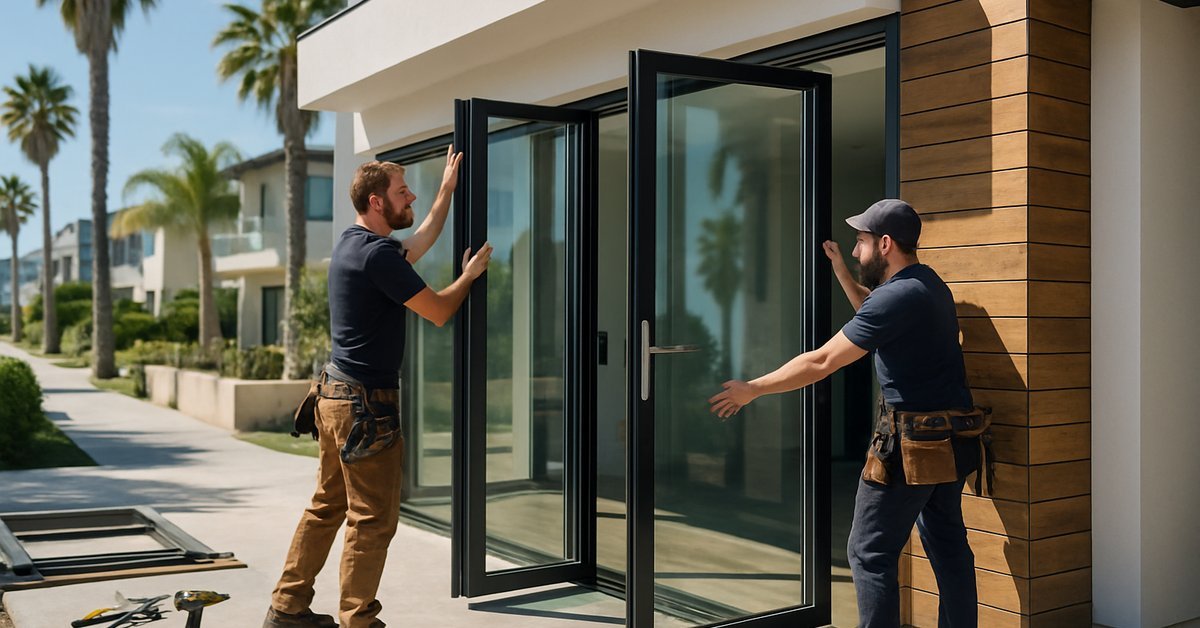
A long beach operable glass wall installation has become one of the fastest-growing property upgrades in the area, with Long Beach owners choosing this improvement over nearly every other interior or exterior renovation right now. The cost lands between $850 and $2,800 per linear foot installed, with most homes and commercial spaces in the $12,000–$45,000 range depending on panel count, framing, and glass technology. In Long Beach and the greater LA metro area, labor costs and permit complexity add roughly 15–25% compared to national averages, so your budget needs to reflect that reality. This guide covers costs, smart glass technology options, permit details specific to Long Beach, and neighborhood-level examples so you can make a confident decision. Ready to get a ballpark for your project? Get a free estimate from a licensed Los Angeles installer.
What Is an Operable Glass Wall and Why Are Long Beach Properties Installing Them?
An operable glass wall is a system of framed glass panels that slide, fold, or pivot to open an indoor space to the outdoors or to divide interior rooms on demand. Unlike a fixed glass window or door, these systems can fully retract, creating a pass-through opening that spans an entire wall. They’re built with aluminum or steel tracks, tempered or laminated safety glass, and hardware rated for thousands of open-close cycles.
Long Beach properties are installing them for a specific reason: the climate makes indoor-outdoor living genuinely functional for most of the year. A rear patio or restaurant terrace that connects to an interior space is usable for 10 or 11 months without discomfort. That’s not true in most of the country, but it is true here. So the investment pays off differently in this market than it would in a colder region.
Residential demand is strongest in homes with rear yards that face a patio, pool, or garden. Commercial demand is highest in restaurants and retail storefronts where street-facing openability draws foot traffic. And increasingly, property owners are pairing these systems with smart film, smart glass, or LED film to add privacy control and visual interest without adding blinds or curtains that defeat the whole open-air concept.
A long beach operable glass wall installation isn’t a niche luxury product anymore. It’s a practical upgrade that architectural glass contractors in Los Angeles are installing weekly across the region.
How Much Does Operable Glass Wall Installation Cost in Long Beach?
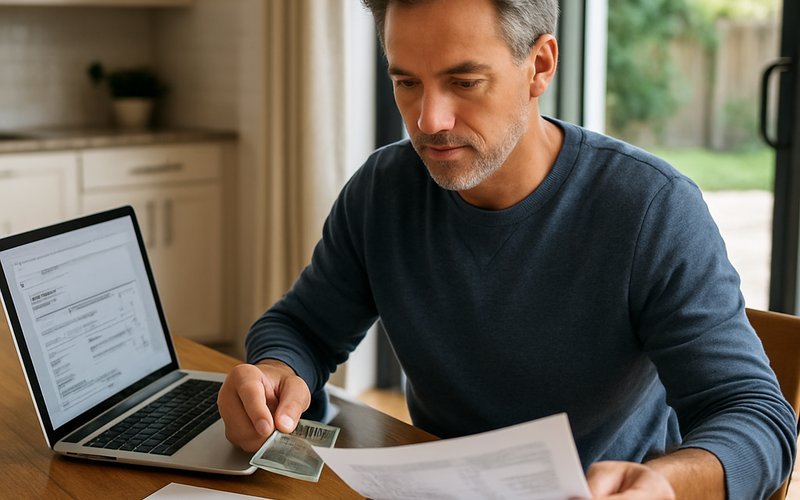
In Long Beach, operable glass wall installation typically runs $850–$2,800 per linear foot all-in, including materials, framing, hardware, and labor. Here’s how that breaks down by system type and glass technology.
| System Type | Base Cost (per linear ft) | With Smart Film Added | With Smart Glass Panels | With LED Film Added |
|---|---|---|---|---|
| Aluminum sliding panels (residential) | $850–$1,200 | $950–$1,400 | $1,300–$1,800 | $1,100–$1,500 |
| Folding/bi-fold system (residential) | $1,100–$1,600 | $1,200–$1,800 | $1,600–$2,200 | $1,400–$1,900 |
| Frameless pivot system (high-end) | $1,800–$2,800 | $2,000–$3,000 | $2,400–$3,400 | $2,100–$3,100 |
| Commercial storefront folding wall | $1,200–$2,000 | $1,350–$2,200 | $1,700–$2,600 | $1,500–$2,300 |
A homeowner in the Belmont Shore neighborhood recently completed a 16-foot rear patio opening using an aluminum bi-fold system with smart film applied to all panels. Total project cost came to $28,400, which included structural header work, track installation, smart film with a wireless controller, and finishing trim. The smart film alone added about $3,200 to the project, but it eliminated the need for any window covering on a wall facing a neighbor’s property.
Your biggest cost variables are panel count, structural modifications to the rough opening, and whether you’re adding glass technology. If your wall already has a header and the framing is sound, you’ll save $2,000–$5,000 compared to a project that needs a new structural beam. Don’t skip a structural assessment before you sign anything.
If you want an accurate number for your specific space, Pacific Smart Glass offers smart film consultation and pricing for Long Beach projects with no obligation to commit.
Smart Film, Smart Glass, or LED Film: Which Technology Fits a Long Beach Operable Wall?
All three technologies work on operable glass wall panels, but they solve different problems and carry different price tags. Here’s a direct comparison so you can match the right product to your actual goal.
| Technology | How It Works | Best Use Case | Cost (per sq ft, installed) | Retrofittable? |
|---|---|---|---|---|
| Smart Film (PDLC) | Applied to existing glass; switches from frosted to clear with power | Privacy on demand, residential patios, offices | $40–$85 | Yes — applies to existing panels |
| Smart Glass (built-in PDLC) | PDLC layer laminated into the glass at the factory | New installations, high-traffic commercial | $90–$180 | No — requires panel replacement |
| LED Film | Transparent film with embedded LEDs for display or ambient light | Retail storefronts, restaurant branding, hospitality | $120–$250 | Yes — applies to existing panels |
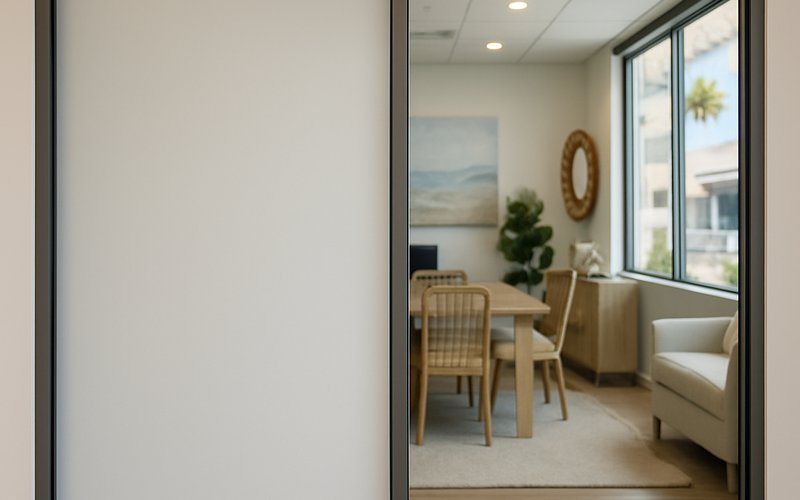
Smart film is almost always the right starting point for homeowners who already have a glass wall or are installing a new one and want to add privacy without replacing panels. The film applies directly to the existing glass surface, switches from opaque to clear in under a second, and can be controlled by a wall switch, smartphone app, or integrated into a smart home system like Lutron or Crestron.
Smart glass is the cleaner solution for commercial builds where the panels are being specified from scratch. You’re paying more per square foot, but you get a single factory-integrated unit with no film seams or adhesion concerns. For a Long Beach restaurant or hotel lobby doing a full buildout, that premium often makes sense.
LED film is a different category entirely. It doesn’t replace privacy film. It turns glass panels into low-resolution display surfaces. Think animated logos on a storefront, dynamic menus visible from the sidewalk, or ambient lighting effects in a hospitality space. For more context on how these technologies compare across Los Angeles projects, see our overview of switchable glass options in Los Angeles.
Do Long Beach Operable Glass Wall Projects Require a Permit in Los Angeles?
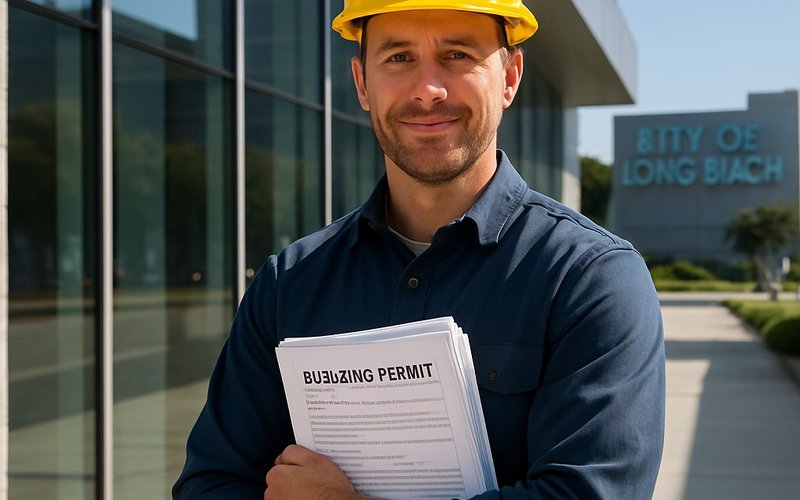
Yes. Any operable glass wall installation that modifies an existing wall opening, requires a structural header, or changes the load path of the structure needs a building permit in Long Beach. The City of Long Beach Development Services Department handles building permits, and they operate under the California Building Code with local amendments.
Here’s what typically triggers a permit requirement:
- Enlarging or modifying an existing door or window opening
- Installing a new structural header to span the opening
- Any work that affects an exterior wall of a residence or commercial space
- Electrical work for smart film, smart glass, or LED film low-voltage wiring
What typically does NOT require a permit: applying smart film or LED film to existing panels that don’t require any structural modification. Film application is a surface treatment, not a structural alteration. The low-voltage wiring for the film controller may still require an electrical permit depending on the scope.
For residential projects, expect a plan check period of 2–6 weeks and permit fees in the range of $400–$1,200 depending on project valuation. Commercial projects with significant structural work can run longer. Call the Long Beach Development Services Department directly at (562) 570-5416 before you finalize your timeline. Don’t assume your contractor will handle permit timing automatically without asking.
Which Long Beach Neighborhoods Are Installing Operable Glass Walls Right Now?
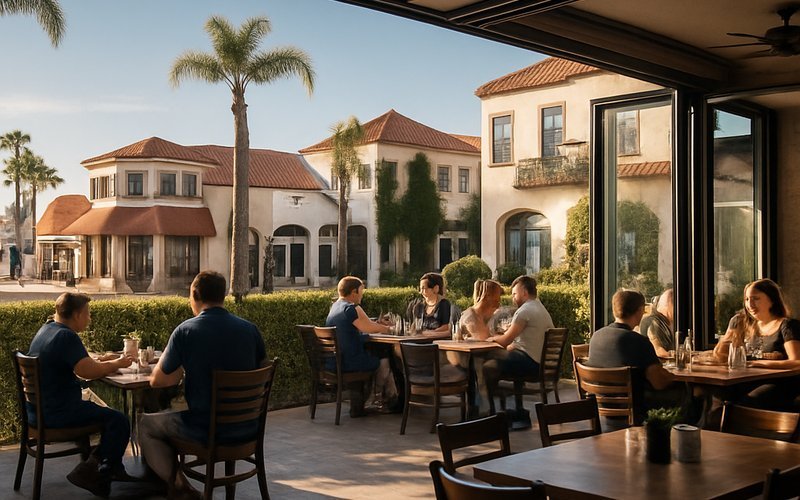
Demand is concentrated in neighborhoods where home values support the investment and where the lot configuration makes an indoor-outdoor connection practical. Two areas stand out clearly right now.
Belmont Shore
Belmont Shore homeowners are driving some of the highest per-project budgets in Long Beach for operable glass wall work. The neighborhood’s bungalow and Craftsman-style homes often have rear yards that face a narrow alley or neighbor, which makes privacy-enabled smart film a natural add-on. A rear patio wall that can switch from clear to frosted solves the privacy problem without losing the light or the indoor-outdoor feel. Projects in Belmont Shore are averaging $22,000–$38,000 for a full residential installation with smart film integration.
Bixby Knolls
Bixby Knolls is seeing strong demand from mid-century modern homeowners who want to preserve the architectural character of their homes while opening up rear living spaces. The neighborhood’s ranch-style homes are ideal candidates because the rear-facing walls often span 20–30 feet without load-bearing interruptions. That means fewer structural complications and cleaner panel runs. Projects in Bixby Knolls typically run $18,000–$32,000 for a sliding or bi-fold system on a standard-sized rear wall.
Commercial installations are also active along the East Village Arts District and the Pine Avenue corridor, where restaurant and retail owners are using operable storefront walls and LED film to compete for foot traffic. If you’re curious about how smart film performs in a residential setting specifically, our guide on the best rooms to install smart glass in a Los Angeles home covers placement strategy in detail.
How Long Does Operable Glass Wall Installation Take in the Long Beach Area?
A straightforward residential operable glass wall installation in Long Beach takes 3–7 days of on-site work once materials arrive. The full timeline from first consultation to completed install is typically 6–10 weeks, and here’s why that span exists.
Custom panel fabrication takes 3–5 weeks after you approve final measurements. Aluminum frames and tempered glass panels are not stock items. They’re cut to your specific opening dimensions. If you’re ordering smart glass panels (factory-integrated PDLC), add another 1–2 weeks to that lead time because smart glass laminates are produced on a longer manufacturing cycle than standard tempered panels.
Permit review at the Long Beach Development Services Department adds 2–4 weeks for residential projects if your project requires structural work. Some contractors will start custom fabrication concurrent with permit review to compress the timeline, which is smart practice as long as your permit approval is reasonably certain.
Smart film application, if you’re retrofitting it onto new or existing panels, adds only 1–2 days to the install schedule. It’s one of the fastest parts of the whole project. For a detailed breakdown of smart glass and film installation timelines in the Los Angeles area, see our full smart glass installation timeline guide.
Next Steps for Long Beach Homeowners and Business Owners Ready to Move Forward
Before you contact any contractor, do three things. Measure your opening accurately — width and height to the nearest quarter inch. Identify whether you have a structural header already in place or whether your wall is load-bearing. And decide whether you want privacy control built in from day one, because adding smart film at the time of installation is cheaper and cleaner than retrofitting it later.
Once you have those answers, get at least two quotes from licensed California contractors who specialize in architectural glass systems. Ask each contractor for their CSLB license number, and verify it takes less than two minutes at the California Contractors State License Board website. Don’t hire anyone who can’t produce it immediately.
Honestly, the biggest mistake Long Beach homeowners make is treating the glass wall and the smart film as two separate decisions. They’re not. The wiring pathway, the panel thickness, and the track system all affect how cleanly film or smart glass integrates. Plan them together from the start and you’ll save money and get a better result.
Pacific Smart Glass works with Long Beach homeowners and commercial clients on operable glass wall projects from initial consultation through installation. Contact our Long Beach team for a project quote and we’ll walk you through the right system, the right glass technology, and a realistic timeline for your specific space.