
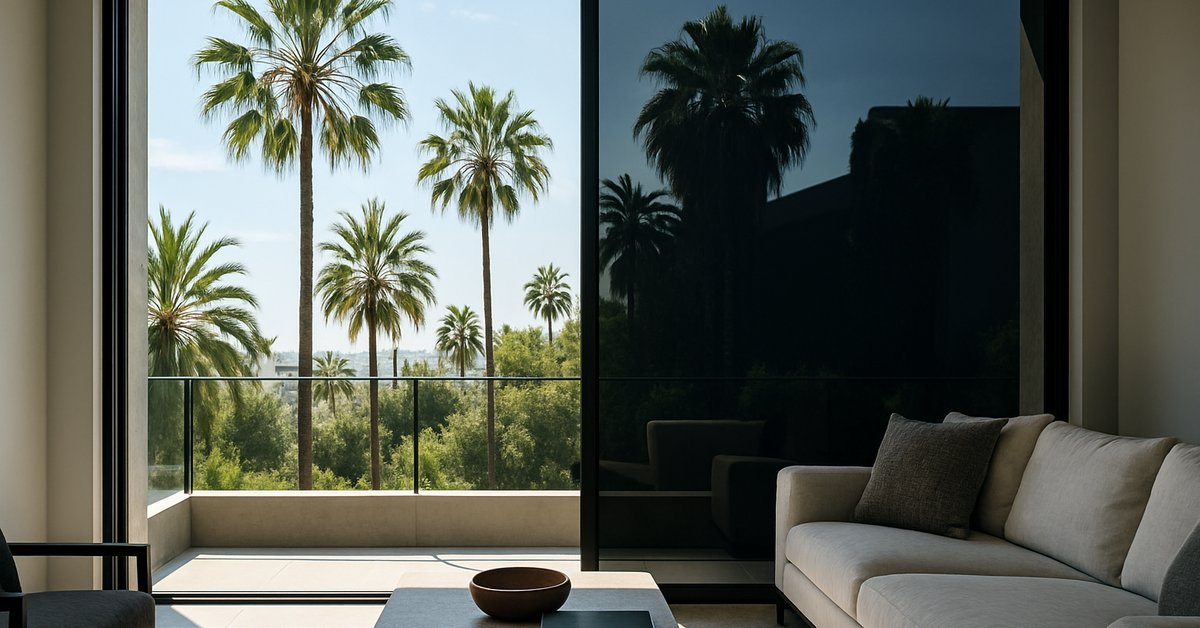
You’re looking at a window that changes from clear to opaque at the touch of a button, and you want to know whether electrochromic glass is the right call for your Los Angeles home or business. The honest answer: it depends on your budget, your building type, and whether you need a permanent glazing upgrade or a retrofit solution. In Los Angeles, labor costs and the city’s strict energy compliance requirements under Title 24 can push project costs higher than comparable work in other markets. This guide covers real 2026 pricing, how electrochromic glass compares to smart film and LED film, which LA neighborhoods are seeing the most activity, and exactly how to find a qualified installer.
Ready to get a real number for your specific space? Get a free estimate from a licensed Los Angeles smart glass contractor before you commit to anything.
What Is Electrochromic Glass and How Does It Differ From Smart Film or LED Film?
Electrochromic glass is a permanently manufactured glazing unit that changes its tint level when a low-voltage electrical current passes through a metal oxide coating applied between two panes. You’re buying a new window, not a film. The glass shifts from fully transparent to a darker, heat-rejecting tint across a continuous spectrum, rather than switching between clear and fully opaque like most other smart glass products.
That’s the critical difference from smart film. Smart film (also called PDLC film) is a polymer-dispersed liquid crystal layer that’s laminated or adhesively bonded to your existing glass surface. When power is off, it’s frosted. When power is on, it goes clear. It’s a privacy-switching product, not a tint-control product. You can retrofit it onto existing windows without replacing the glass entirely.
LED film is a different product category altogether. It’s a transparent LED display layer applied to glass, turning your window into a digital display surface. It’s used almost exclusively in commercial retail and hospitality settings where visual advertising is the goal. It doesn’t provide privacy or solar control.
So why does this distinction matter so much? Because most Los Angeles homeowners and business owners searching for “electrochromic glass” actually need smart film. Electrochromic glass makes the most sense when you’re already replacing windows or building new construction. If your windows are staying put, smart film does the job at a fraction of the cost and without the construction disruption.
How Much Does Electrochromic Glass Cost in Los Angeles in 2026?
In Los Angeles, electrochromic glass installations run $85–$250 per square foot installed, with the wide range driven by glass size, system complexity, and whether you need structural work to accommodate new glazing. Smaller residential projects with fewer units tend to land toward the higher per-square-foot end because setup and integration costs don’t scale down the way the glass price does.
| Product Type | Cost Per Sq Ft (Installed) | Typical LA Project Total | Best For |
|---|---|---|---|
| Electrochromic Glass | $85–$250 | $12,000–$40,000+ | New construction, window replacements, commercial facades |
| Smart Film (PDLC) | $25–$65 | $1,800–$12,000 | Existing windows, condos, privacy partitions, retrofits |
| LED Film | $60–$120 | $6,000–$25,000 | Retail storefronts, hotel lobbies, commercial displays |
| Switchable Smart Glass (pre-laminated PDLC) | $45–$95 | $4,500–$18,000 | Office partitions, bathroom glass, conference rooms |
A real project example: a homeowner in the Silver Lake neighborhood recently replaced four large west-facing windows with electrochromic units to manage brutal afternoon heat. Total installed cost came to $22,400 for approximately 160 square feet of glass, including electrical integration with an existing smart home system. The project took three weeks from permit approval to final inspection.
Your biggest cost variables in Los Angeles specifically are the glazing contractor’s labor rate (typically $75–$130 per hour for licensed glaziers), low-voltage electrical work for system control wiring, and any structural modifications needed to accommodate new frame dimensions. If you’re in a mid-century home in the Hollywood Hills, expect framing surprises that can add $1,500–$4,000 to the base estimate.
Want an accurate number for your specific project without guessing? Request a site estimate from Pacific Smart Glass in Los Angeles and get a real quote based on your actual square footage and window configuration.
Which Los Angeles Neighborhoods Are Installing Electrochromic Glass Right Now?
Activity is concentrated in a handful of neighborhoods where the combination of high property values, western sun exposure, and design-forward remodeling culture makes the investment make sense.
Venice and Mar Vista are seeing heavy demand on the westside, driven by beach-adjacent homes with large glass walls facing the afternoon Pacific sun. Homeowners there are dealing with both heat gain and privacy from close-set neighbors and pedestrian traffic. Electrochromic glass and PDLC smart film are both in play, with smart film getting more traction because of the condo and rental stock in those blocks.
In Silver Lake and Los Feliz, the mid-century modern housing stock with its signature floor-to-ceiling glazing is a natural fit. These homes were designed for light but not for modern solar loads. Replacing original single-pane glass with electrochromic units often qualifies for Title 24 energy compliance upgrades on permits, which matters when owners are doing larger renovations.
Commercial projects are concentrated along Wilshire Boulevard and the surrounding Miracle Mile corridor, where office and mixed-use buildings are integrating electrochromic and smart glass into facade upgrades. Conference rooms, executive suites, and lobby glass walls are the most common applications. A second-floor conference room in a mid-Wilshire office building can run $8,000–$15,000 for smart glass partitioning, depending on square footage and control system integration.
And in the Hollywood Hills, custom new construction projects are specifying electrochromic glass during design, which keeps costs lower than retrofit work and allows for full smart home integration from the start.
Smart Film vs. Smart Glass vs. LED Film: Which One Actually Fits Your LA Property?
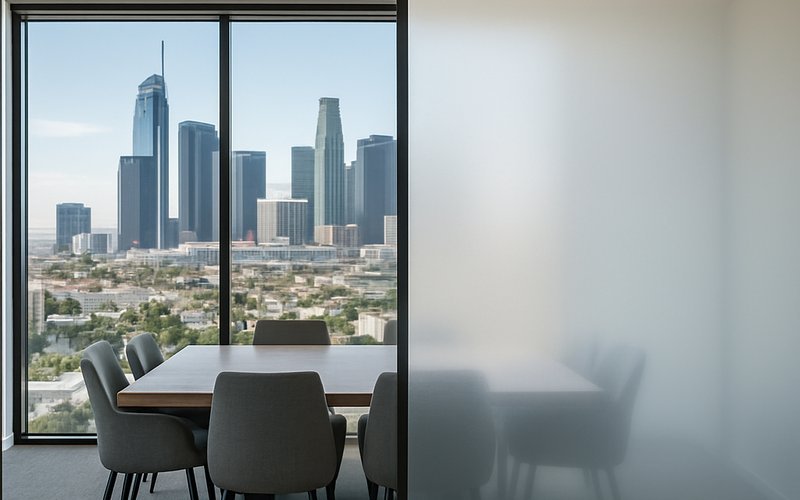
Choosing the wrong product is the most expensive mistake you can make. Here’s a straightforward breakdown of what each technology actually does and where it makes sense in a Los Angeles context.
| Feature | Electrochromic Glass | Smart Film (PDLC) | LED Film |
|---|---|---|---|
| Privacy (Off = Frosted) | No (tints, doesn’t frost) | Yes | No |
| Solar Heat Control | Yes (best-in-class) | Minimal | No |
| Works on Existing Glass | No (replacement required) | Yes | Yes |
| Smart Home Integration | Yes (Lutron, KNX, BACnet) | Yes (simple 12V control) | Limited |
| Typical Lifespan | 20–30 years | 10–15 years | 7–12 years |
| Renter-Friendly | No | Possibly (removable versions exist) | No |
Honestly, most Los Angeles homeowners who contact an installer thinking they need electrochromic glass end up choosing smart film. It’s not a downgrade. For privacy-focused applications like bathroom glass, bedroom windows, or office partitions, PDLC smart film delivers exactly what you need at 40–70% lower cost, and it can be applied without touching your existing windows.
Electrochromic glass wins clearly when solar heat rejection is the main goal and you’re already committing to a window replacement. If you’re building new in the Hills or replacing aging glazing on a commercial facade, specifying electrochromic units from the start makes financial sense over the lifetime of the building.
LED film is its own conversation. If you’re a retailer on Melrose or a hotel in Hollywood looking to turn your storefront into a display surface, it’s a genuinely compelling product. If you’re a homeowner, it’s not relevant to your project. For more on how the products compare specifically for LA properties, see our guide to smart glass vs. window tint in Los Angeles.
Does the City of Los Angeles Require a Permit for Electrochromic Glass Installations?
Yes. In Los Angeles, replacing windows or installing new glazing units requires a permit from the Los Angeles Department of Building and Safety (LADBS). Electrochromic glass, because it involves both structural window replacement and low-voltage electrical work, typically requires both a building permit and an electrical permit.
The low-voltage electrical wiring for control systems is generally handled under a separate electrical permit, though some smaller residential projects consolidate this under a single building permit with an electrical inspection scope. Your licensed glazing contractor should be pulling both permits as part of the job. If an installer offers to “skip the permit to save money,” walk away. LADBS has increased enforcement on unpermitted window work, particularly in hillside and historic zones.
Smart film is a different story. If the installation doesn’t involve hardwiring and uses a self-adhesive film with a plug-in transformer, LADBS generally does not require a permit. But once a certified electrician hardwires the control system into your panel or wall switch, an electrical permit applies. See our full breakdown on smart glass permit requirements in Los Angeles for a detailed walkthrough of what triggers each permit type.
For commercial projects, you’ll also need to verify California Title 24 energy compliance. Electrochromic glass can qualify as a performance compliance path under Title 24, which sometimes allows you to exceed window-to-wall ratios that would otherwise be restricted. Your glazing contractor or architect should run this calculation before the permit application is submitted.
How to Find a Qualified Electrochromic Glass Installer in Los Angeles
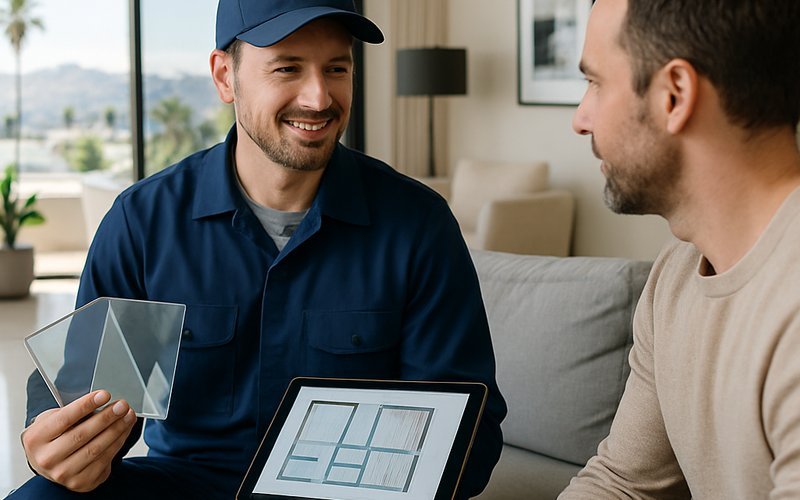
Finding someone who can actually do this work correctly is harder than it sounds. Not every window company has experience with electrochromic glass systems, and not every smart film installer understands the electrical integration requirements for commercial projects.
Here’s what to look for:
- California C-17 glazing license or C-10 electrical license, depending on scope. For combined projects, you want a contractor who holds both or works with licensed subcontractors on each trade.
- Demonstrated experience with smart glass control systems, not just glass installation. Ask specifically about Lutron, KNX, or Crestron integration if you’re connecting to a smart home system.
- A willingness to pull LADBS permits themselves. Legitimate contractors don’t ask you to pull your own permits to avoid liability.
- Local references, ideally in neighborhoods you know. Ask for a project address or photos that you can verify are genuinely in Los Angeles.
- A written quote that breaks out glass cost, labor, electrical, and permit fees separately. Bundled “all-in” quotes make it impossible to know what you’re actually paying for.
A second project example worth knowing: a small law firm in the Miracle Mile district recently had smart glass partitions installed in their conference room, around 220 square feet total, at a cost of $11,800 installed including LADBS permits and a hardwired wall switch. The whole job took four days on-site plus two weeks for permit processing. That’s a realistic timeline for commercial retrofits in Los Angeles right now.
For a deeper checklist before you hire anyone, read our guide on how to choose a smart glass installer in Los Angeles.
Searching Beyond Los Angeles? What to Know About Switchable Glass Services Nearby
If your project is outside Los Angeles city limits, the permit requirements, contractor availability, and even cost ranges can shift noticeably. Southern California’s switchable glass market is active across the region, and qualified installers often serve multiple markets.
For properties in Orange County, for instance, installer networks and pricing structures differ from what you’ll encounter in LA. If you’re managing a project in that area, Pacific Smart Glass offers switchable privacy glass services in Irvine, with the same product quality and integration expertise available to LA clients. It’s worth knowing your options if you’re coordinating multi-site projects or if your property sits near the county line.
The broader point: don’t assume your Los Angeles installer is the right fit for a project in a different jurisdiction. Permit requirements, Title 24 interpretations, and inspection processes vary enough that local experience matters even within Southern California.
Ready to take the next step for your Los Angeles property? Contact Pacific Smart Glass for a free consultation and get a real quote based on your specific space, whether you’re leaning toward electrochromic glass, smart film, or something in between. The right product depends on your windows, your goals, and your budget, and a 20-minute conversation with someone who knows LA’s market will save you a lot of guesswork.