
When it comes to smart glass smart home integration, San Jose homeowners are quickly discovering it’s not the straightforward plug-and-play upgrade most expect. If you’ve got Lutron Homeworks, Crestron, or Apple HomeKit already installed in your Willow Glen colonial or North San Jose spec home, adding switchable glass to that ecosystem involves voltage requirements, relay wiring, and protocol decisions that most general smart home installers don’t deal with every day. This guide breaks down exactly how PDLC smart glass and smart film connect to the systems Silicon Valley homeowners already own, what those integrations actually cost, and where the friction points are.
Why Smart Glass Integration Is a Different Problem Than Most Smart Home Upgrades
Smart glass doesn’t connect to a hub the way a Philips Hue bulb or a Nest thermostat does. It requires low-voltage AC power, a dedicated transformer, and a switching mechanism, which means your existing smart home ecosystem needs to talk to it through relay outputs or a compatible driver, not a Wi-Fi or Zigbee radio.
Silicon Valley homeowners are used to pulling up the App Store, downloading a vendor app, and having a new device show up in their dashboard in about four minutes. Smart glass smart home integration in San Jose doesn’t work like that. The expectations are high here, and the reality is a bit more involved. That’s not a dealbreaker, but it does mean the integration needs planning upfront, not as an afterthought after the glass is already in.
Voltage and protocol mismatches are the most common source of problems. PDLC smart glass typically runs on AC 60V or AC 110V at 50/60Hz, depending on the manufacturer and panel size. Your Lutron processor or Crestron controller outputs a dry contact relay signal, not the voltage the glass needs directly. You need a smart glass power supply or driver in the circuit, and that driver needs to accept the right input to switch states.
And there’s another layer: smart film retrofits and factory-built smart glass units have different wiring configurations, different power demands, and different compatibility profiles with the same control system. So the approach for a Crestron-controlled Willow Glen home adding smart glass to existing windows is genuinely different from a North San Jose new construction home that’s spec’ing the whole system together from scratch.
How Smart Glass and Smart Film Actually Receive Control Signals
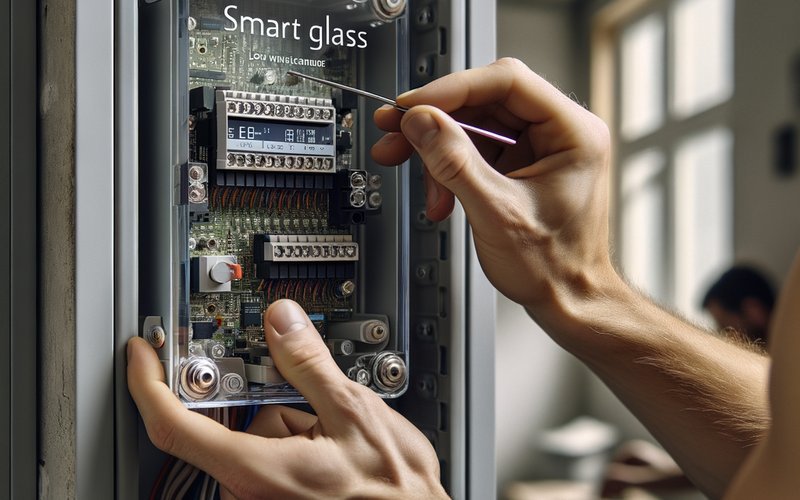
PDLC-based smart glass switches between opaque and clear by applying voltage across a liquid crystal film layer. When voltage is on, the crystals align and the glass becomes transparent. When voltage cuts off, it goes frosted. That switching happens at the power supply level, and the control signal your smart home system sends just tells the power supply to switch on or off.
Relay vs. Direct Wiring
Most premium control systems, including Crestron, Lutron Homeworks, and Savant, use dry contact relay outputs to trigger the smart glass power supply. The relay acts like a simple on/off switch in the circuit. The controller closes the relay, the power supply activates, and the glass clears. Open the relay, glass goes frosted. It’s genuinely simple at the electrical level, though the programming and scene integration take real expertise.
Smart film retrofits work the same way electrically, but the wiring run is often more complex because you’re adding the film and its transformer to an existing window without the pre-planned conduit that new smart glass installations have. Expect additional labor time of 1–3 hours per window on retrofit smart film projects when integrating with an existing control system.
Some manufacturers offer smart glass drivers with 0–10V dimming inputs, RS-485 serial control, or even dedicated app-based modules. These open up more options for scene-level control, like partially dimming the glass to a semi-translucent state, though PDLC glass doesn’t truly dim the way a light fixture does. It either switches or it doesn’t, so “dimming” control mostly applies to electrochromic glass, which is a separate (and significantly more expensive) technology.
Lutron Integration: What Works, What Doesn’t, and What It Costs in San Jose
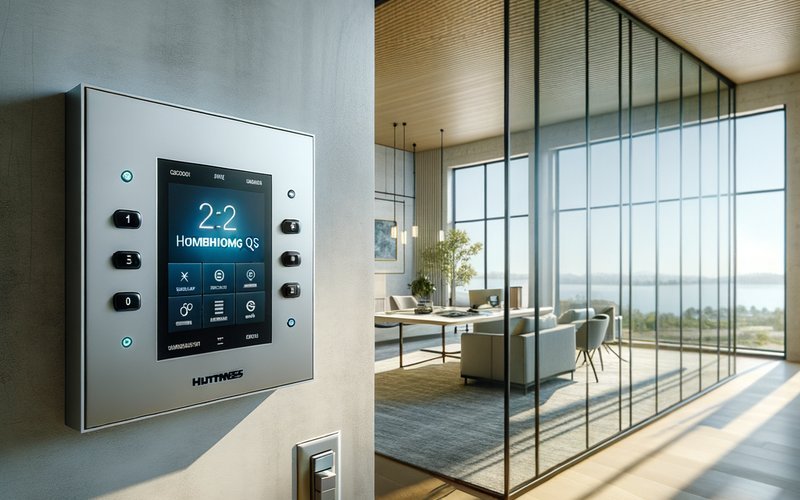
Lutron Homeworks QS and Homeworks IQ are the systems most commonly found in higher-end San Jose homes, and both support smart glass integration through relay contact closure outputs. The Homeworks processor has dedicated relay modules that can switch the glass power supply directly as part of a programmed scene.
| Lutron System | Smart Glass Integration | Method | Estimated San Jose Integration Cost |
|---|---|---|---|
| Homeworks IQ / QS | Full support | Relay contact closure module | $1,800–$4,500 (programming + wiring) |
| RadioRA 3 (RA3) | Limited | Requires third-party relay bridge | $900–$2,200 (bridge device + setup) |
| Caseta | Not directly compatible | Needs separate relay + smart hub workaround | $600–$1,400 (workaround only, limited scenes) |
Caseta is the entry-level Lutron line, and it’s popular for good reason in mid-range San Jose homes. But it doesn’t have native relay outputs for smart glass. You can engineer a workaround using a Lutron-compatible smart relay module bridged through a platform like Home Assistant or a dedicated smart glass driver with a Wi-Fi input, but you’ll give up seamless scene integration and Lutron’s signature fade-and-timing polish.
RadioRA 3 is a step up and can support smart glass through a third-party relay device, but it still requires more setup than a full Homeworks system. If you’re already running RA3 in your home and want to add switchable glass, budget roughly $1,500–$2,800 all-in for a single zone including the relay bridge, labor, and Lutron programming time.
For Homeworks homes, the integration is genuinely clean. A smart glass zone gets programmed like any other lighting scene. Your “Good Morning” scene can clear the bedroom glass. “Movie Mode” can frost the living room skylights. It works the way Lutron is supposed to work, but it requires a Lutron dealer who understands smart glass wiring, not just lighting.
Crestron and Savant: High-End Control Systems and Switchable Glass
Crestron and Savant are the control platforms you’ll find in serious tech executive homes throughout Willow Glen, Almaden Valley, and the Evergreen foothills. Both handle smart glass integration cleanly, because both have relay outputs designed for exactly this kind of load-switching application.
A Crestron integration typically uses a C2N-CB-E relay control module or a similar relay card inside the Crestron rack. The module takes programming commands from the Crestron processor and switches the smart glass power supply on or off. What makes Crestron powerful here is the programming flexibility: you can tie glass states to time of day, occupancy sensors, security system arm/disarm events, or voice commands through the Crestron home app.
Savant Scene Programming for Smart Glass
Savant takes a slightly different approach. Its integration is more scene-centric than Crestron’s low-level relay control. You define glass states as part of experience scenes: “Dining,” “Privacy,” “Presentation,” “Away.” The Savant Pro Remote or the Savant app calls these scenes, and the glass responds. For a homeowner in Willow Glen who already has Savant running their audio, shading, and HVAC, adding smart glass to those scenes is a relatively natural extension.
Savant does require that your integrator programs the glass driver as a two-state device, and some of the less experienced Savant dealers in the Bay Area have struggled with this because smart glass isn’t a standard Savant device template. Find an integrator who has done it before. The Crestron ecosystem is slightly more flexible for custom wiring configurations, but Savant wins on interface design and ease of use once it’s set up correctly.
For either system, expect Crestron or Savant integration labor in San Jose to run $2,500–$6,000 depending on the number of zones, complexity of existing programming, and whether the rack needs additional relay modules added.
Apple HomeKit and Google Home: Smart Glass Integration for New Construction San Jose Homes
In North San Jose new construction, Apple HomeKit and Google Home are increasingly the default smart home platforms for mid-range spec homes. The question is whether smart glass fits into that ecosystem, and the honest answer is: with the right bridge device, yes, but it’s not native.
Smart glass and smart film manufacturers don’t build HomeKit or Google Home radios directly into their drivers. What makes integration possible is a bridge device, typically a smart relay switch with Wi-Fi or Thread connectivity that supports the Matter protocol. Matter-compatible relay switches from brands like Aqara, Eve, or SwitchBot can sit between your HomeKit hub and the smart glass power supply, making the glass appear as a simple on/off accessory in the Home app.
The Matter protocol support is the key development here. As more smart glass drivers adopt Matter-compatible relay inputs, integration with HomeKit and Google Home gets cleaner and less dependent on cloud-based workarounds. For a new construction home in North San Jose that’s being wired from scratch, specifying a Matter-ready smart relay in the rough-in phase costs almost nothing extra and saves significant headaches at commissioning.
If you’re already working with a smart glass installer on a San Jose home project, ask specifically about smart film for existing windows and whether their drivers support Matter or HomeKit-compatible relay inputs. Not all installers think about this proactively.
Google Home integration follows similar logic. Smart glass appears as a switch accessory through a compatible relay, and you can add it to Routines. “Good morning” routine clears the bedroom glass, opens the shades, and starts the coffee maker. It works reliably once it’s set up, though it doesn’t have the scene depth of Crestron or Savant.
Voice Control for Privacy Glass: What Alexa, Siri, and Google Assistant Can Actually Do
Voice control for smart glass works, but it’s simpler than most homeowners expect. You’re not issuing nuanced commands. You’re triggering two states: clear or frosted.
In a San Jose tech executive home, voice-controlled privacy glass is practically a baseline expectation. “Hey Siri, set office to privacy mode” or “Alexa, turn on bedroom glass” are the kinds of commands these systems handle. They work because the glass has been exposed to the smart home platform as a switch device, and voice assistants can toggle switches.
What voice control can’t do is give you graduated states on PDLC glass. It’s binary. On or off. If you want “50% frosted,” you’re looking at electrochromic glass at a significantly higher price point, not standard PDLC. For most residential privacy applications, binary switching is completely fine, and the voice control experience is clean and reliable.
Scene-based voice control is actually more useful than direct glass control. Rather than saying “clear the kitchen glass,” you say “Alexa, good morning,” and your programmed morning scene handles the glass, the shades, the lights, and the thermostat together. That’s where these integrations really shine, and it’s how most tech homeowners in San Jose end up using them day-to-day.
Siri through HomeKit is the smoothest experience for direct glass control if your home is on that platform, because HomeKit accessory control has low latency and works locally without a cloud round-trip. Google Assistant and Alexa both depend on cloud routing, which adds a fraction of a second delay but is rarely noticeable in practice.
Smart Film vs. Smart Glass: Which Integrates Better With Your Existing System

For homeowners choosing between smart film and factory-built smart glass, the integration question is genuinely different from the aesthetic or cost question. Both integrate the same way electrically, through a relay-switched power supply, but the practical wiring challenges are different.
| Factor | Smart Film (Retrofit) | Smart Glass (New Unit) |
|---|---|---|
| Integration method | Relay-switched driver, same as smart glass | Relay-switched driver, pre-wired leads |
| Wiring complexity | Higher: needs conduit run to existing frame | Lower: wiring planned during installation |
| Cost per sq ft (product only) | $25–$55/sq ft | $65–$120/sq ft |
| Integration labor add-on | $150–$300 per window (existing wall routing) | $100–$200 per window (planned rough-in) |
| Best for | Existing homes, Lutron/Crestron retrofit projects | New construction, full remodels, commercial |
Smart film integrates just as well as smart glass with Lutron, Crestron, or HomeKit once the wiring is in place. The challenge is getting that wiring to an existing window frame cleanly without tearing up finished walls. In older Willow Glen homes where wall cavities are tight and finishes are original plaster, that adds real labor cost.
For most San Jose retrofit projects on existing homes, smart film is the right call on cost. For new construction or a full gut renovation, factory smart glass gives you cleaner wiring, better optical clarity, and a more polished end result. The control system integration is essentially identical either way.
LED Film and Whole-Home Automation: A Niche Use Case Worth Knowing
LED film is a separate product category from smart glass and smart film, and its control inputs are different. LED film turns glass surfaces into transparent display screens, and it requires video signal inputs, not just relay switching.
In a media room or home theater application in San Jose, LED film can be integrated into a Crestron or Savant system through an HDMI matrix or a dedicated video controller. The glass becomes a display source the AV system can route signal to, just like a projector or TV. That’s a genuinely different integration workflow, and not every smart home integrator has experience with it.
For most residential projects, LED film is a media room or statement-piece application. It’s not a standard privacy or solar control product. If you’re considering it for a whole-home automation setup, be upfront with your AV integrator that it requires video signal routing, not just a relay switch. The LED film product requirements are worth reviewing before you spec anything, because the control infrastructure is more involved than PDLC smart glass or film.
That said, for a tech homeowner in San Jose who wants a conference room or media room with a glass wall that doubles as a display, LED film integrated into a Crestron system is a legitimate and impressive application. It’s just not the same thing as privacy glass, and it shouldn’t be evaluated on the same criteria.
Getting Your Smart Glass Integration Right in San Jose: Next Steps
Smart glass smart home integration in San Jose works best when the control system decision comes first, not the glass selection. If you’re adding switchable glass to an existing Lutron Homeworks or Crestron system, your first call should be to your AV or smart home integrator to confirm relay output availability and any programming scope before you order glass.
Here’s a practical sequence for getting this right:
- Confirm your control system has available relay outputs or identify the bridge device you’ll need
- Determine whether you’re doing smart film retrofit or full smart glass replacement, which affects rough-in wiring planning
- Choose a smart glass installer who has worked alongside Lutron, Crestron, or Savant integrators before, not one who hands you a wall switch and calls it done
- Get the smart glass driver specification sheet and share it with your AV integrator so they can confirm compatibility before installation day
- For new construction North San Jose homes, specify Matter-compatible relay inputs during rough-in to future-proof the system
The installer coordination piece matters more than most homeowners realize. A smart glass installer who has never worked on a Crestron job will make different (and sometimes incompatible) wiring decisions than one who coordinates with the AV rack from the start. Ask specifically: “Have you integrated with Crestron or Lutron Homeworks before? Can you give me a reference?”
If you’re in the San Jose area and ready to start that conversation, Pacific Smart Glass serves San Jose homeowners with smart glass and smart film installation, including integration-aware projects for homes with existing Lutron, Crestron, and HomeKit systems. Getting the integration right from the start is genuinely the difference between a smart home feature that impresses and one that just sits there unused.
And if you’re still in the research phase, take a look at the permit requirements for smart glass in San Jose and Santa Clara County before you finalize your project scope. Some integrations that involve new electrical rough-in do require permits, and knowing that upfront saves real headaches later.